ROADS OF ADVENTURE SAFARIS LTD
️
 info@roadsofadventuresafaris.com
A Kenya wildlife safari offers spectacular sightings of the "Big Five" (lion, leopard, elephant, rhino, and buffalo), especially in the Masai Mara and Amboseli. You can expect to see vast herds of wildebeest and zebra during the Great Migration, alongside cheetahs, giraffes, hippos, and over 1,000 bird species.
1. The Big Five
The "Big Five" is a term originally coined by big-game hunters to describe Africa’s five most dangerous animals to hunt on foot: the Lion, Leopard, Elephant, Rhinoceros, and Cape Buffalo. Today, this group represents the ultimate checklist for any wildlife enthusiast. In Kenya’s world-class sanctuaries like the Maasai Mara, Amboseli, and Tsavo, these giants are the stars of the show. The African Elephant is perhaps the most iconic, with Kenya being home to some of the last "Super Tuskers"—massive bulls whose ivory reaches the ground. Observing a matriarch lead her family across the red dust of Tsavo is a masterclass in social intelligence and raw power.
The Lion remains the undisputed king of the savanna. Kenya is particularly famous for the Marsh Pride of the Mara, but it also offers a unique spectacle: the tree-climbing lions of certain regions, who lounge in fig trees to escape insects and catch a breeze. In contrast, the Leopard is the ghost of the bush. Solitary and silent, they are master camouflagers. Seeing one draped over a yellow-fever tree branch, tail twitching, is a rare and electrifying sight.
Then there is the Rhinoceros. Kenya is a global stronghold for the Black Rhino, particularly in private conservancies like Ol Pejeta and Lewa. While the Black Rhino is a browser and notoriously shy (and occasionally grumpy), the White Rhino is a grazer and generally more social. Finally, the Cape Buffalo is often underestimated. Known as "The Black Death" by hunters, these bovines are incredibly protective of their herds. A wall of buffalo staring you down from the tall grass is a potent reminder that in the wild, size and attitude are the ultimate defense. Together, the Big Five embody the majesty and the danger of the African wilderness.
2. Big Cats & Predators
Beyond the lions and leopards, Kenya’s plains are a theater for some of the most specialized hunters on Earth. The Cheetah is the undisputed sprinter of the savanna. Built for speed with a slender frame and non-retractable claws that act like running spikes, a cheetah hunt is a high-speed pursuit that usually lasts less than a minute. They prefer the open grasslands where they can use their incredible eyesight to spot prey from a distance. Unlike other cats, they are diurnal, hunting during the day to avoid competition with the larger, nocturnal predators.
The Spotted Hyena is often misunderstood as a mere scavenger, but they are actually highly successful apex predators with one of the most complex social structures in the animal kingdom. Their bone-crushing jaw pressure and eerie "whoop" are hallmarks of the night. While less common, the Striped Hyena can also be found in the more arid northern regions of Kenya, distinguished by its shaggy mane and solitary nature.
For those who appreciate the smaller details, Kenya offers the "Small Cats." The Serval, with its oversized ears and cheetah-like spots, is a specialist at hunting rodents in tall grass, often leaping high into the air to pounce. Even more elusive is the Caracal, a desert-adapted cat with iconic tufted ears. It is famous for its ability to swat birds right out of the air mid-flight. These predators, from the massive hyena to the agile caracal, maintain the delicate balance of the ecosystem, ensuring that only the strongest and most alert herbivores survive to pass on their genes.
3. Large Mammals & Herbivores
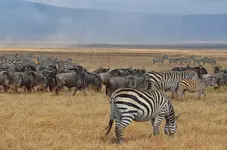
The vast savannas of Kenya support the greatest concentration of herbivores on the planet. The headliner is undoubtedly the Wildebeest, particularly during the Great Migration. Over 1.5 million of these "gnus" move in a clockwise circle between the Serengeti and the Maasai Mara, following the rains in search of fresh grass. They are almost always accompanied by hundreds of thousands of Zebras, creating a symbiotic relationship where the zebra eats the tall, tough grass and the wildebeest eats the short, tender shoots left behind.
Kenya is also a sanctuary for two distinct types of giraffes. The Masai Giraffe, with its jagged, vine-leaf spots, is common in the south. In the north, you find the Rothschild’s Giraffe, one of the most endangered subspecies, distinguished by its creamy white "socks" and more defined patches. Watching these "towers" glide across the horizon is one of the most graceful sights in nature.
The plains are also filled with "Antelope Alley." You will see the Impala, famous for its spectacular leaps; the Thomson’s Gazelle, which serves as the "fast food" of the savanna for predators; and the massive Eland, the world's largest antelope, which can weigh up to a ton yet jump over a two-meter fence from a standing start. These herbivores are the architects of the landscape, keeping the grasslands trimmed and providing the primary energy source for the entire food chain. Their sheer numbers and diversity make the Kenyan wilderness feel like a living, breathing tapestry of movement.
4. Aquatic Wildlife
Kenya’s rivers and lakes host a world of wildlife that is as dangerous as it is fascinating. The Hippopotamus is the heavyweight champion of the waterways. Despite their comical appearance and herbivorous diet, hippos are responsible for more human fatalities in Africa than almost any other large animal. They are highly territorial in the water, and during the day, you will see them submerged in "pods," huffing and grunting to stay cool. At night, they emerge to graze on land, sometimes traveling several kilometers to find the best grass.
Sharing these waters is the Nile Crocodile. In the Mara River, these prehistoric reptiles reach monstrous proportions, some growing over five meters in length. They are the ultimate "sit-and-wait" predators, lying motionless for days until a wildebeest or zebra makes the fatal mistake of drinking or crossing at the wrong spot. The explosive power of a crocodile strike is a terrifying display of evolutionary perfection.
In the freshwater havens like Lake Naivasha, the aquatic ecosystem is more serene. Here, you can take boat safaris to see hippos up close while observing the smaller inhabitants like the Malachite Kingfisher or the African Fish Eagle. These water bodies are vital oases in the often-parched Kenyan landscape, attracting wildlife from miles around. The drama of the Mara River crossings—where wildebeest must navigate both the current and the snapping jaws of crocodiles—remains the most visceral and famous example of aquatic wildlife in action.
5. Birdlife
Kenya is a global pilgrimage site for birdwatchers, boasting a staggering count of over 1,000 species. The most famous avian spectacle is the gathering of Lesser and Greater Flamingos on the soda lakes of the Rift Valley, such as Lake Nakuru and Lake Bogoria. When conditions are right, millions of these birds turn the lakes into a shimmering sea of pink, filtering algae from the alkaline waters with their specialized beaks.
On the savanna, the Secretary Bird is a crowd favorite. Looking like a cross between an eagle and a crane, this bird stalks the plains on long legs, famously killing snakes with precise, powerful kicks. High above, the "cleanup crew"—the Vultures—circle on thermals. Kenya is home to several species, including the Lappet-faced and White-backed vultures. While often maligned, they are essential for preventing the spread of disease by consuming carcasses.
The national bird of Uganda, the Grey Crowned Crane, is also a frequent and beautiful sight in Kenya’s wetlands, easily identified by its golden "crown" and elegant dancing displays. For those with a keen eye, the smaller birds offer a riot of color, from the iridescent Superb Starling to the Lilac-breasted Roller, which sports nearly every color of the rainbow. Whether it is the sheer scale of the flamingo colonies or the solitary majesty of a Martial Eagle perched in an acacia tree, Kenya’s birdlife adds a layer of color and sound that completes the safari experience.
️
info@roadsofadventuresafaris.comA Kenya wildlife safari offers spectacular sightings of the "Big Five" (lion, leopard, elephant, rhino, and buffalo), especially in the Masai Mara and Amboseli. You can expect to see vast herds of wildebeest and zebra during the Great Migration, alongside cheetahs, giraffes, hippos, and over 1,000 bird species.
1. The Big Five
The "Big Five" is a term originally coined by big-game hunters to describe Africa’s five most dangerous animals to hunt on foot: the Lion, Leopard, Elephant, Rhinoceros, and Cape Buffalo. Today, this group represents the ultimate checklist for any wildlife enthusiast. In Kenya’s world-class sanctuaries like the Maasai Mara, Amboseli, and Tsavo, these giants are the stars of the show. The African Elephant is perhaps the most iconic, with Kenya being home to some of the last "Super Tuskers"—massive bulls whose ivory reaches the ground. Observing a matriarch lead her family across the red dust of Tsavo is a masterclass in social intelligence and raw power.
The Lion remains the undisputed king of the savanna. Kenya is particularly famous for the Marsh Pride of the Mara, but it also offers a unique spectacle: the tree-climbing lions of certain regions, who lounge in fig trees to escape insects and catch a breeze. In contrast, the Leopard is the ghost of the bush. Solitary and silent, they are master camouflagers. Seeing one draped over a yellow-fever tree branch, tail twitching, is a rare and electrifying sight.
Then there is the Rhinoceros. Kenya is a global stronghold for the Black Rhino, particularly in private conservancies like Ol Pejeta and Lewa. While the Black Rhino is a browser and notoriously shy (and occasionally grumpy), the White Rhino is a grazer and generally more social. Finally, the Cape Buffalo is often underestimated. Known as "The Black Death" by hunters, these bovines are incredibly protective of their herds. A wall of buffalo staring you down from the tall grass is a potent reminder that in the wild, size and attitude are the ultimate defense. Together, the Big Five embody the majesty and the danger of the African wilderness.
2. Big Cats & Predators
Beyond the lions and leopards, Kenya’s plains are a theater for some of the most specialized hunters on Earth. The Cheetah is the undisputed sprinter of the savanna. Built for speed with a slender frame and non-retractable claws that act like running spikes, a cheetah hunt is a high-speed pursuit that usually lasts less than a minute. They prefer the open grasslands where they can use their incredible eyesight to spot prey from a distance. Unlike other cats, they are diurnal, hunting during the day to avoid competition with the larger, nocturnal predators.
The Spotted Hyena is often misunderstood as a mere scavenger, but they are actually highly successful apex predators with one of the most complex social structures in the animal kingdom. Their bone-crushing jaw pressure and eerie "whoop" are hallmarks of the night. While less common, the Striped Hyena can also be found in the more arid northern regions of Kenya, distinguished by its shaggy mane and solitary nature.
For those who appreciate the smaller details, Kenya offers the "Small Cats." The Serval, with its oversized ears and cheetah-like spots, is a specialist at hunting rodents in tall grass, often leaping high into the air to pounce. Even more elusive is the Caracal, a desert-adapted cat with iconic tufted ears. It is famous for its ability to swat birds right out of the air mid-flight. These predators, from the massive hyena to the agile caracal, maintain the delicate balance of the ecosystem, ensuring that only the strongest and most alert herbivores survive to pass on their genes.
3. Large Mammals & Herbivores
The vast savannas of Kenya support the greatest concentration of herbivores on the planet. The headliner is undoubtedly the Wildebeest, particularly during the Great Migration. Over 1.5 million of these "gnus" move in a clockwise circle between the Serengeti and the Maasai Mara, following the rains in search of fresh grass. They are almost always accompanied by hundreds of thousands of Zebras, creating a symbiotic relationship where the zebra eats the tall, tough grass and the wildebeest eats the short, tender shoots left behind.
Kenya is also a sanctuary for two distinct types of giraffes. The Masai Giraffe, with its jagged, vine-leaf spots, is common in the south. In the north, you find the Rothschild’s Giraffe, one of the most endangered subspecies, distinguished by its creamy white "socks" and more defined patches. Watching these "towers" glide across the horizon is one of the most graceful sights in nature.
The plains are also filled with "Antelope Alley." You will see the Impala, famous for its spectacular leaps; the Thomson’s Gazelle, which serves as the "fast food" of the savanna for predators; and the massive Eland, the world's largest antelope, which can weigh up to a ton yet jump over a two-meter fence from a standing start. These herbivores are the architects of the landscape, keeping the grasslands trimmed and providing the primary energy source for the entire food chain. Their sheer numbers and diversity make the Kenyan wilderness feel like a living, breathing tapestry of movement.
4. Aquatic Wildlife
Kenya’s rivers and lakes host a world of wildlife that is as dangerous as it is fascinating. The Hippopotamus is the heavyweight champion of the waterways. Despite their comical appearance and herbivorous diet, hippos are responsible for more human fatalities in Africa than almost any other large animal. They are highly territorial in the water, and during the day, you will see them submerged in "pods," huffing and grunting to stay cool. At night, they emerge to graze on land, sometimes traveling several kilometers to find the best grass.
Sharing these waters is the Nile Crocodile. In the Mara River, these prehistoric reptiles reach monstrous proportions, some growing over five meters in length. They are the ultimate "sit-and-wait" predators, lying motionless for days until a wildebeest or zebra makes the fatal mistake of drinking or crossing at the wrong spot. The explosive power of a crocodile strike is a terrifying display of evolutionary perfection.
In the freshwater havens like Lake Naivasha, the aquatic ecosystem is more serene. Here, you can take boat safaris to see hippos up close while observing the smaller inhabitants like the Malachite Kingfisher or the African Fish Eagle. These water bodies are vital oases in the often-parched Kenyan landscape, attracting wildlife from miles around. The drama of the Mara River crossings—where wildebeest must navigate both the current and the snapping jaws of crocodiles—remains the most visceral and famous example of aquatic wildlife in action.
5. Birdlife
Kenya is a global pilgrimage site for birdwatchers, boasting a staggering count of over 1,000 species. The most famous avian spectacle is the gathering of Lesser and Greater Flamingos on the soda lakes of the Rift Valley, such as Lake Nakuru and Lake Bogoria. When conditions are right, millions of these birds turn the lakes into a shimmering sea of pink, filtering algae from the alkaline waters with their specialized beaks.
On the savanna, the Secretary Bird is a crowd favorite. Looking like a cross between an eagle and a crane, this bird stalks the plains on long legs, famously killing snakes with precise, powerful kicks. High above, the "cleanup crew"—the Vultures—circle on thermals. Kenya is home to several species, including the Lappet-faced and White-backed vultures. While often maligned, they are essential for preventing the spread of disease by consuming carcasses.
The national bird of Uganda, the Grey Crowned Crane, is also a frequent and beautiful sight in Kenya’s wetlands, easily identified by its golden "crown" and elegant dancing displays. For those with a keen eye, the smaller birds offer a riot of color, from the iridescent Superb Starling to the Lilac-breasted Roller, which sports nearly every color of the rainbow. Whether it is the sheer scale of the flamingo colonies or the solitary majesty of a Martial Eagle perched in an acacia tree, Kenya’s birdlife adds a layer of color and sound that completes the safari experience.