ROADS OF ADVENTURE SAFARIS LTD
️
 info@roadsofadventuresafaris.com
A Uganda safari offers premier experiences including mountain gorilla trekking in Bwindi Impenetrable National Park, chimpanzee tracking in Kibale Forest, and wildlife game drives to see tree-climbing lions in Queen Elizabeth National Park. Popular activities include boat cruises on the Nile/Kazinga Channel, white-water rafting in Jinja, and visiting the Ziwa Rhino Sanctuary.
Uganda, often called the "Pearl of Africa," offers a safari experience that is markedly different from its neighbors. While Kenya and Tanzania are defined by vast savannahs, Uganda is a lush, emerald world of mountains, rainforests, and high-altitude lakes. Below is a detailed exploration of the top activities that make a Ugandan safari truly unique.
Mountain Gorilla Trekking
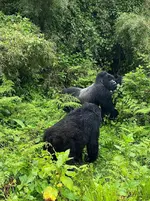
Mountain Gorilla trekking is the crown jewel of Uganda’s tourism and perhaps the most profound wildlife encounter on earth. There are only about 1,000 mountain gorillas left in the wild, and Uganda is home to half of them. Most treks occur in Bwindi Impenetrable National Park, a UNESCO World Heritage site featuring ancient, dense rainforest. The experience begins early at a park headquarters for a briefing before you are assigned a gorilla family. Led by expert rangers and trackers, you hike through steep, tangled vegetation—often using a machete to clear the path.
The trek can take anywhere from two to seven hours, depending on where the gorillas nested the previous night. Once found, you are allowed exactly one hour to observe them. Watching a 400-pound Silverback calmly oversee his family, or seeing infants tumble through the vines, is a deeply emotional experience. The proximity—usually just seven meters—allows you to see the human-like expressions in their eyes and hear their deep vocalizations. It is a physical challenge, but the reward is a soul-stirring connection with our closest wild relatives.
Gorilla Habituation Experience
For those who find the standard one-hour encounter too brief, the Gorilla Habituation Experience in Bwindi’s Rushaga sector is a transformative alternative. Unlike a standard trek to see a fully habituated group (animals accustomed to humans), this experience involves visiting a group currently undergoing the two-year habituation process. You accompany researchers and rangers as they perform the delicate work of teaching the gorillas that humans are not a threat.
The highlight is that you spend four hours in the presence of the gorillas. This extended time allows you to observe their behaviors in much greater detail—seeing how they forage, groom, and socialized throughout the morning. You also learn the specific techniques used by researchers, such as vocalizations and non-threatening body language. Because the group is semi-habituated, the behavior is more raw and unpredictable. With only four tourists allowed per group, compared to eight on a standard trek, it is a more intimate, educational, and immersive scientific journey.
Chimpanzee Tracking
If Bwindi is the home of the gorilla, Kibale National Park is the world capital of chimpanzees. Uganda is arguably Africa’s best primate viewing location, and Kibale alone hosts 13 different primate species. Chimpanzee tracking is a faster-paced, more vocal experience than gorilla trekking. You follow the sounds of pant-hoots and rhythmic drumming on tree buttresses as the chimps move through the canopy.
While Kibale offers the highest success rate, you can also track chimps in the dramatic Kyambura Gorge—a "sunken forest" in the middle of a savannah—or in the Budongo Forest near Murchison Falls. Observing chimpanzees is fascinating because of their high intelligence and social complexity; you might see them hunting colobus monkeys, using sticks as tools, or engaging in intense political displays. The sheer energy of a chimp troop moving through the forest is exhilarating and provides a fascinating contrast to the quiet, stoic nature of the mountain gorillas.
Game Drives
While famous for primates, Uganda’s savannah parks offer spectacular big game viewing without the crowds found in other parts of East Africa. Queen Elizabeth National Park is a highlight, particularly the Ishasha sector, which is world-famous for its tree-climbing lions. Witnessing a pride of lions draped across the branches of a giant fig tree is a rare and surreal sight found in only a few places globally.
In the north, Murchison Falls National Park offers sightings of elephants, giraffes, and buffaloes against the backdrop of the Victoria Nile. For those seeking true wilderness, Kidepo Valley National Park on the border of South Sudan is often ranked as one of Africa’s most beautiful parks. It is rugged, remote, and home to species not found elsewhere in Uganda, such as the cheetah and caracal. Game drives in Uganda are characterized by a sense of discovery, where you often feel like the only vehicle in the landscape.
Boat Cruises
In a land defined by water, a boat safari is an essential part of the Ugandan experience. The most iconic is the cruise along the Kazinga Channel in Queen Elizabeth National Park. This natural waterway connects Lake Edward and Lake George and boasts one of the world's highest concentrations of hippos. From the safety of the boat, you can see massive pods of hippos, enormous Nile crocodiles, and elephants coming to the bank to drink.
Another must-do is the boat trip to the base of Murchison Falls. As you head upstream, you witness the Nile narrowing into a seven-meter cleft before plunging 43 meters down. The spray and thunder of the falls are best experienced from the water. For birders, a boat trip on the Nile or through the swamps of Lake Mabamba is the best way to spot the prehistoric-looking Shoebill Stork. These cruises offer a relaxed, "front-row seat" to the wildlife that congregates at the water’s edge, providing a different perspective than a traditional vehicle safari.
Rhino Tracking
The Ziwa Rhino Sanctuary is a critical conservation success story. Rhinos were once extinct in Uganda, but this sanctuary was established to reintroduce Southern White Rhinos to the country. It is the only place in Uganda where you can see rhinos in the wild, and the experience is uniquely personal: you track them on foot.
Accompanied by an armed ranger, you walk through the bush until you locate the rhinos. Because rhinos have poor eyesight but excellent hearing, the approach is quiet and strategic. Standing just a few meters away from a three-ton rhino while on your own two feet is an adrenaline-pumping experience that fosters a deep respect for these prehistoric giants. The goal of the sanctuary is to eventually reintroduce these animals into Murchison Falls National Park, and your visit directly funds the security and breeding programs required to make that dream a reality.
Adventure Sports in Jinja
Known as the "Adrenaline Capital of East Africa," Jinja is situated at the source of the River Nile. While the town itself has a charming, colonial-era feel, the draw for many is the high-octane adventure on the water. Uganda offers some of the world's best Grade 5 white-water rafting. Navigating the massive rapids of the Nile is a world-class thrill that attracts adventurers from across the globe.
For those who prefer a different kind of rush, Jinja offers bungee jumping over the Nile, kayaking, and high-speed quad biking through local villages and forest trails. You can also take a more serene boat ride to the exact point where the Nile begins its 6,600 km journey to the Mediterranean. Whether you are flying through the air or paddling through the foam, Jinja provides a high-energy contrast to the quiet patience of a wildlife safari.
Birding
With over 1,070 recorded bird species, Uganda is a paradise for ornithologists. The country’s unique location at the convergence of the East African savannah and the West African rainforest creates an incredible diversity of avian life. You don't have to be an expert to appreciate the vibrant colors of the Great Blue Turaco or the majestic flight of the African Fish Eagle.
The "holy grail" for birders in Uganda is the Shoebill Stork. This large, prehistoric-looking bird is most commonly found in the Mabamba Swamp near Entebbe. Other top birding spots include the Royal Mile in Budongo Forest and the "Albertine Rift Endemics" found in the high forests of Bwindi and the Rwenzori Mountains. Whether you are looking for tiny sunbirds or massive storks, Uganda's sheer variety of birds ensures that every game drive and nature walk is filled with flashes of color and unique calls.
Cultural Tours
A Ugandan safari is as much about the people as it is about the animals. Cultural tours allow you to step outside the national parks and engage with the "Pearl of Africa's" rich heritage. In Kampala, you can visit the Kasubi Tombs, a UNESCO site and the burial ground for the kings of the Buganda Kingdom, or explore the Uganda Museum to see ethnological and natural-historical exhibits.
More rural encounters are equally rewarding. You can visit Batwa community projects near Bwindi to learn how the "Forest People" lived in harmony with the jungle for generations. You might visit a coffee plantation to see the process from bean to cup or a local school to meet the next generation of Ugandans. These interactions provide a vital human dimension to your trip, illustrating the complex relationship between local communities and the conservation of the land they call home.
Hiking & Nature Walks
For those who love to explore on foot, Uganda offers world-class trekking. The Rwenzori Mountains, also known as the "Mountains of the Moon," offer a multi-day hiking challenge that rivals Kilimanjaro but with far more dramatic scenery, including glaciers, bogs, and giant lobelias. It is considered one of the most difficult and beautiful treks in Africa.
For shorter excursions, almost every national park offers nature walks. In Mount Elgon National Park, you can hike to Sipi Falls—a series of three stunning waterfalls on the edge of a massive extinct volcano. Walking through the forest in Kibale or Bwindi allows you to notice the smaller details—butterflies, orchids, and rare insects—that are often missed from a safari vehicle. These walks provide a sense of scale and intimacy with the African bush that only walking can provide.
Lake Bunyonyi Relaxation
After the physical exertion of gorilla trekking, there is no better place to unwind than Lake Bunyonyi. Located in the southwestern highlands, the lake is surrounded by steep, terraced hills and is dotted with 29 islands. The name "Bunyonyi" means "place of many little birds," and the atmosphere is one of total serenity.
What makes Bunyonyi special is that it is one of the few lakes in the region that is safe for swimming, as it is free from bilharzia, hippos, and crocodiles. You can spend your days canoeing in a traditional dugout, visiting "Punishment Island," or simply relaxing on a deck with a view of the mist-covered mountains. It is the perfect "cool down" period to reflect on your safari adventures and process the incredible sights you've seen before beginning your journey back to the bustling world.
️
info@roadsofadventuresafaris.comA Uganda safari offers premier experiences including mountain gorilla trekking in Bwindi Impenetrable National Park, chimpanzee tracking in Kibale Forest, and wildlife game drives to see tree-climbing lions in Queen Elizabeth National Park. Popular activities include boat cruises on the Nile/Kazinga Channel, white-water rafting in Jinja, and visiting the Ziwa Rhino Sanctuary.
Uganda, often called the "Pearl of Africa," offers a safari experience that is markedly different from its neighbors. While Kenya and Tanzania are defined by vast savannahs, Uganda is a lush, emerald world of mountains, rainforests, and high-altitude lakes. Below is a detailed exploration of the top activities that make a Ugandan safari truly unique.
Mountain Gorilla Trekking
Mountain Gorilla trekking is the crown jewel of Uganda’s tourism and perhaps the most profound wildlife encounter on earth. There are only about 1,000 mountain gorillas left in the wild, and Uganda is home to half of them. Most treks occur in Bwindi Impenetrable National Park, a UNESCO World Heritage site featuring ancient, dense rainforest. The experience begins early at a park headquarters for a briefing before you are assigned a gorilla family. Led by expert rangers and trackers, you hike through steep, tangled vegetation—often using a machete to clear the path.
The trek can take anywhere from two to seven hours, depending on where the gorillas nested the previous night. Once found, you are allowed exactly one hour to observe them. Watching a 400-pound Silverback calmly oversee his family, or seeing infants tumble through the vines, is a deeply emotional experience. The proximity—usually just seven meters—allows you to see the human-like expressions in their eyes and hear their deep vocalizations. It is a physical challenge, but the reward is a soul-stirring connection with our closest wild relatives.
Gorilla Habituation Experience
For those who find the standard one-hour encounter too brief, the Gorilla Habituation Experience in Bwindi’s Rushaga sector is a transformative alternative. Unlike a standard trek to see a fully habituated group (animals accustomed to humans), this experience involves visiting a group currently undergoing the two-year habituation process. You accompany researchers and rangers as they perform the delicate work of teaching the gorillas that humans are not a threat.
The highlight is that you spend four hours in the presence of the gorillas. This extended time allows you to observe their behaviors in much greater detail—seeing how they forage, groom, and socialized throughout the morning. You also learn the specific techniques used by researchers, such as vocalizations and non-threatening body language. Because the group is semi-habituated, the behavior is more raw and unpredictable. With only four tourists allowed per group, compared to eight on a standard trek, it is a more intimate, educational, and immersive scientific journey.
Chimpanzee Tracking
If Bwindi is the home of the gorilla, Kibale National Park is the world capital of chimpanzees. Uganda is arguably Africa’s best primate viewing location, and Kibale alone hosts 13 different primate species. Chimpanzee tracking is a faster-paced, more vocal experience than gorilla trekking. You follow the sounds of pant-hoots and rhythmic drumming on tree buttresses as the chimps move through the canopy.
While Kibale offers the highest success rate, you can also track chimps in the dramatic Kyambura Gorge—a "sunken forest" in the middle of a savannah—or in the Budongo Forest near Murchison Falls. Observing chimpanzees is fascinating because of their high intelligence and social complexity; you might see them hunting colobus monkeys, using sticks as tools, or engaging in intense political displays. The sheer energy of a chimp troop moving through the forest is exhilarating and provides a fascinating contrast to the quiet, stoic nature of the mountain gorillas.
Game Drives
While famous for primates, Uganda’s savannah parks offer spectacular big game viewing without the crowds found in other parts of East Africa. Queen Elizabeth National Park is a highlight, particularly the Ishasha sector, which is world-famous for its tree-climbing lions. Witnessing a pride of lions draped across the branches of a giant fig tree is a rare and surreal sight found in only a few places globally.
In the north, Murchison Falls National Park offers sightings of elephants, giraffes, and buffaloes against the backdrop of the Victoria Nile. For those seeking true wilderness, Kidepo Valley National Park on the border of South Sudan is often ranked as one of Africa’s most beautiful parks. It is rugged, remote, and home to species not found elsewhere in Uganda, such as the cheetah and caracal. Game drives in Uganda are characterized by a sense of discovery, where you often feel like the only vehicle in the landscape.
Boat Cruises
In a land defined by water, a boat safari is an essential part of the Ugandan experience. The most iconic is the cruise along the Kazinga Channel in Queen Elizabeth National Park. This natural waterway connects Lake Edward and Lake George and boasts one of the world's highest concentrations of hippos. From the safety of the boat, you can see massive pods of hippos, enormous Nile crocodiles, and elephants coming to the bank to drink.
Another must-do is the boat trip to the base of Murchison Falls. As you head upstream, you witness the Nile narrowing into a seven-meter cleft before plunging 43 meters down. The spray and thunder of the falls are best experienced from the water. For birders, a boat trip on the Nile or through the swamps of Lake Mabamba is the best way to spot the prehistoric-looking Shoebill Stork. These cruises offer a relaxed, "front-row seat" to the wildlife that congregates at the water’s edge, providing a different perspective than a traditional vehicle safari.
Rhino Tracking
The Ziwa Rhino Sanctuary is a critical conservation success story. Rhinos were once extinct in Uganda, but this sanctuary was established to reintroduce Southern White Rhinos to the country. It is the only place in Uganda where you can see rhinos in the wild, and the experience is uniquely personal: you track them on foot.
Accompanied by an armed ranger, you walk through the bush until you locate the rhinos. Because rhinos have poor eyesight but excellent hearing, the approach is quiet and strategic. Standing just a few meters away from a three-ton rhino while on your own two feet is an adrenaline-pumping experience that fosters a deep respect for these prehistoric giants. The goal of the sanctuary is to eventually reintroduce these animals into Murchison Falls National Park, and your visit directly funds the security and breeding programs required to make that dream a reality.
Adventure Sports in Jinja
Known as the "Adrenaline Capital of East Africa," Jinja is situated at the source of the River Nile. While the town itself has a charming, colonial-era feel, the draw for many is the high-octane adventure on the water. Uganda offers some of the world's best Grade 5 white-water rafting. Navigating the massive rapids of the Nile is a world-class thrill that attracts adventurers from across the globe.
For those who prefer a different kind of rush, Jinja offers bungee jumping over the Nile, kayaking, and high-speed quad biking through local villages and forest trails. You can also take a more serene boat ride to the exact point where the Nile begins its 6,600 km journey to the Mediterranean. Whether you are flying through the air or paddling through the foam, Jinja provides a high-energy contrast to the quiet patience of a wildlife safari.
Birding
With over 1,070 recorded bird species, Uganda is a paradise for ornithologists. The country’s unique location at the convergence of the East African savannah and the West African rainforest creates an incredible diversity of avian life. You don't have to be an expert to appreciate the vibrant colors of the Great Blue Turaco or the majestic flight of the African Fish Eagle.
The "holy grail" for birders in Uganda is the Shoebill Stork. This large, prehistoric-looking bird is most commonly found in the Mabamba Swamp near Entebbe. Other top birding spots include the Royal Mile in Budongo Forest and the "Albertine Rift Endemics" found in the high forests of Bwindi and the Rwenzori Mountains. Whether you are looking for tiny sunbirds or massive storks, Uganda's sheer variety of birds ensures that every game drive and nature walk is filled with flashes of color and unique calls.
Cultural Tours
A Ugandan safari is as much about the people as it is about the animals. Cultural tours allow you to step outside the national parks and engage with the "Pearl of Africa's" rich heritage. In Kampala, you can visit the Kasubi Tombs, a UNESCO site and the burial ground for the kings of the Buganda Kingdom, or explore the Uganda Museum to see ethnological and natural-historical exhibits.
More rural encounters are equally rewarding. You can visit Batwa community projects near Bwindi to learn how the "Forest People" lived in harmony with the jungle for generations. You might visit a coffee plantation to see the process from bean to cup or a local school to meet the next generation of Ugandans. These interactions provide a vital human dimension to your trip, illustrating the complex relationship between local communities and the conservation of the land they call home.
Hiking & Nature Walks
For those who love to explore on foot, Uganda offers world-class trekking. The Rwenzori Mountains, also known as the "Mountains of the Moon," offer a multi-day hiking challenge that rivals Kilimanjaro but with far more dramatic scenery, including glaciers, bogs, and giant lobelias. It is considered one of the most difficult and beautiful treks in Africa.
For shorter excursions, almost every national park offers nature walks. In Mount Elgon National Park, you can hike to Sipi Falls—a series of three stunning waterfalls on the edge of a massive extinct volcano. Walking through the forest in Kibale or Bwindi allows you to notice the smaller details—butterflies, orchids, and rare insects—that are often missed from a safari vehicle. These walks provide a sense of scale and intimacy with the African bush that only walking can provide.
Lake Bunyonyi Relaxation
After the physical exertion of gorilla trekking, there is no better place to unwind than Lake Bunyonyi. Located in the southwestern highlands, the lake is surrounded by steep, terraced hills and is dotted with 29 islands. The name "Bunyonyi" means "place of many little birds," and the atmosphere is one of total serenity.
What makes Bunyonyi special is that it is one of the few lakes in the region that is safe for swimming, as it is free from bilharzia, hippos, and crocodiles. You can spend your days canoeing in a traditional dugout, visiting "Punishment Island," or simply relaxing on a deck with a view of the mist-covered mountains. It is the perfect "cool down" period to reflect on your safari adventures and process the incredible sights you've seen before beginning your journey back to the bustling world.