
Trekkers Nepal
New Member
Tucked away just north of Kathmandu, Langtang National Park remains one of the Himalayas' most rewarding yet underrated destinations. While Everest and Annapurna often steal the spotlight, this protected wilderness offers an equally spectacular blend of towering peaks, glacier-fed valleys, rare wildlife, and centuries-old mountain culture — all within easier reach of the capital than its more famous neighbors.
A Park Born from Conservation
Established in 1976, Langtang holds the distinction of being Nepal's first national park in the Himalayan region and the fourth protected area in the country overall. Spanning roughly 1,710 square kilometers across the Rasuwa, Nuwakot, and Sindhupalchok districts, the park stretches all the way to the Tibetan border, encompassing everything from subtropical forest at its lower elevations to glaciated peaks soaring past 7,000 meters. That elevational range is part of what makes the park so ecologically rich, supporting a patchwork of habitats within a relatively compact area.Beyond its natural assets, the park was created to safeguard the cultural heritage of the surrounding region. Its valleys are home to Tamang and Hyolmo communities whose Buddhist traditions, monasteries, and mountain hospitality remain very much alive along the trekking trails today.
What Draws Trekkers Here
The park's centerpiece is Langtang Lirung, a dramatic 7,227-meter peak that dominates the skyline above Kyanjin Gompa, a historic monastery village that serves as a hub for trekkers exploring the valley. From there, adventurous hikers often push on to viewpoints like Kyanjin Ri or Tserko Ri, both offering sweeping panoramas of the surrounding Himalayan giants.Further east, the sacred Gosainkunda Lakes draw both trekkers and pilgrims, their high-altitude waters held in reverence by Hindu and Buddhist traditions alike. Along the way, trails wind through forests of rhododendron, oak, pine, and bamboo, offering a constantly shifting backdrop of Himalayan flora.
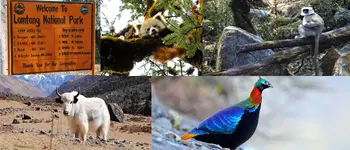
For wildlife lovers, Langtang is something of a hidden gem. The park shelters more than 45 mammal species and upward of 250 recorded bird species, making it one of the richest wildlife habitats in Nepal. The elusive red panda is a particular highlight, along with musk deer, Himalayan tahr, and the rarely glimpsed snow leopard. Birders can look forward to spotting the Himalayan monal Nepal's vividly colored national bird as well as the blood pheasant, golden eagle, and the striking lammergeier, or bearded vulture.
Choosing a Route
Langtang offers several route options depending on the time and experience level of the trekker. The classic Langtang Valley Trek, typically completed in seven to ten days, runs from Syabrubesi to Kyanjin Gompa and is well suited to first-time Himalayan trekkers with reasonable fitness. The Gosainkunda Trek, at five to seven days, focuses on the pilgrimage lakes and passes through beautiful rhododendron forest. Those wanting a cultural focus can opt for the Helambu Trek, which winds through traditional Hyolmo villages over five to eight days.More ambitious travelers sometimes combine the Langtang Valley and Gosainkunda routes into a twelve-to-fifteen-day journey, while the demanding Ganja La Pass Trek crossing a pass above 5,100 meters over two to nearly three weeks is reserved for well-prepared, high-altitude trekkers.
Permits and Practical Planning
Entry into the park requires a Langtang National Park permit, with fees varying by nationality foreign visitors currently pay more than SAARC nationals, while Nepali citizens and young children pay little to nothing. A Trekkers' Information Management System (TIMS) card is generally required as well, something most registered trekking agencies handle on a group's behalf.Current trekking regulations in Nepal generally require foreign visitors to hire a licensed guide for national park treks, including those in Langtang. Beyond meeting this requirement, a good guide adds real value — managing permits, navigating trail conditions, sharing insight into local culture and wildlife, and providing crucial support in the event of altitude-related issues.