

Save Mountain Treks
New Member
The Everest Base Camp trek is one of the most popular high-altitude trekking routes in Nepal. Every year, trekkers from around the world make their way through the Khumbu Valley toward the foot of Mount Everest.
But one question comes up frequently before the trip: Is trekking to Everest Base Camp actually safe?
The short answer is that EBC is a well-established trekking route and can be safely completed by properly prepared travelers. At the same time, it is not an ordinary hiking trail. You're spending several days at high altitude in a remote mountain environment, so understanding the potential challenges is essential.
1. The Main Challenge: High Altitude
Altitude is probably the biggest factor that separates the Everest Base Camp trek from a typical hiking holiday.
The trail gradually climbs from Lukla to Everest Base Camp at 5,364 meters (17,600 feet). As you gain elevation, the amount of oxygen available decreases, and your body needs time to adjust.
This is why a well-designed EBC itinerary includes acclimatization stops rather than trying to reach Base Camp as quickly as possible.
Some trekkers experience headaches, tiredness, nausea or difficulty sleeping as they gain altitude. These symptoms shouldn't simply be ignored. If they become more serious, continuing upward can make the situation worse.
A slower pace and appropriate rest days can make a significant difference.
2. The Khumbu Is a Remote Mountain Environment
Another factor to consider is where the trek takes place.
The Everest trail is popular and there are teahouses, shops, guides and other trekkers along the route. However, once you're deeper into the Khumbu, access to roads and full medical facilities becomes limited.
An injury or serious illness at higher elevations can't always be dealt with immediately.
Depending on the circumstances, a trekker may need to descend to a lower settlement or arrange an evacuation. This is one reason good travel insurance with high-altitude trekking and emergency evacuation coverage is so important.
The remoteness shouldn't discourage you from doing the trek. It simply means you need to plan for situations that you wouldn't normally consider on a regular hiking trip.
3. Weather Can Affect Your Trek
Conditions in the Himalayas can change quickly.
Snow, strong winds, low temperatures and poor visibility can affect the trail, particularly during winter and at higher elevations. Weather can also disrupt flights between Kathmandu and Lukla.
For that reason, it is wise to leave some room in your schedule rather than arranging everything down to the hour.
A spare day can be particularly useful if a flight is delayed or you need additional time because of weather or altitude.
What Are the Trails Like?
You don't need ropes, climbing skills or technical mountaineering equipment for the standard Everest Base Camp trek.
That doesn't mean the trail is easy.
Expect a mixture of rocky paths, steep climbs, long descents, suspension bridges and uneven ground. The final sections around Gorak Shep and Base Camp can be particularly demanding because you're already at a very high elevation.
Your legs may be capable of walking further, but your body doesn't necessarily respond the same way at 5,000 meters.
This is where maintaining a steady pace becomes important.
How Much Fitness Do You Need?
You don't need to be an elite athlete to trek to Everest Base Camp.
However, you should be comfortable walking for several hours on consecutive days.
Preparing beforehand with regular walking, hiking, stair climbing and cardiovascular exercise can help you handle the physical demands much better.
Strength is useful, but endurance is arguably more important. You're not preparing for one extremely difficult day, you're preparing to keep walking day after day while gradually gaining altitude.
What Can You Do to Make the Trek Safer?
A few simple precautions go a long way:
The Bottom Line:
Everest Base Camp trekking is not inherently unsafe, but it does require preparation and respect for the mountain environment.
The route is established, thousands of people trek it, and you don't need technical climbing experience. The real challenges come from the altitude, physical exertion, changing weather and limited access to medical facilities in the higher sections.
If you prepare properly, allow yourself enough time to acclimatize and know when to slow down or turn around, you can enjoy the trek without treating every challenge as an emergency.
And ultimately, reaching Everest Base Camp should never be more important than returning safely.
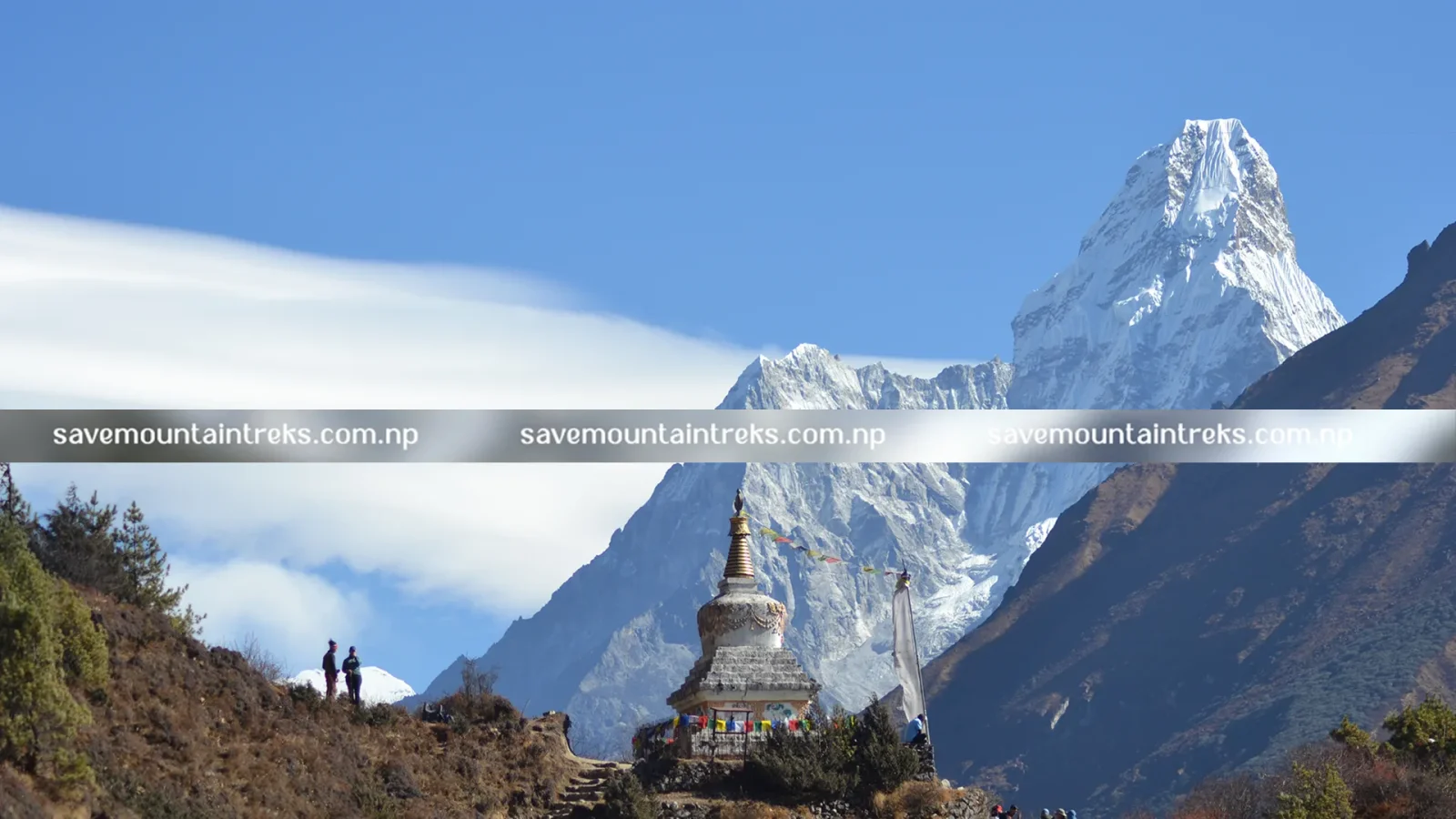
Photo by: Save Mountain Treks & Expeditions
But one question comes up frequently before the trip: Is trekking to Everest Base Camp actually safe?
The short answer is that EBC is a well-established trekking route and can be safely completed by properly prepared travelers. At the same time, it is not an ordinary hiking trail. You're spending several days at high altitude in a remote mountain environment, so understanding the potential challenges is essential.
1. The Main Challenge: High Altitude
Altitude is probably the biggest factor that separates the Everest Base Camp trek from a typical hiking holiday.
The trail gradually climbs from Lukla to Everest Base Camp at 5,364 meters (17,600 feet). As you gain elevation, the amount of oxygen available decreases, and your body needs time to adjust.
This is why a well-designed EBC itinerary includes acclimatization stops rather than trying to reach Base Camp as quickly as possible.
Some trekkers experience headaches, tiredness, nausea or difficulty sleeping as they gain altitude. These symptoms shouldn't simply be ignored. If they become more serious, continuing upward can make the situation worse.
A slower pace and appropriate rest days can make a significant difference.
2. The Khumbu Is a Remote Mountain Environment
Another factor to consider is where the trek takes place.
The Everest trail is popular and there are teahouses, shops, guides and other trekkers along the route. However, once you're deeper into the Khumbu, access to roads and full medical facilities becomes limited.
An injury or serious illness at higher elevations can't always be dealt with immediately.
Depending on the circumstances, a trekker may need to descend to a lower settlement or arrange an evacuation. This is one reason good travel insurance with high-altitude trekking and emergency evacuation coverage is so important.
The remoteness shouldn't discourage you from doing the trek. It simply means you need to plan for situations that you wouldn't normally consider on a regular hiking trip.
3. Weather Can Affect Your Trek
Conditions in the Himalayas can change quickly.
Snow, strong winds, low temperatures and poor visibility can affect the trail, particularly during winter and at higher elevations. Weather can also disrupt flights between Kathmandu and Lukla.
For that reason, it is wise to leave some room in your schedule rather than arranging everything down to the hour.
A spare day can be particularly useful if a flight is delayed or you need additional time because of weather or altitude.
What Are the Trails Like?
You don't need ropes, climbing skills or technical mountaineering equipment for the standard Everest Base Camp trek.
That doesn't mean the trail is easy.
Expect a mixture of rocky paths, steep climbs, long descents, suspension bridges and uneven ground. The final sections around Gorak Shep and Base Camp can be particularly demanding because you're already at a very high elevation.
Your legs may be capable of walking further, but your body doesn't necessarily respond the same way at 5,000 meters.
This is where maintaining a steady pace becomes important.
How Much Fitness Do You Need?
You don't need to be an elite athlete to trek to Everest Base Camp.
However, you should be comfortable walking for several hours on consecutive days.
Preparing beforehand with regular walking, hiking, stair climbing and cardiovascular exercise can help you handle the physical demands much better.
Strength is useful, but endurance is arguably more important. You're not preparing for one extremely difficult day, you're preparing to keep walking day after day while gradually gaining altitude.
What Can You Do to Make the Trek Safer?
A few simple precautions go a long way:
- Choose an itinerary that allows adequate acclimatization.
- Train before arriving in Nepal.
- Stay hydrated and eat regularly.
- Dress appropriately for changing temperatures.
- Don't ignore unusual or worsening symptoms.
- Follow your guide's advice about altitude and weather.
- Carry travel insurance that includes high-altitude trekking and evacuation.
- Keep some flexibility in your itinerary for weather and transportation delays.
The Bottom Line:
Everest Base Camp trekking is not inherently unsafe, but it does require preparation and respect for the mountain environment.
The route is established, thousands of people trek it, and you don't need technical climbing experience. The real challenges come from the altitude, physical exertion, changing weather and limited access to medical facilities in the higher sections.
If you prepare properly, allow yourself enough time to acclimatize and know when to slow down or turn around, you can enjoy the trek without treating every challenge as an emergency.
And ultimately, reaching Everest Base Camp should never be more important than returning safely.
Photo by: Save Mountain Treks & Expeditions