
forum4travel

Sagarmatha Base Camp Trek 2026: The Best 14-Day Guide to Conquering Everest's Footsteps
Standing at 5,364 meters (17,598 feet) beside the Khumbu Glacier, gazing up at the icefall that every Everest summiteer must conquer — this is the Sagarmatha Base Camp trek, the most iconic Himalayan adventure on Earth. Whether you call it Everest Base Camp or Sagarmatha Base Camp (Sagarmatha being the Nepali name for Everest), this 14-day journey through Nepal's Khumbu region delivers unmatched mountain panoramas, immersive Sherpa culture, and a physical challenge that transforms every trekker who completes it.
In this comprehensive guide, we break down everything you need to know: the complete day-by-day itinerary, real 2026 costs and permit fees, acclimatization strategies that keep you safe above 5,000 meters, packing essentials, and insider tips from guides who've led hundreds of trekkers to base camp. If you're searching for the most authoritative resource on the Sagarmatha Base Camp trek in 2026, you've found it.
Plan My Nepal Trip →

The Sagarmatha Base Camp trek — internationally known as the Everest Base Camp (EBC) trek — is a legendary 14-day high-altitude trekking route in Nepal's Solukhumbu District. The trail begins with a thrilling flight to Lukla's Tenzing-Hillary Airport (2,860 m), one of the world's most dramatic mountain airstrips, and ascends through the UNESCO-listed Sagarmatha National Park to reach the base of Mount Everest at 5,364 meters.
"Sagarmatha" is the official Nepali name for Mount Everest, derived from Sanskrit meaning "Forehead of the Sky." The trek weaves through the Khumbu region, the ancestral homeland of the Sherpa people, passing through iconic villages like Namche Bazaar (the Sherpa capital), Tengboche (home to the region's largest monastery), Dingboche, and Lobuche before the final push to base camp via Gorak Shep.
Importantly, Mount Everest itself is NOT visible from Base Camp — the ridgelines of Nuptse and Lhotse block the view. For the iconic panoramic shot of Everest, trekkers ascend Kala Patthar (5,545 m / 18,192 ft) at dawn, where the sunrise paints the world's highest peak in golden light. This makes Kala Patthar a non-negotiable part of any Sagarmatha Base Camp trek itinerary.
For more details on the official trekking route and peak information, visit the Nepal Himal Peak Profile — the government's official mountaineering and trekking resource.
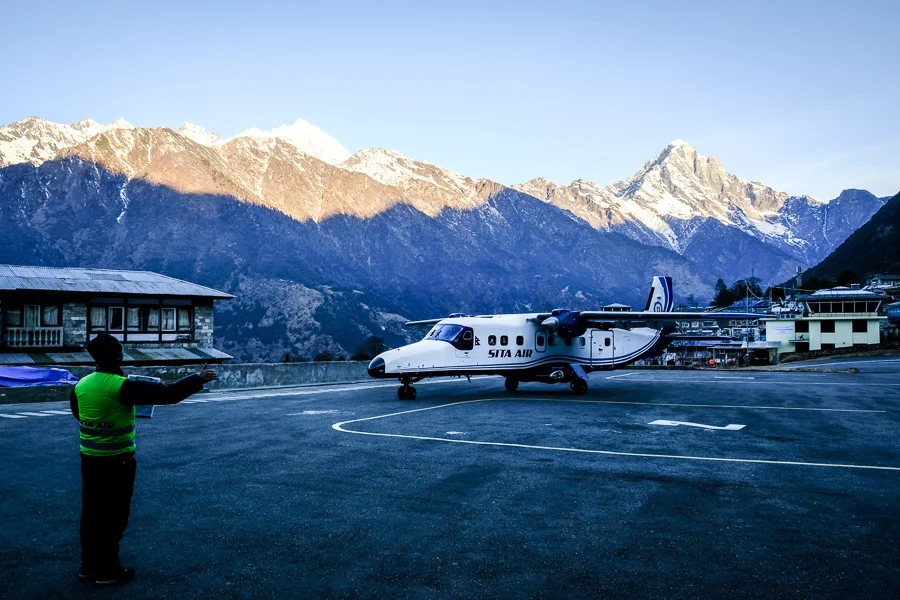
Small aircraft landed at Lukla Airport, the gateway to Everest Base Camp, surrounded by the majestic Himalayan mountains.
Your adventure begins with a 25–40 minute scenic flight to Lukla's Tenzing-Hillary Airport (2,860 m). The runway is just 527 meters long and slopes uphill at 11.7 degrees — landing here is an adrenaline rush that sets the tone for the entire trek. During peak seasons (March–May, September–November), flights may operate from Manthali (Ramechhap) instead, requiring a 4-hour night drive from Kathmandu.
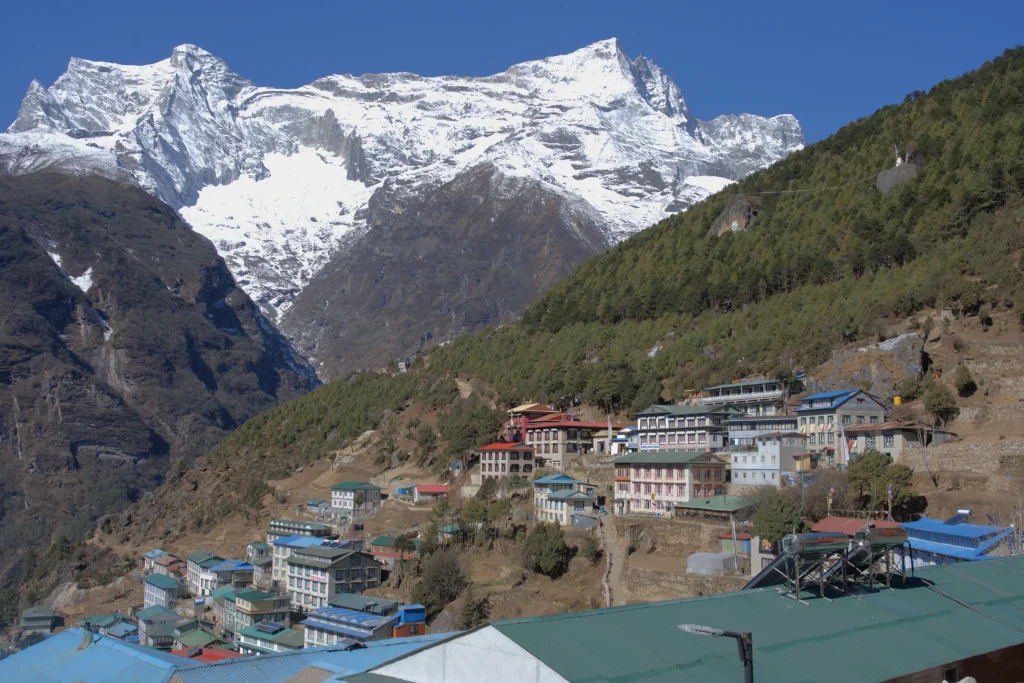
View from namche bazar during everest base camp
Built like a natural amphitheatre into the mountainside, Namche Bazaar is the largest town in the Khumbu and your first major acclimatization stop. Colorful markets, bakeries serving apple pie, gear shops, and prayer wheels at every corner make this a vibrant cultural hub. The hike up from Phakding crosses the famous Hillary Suspension Bridge draped in prayer flags — one of the most photographed sections of the entire trail.
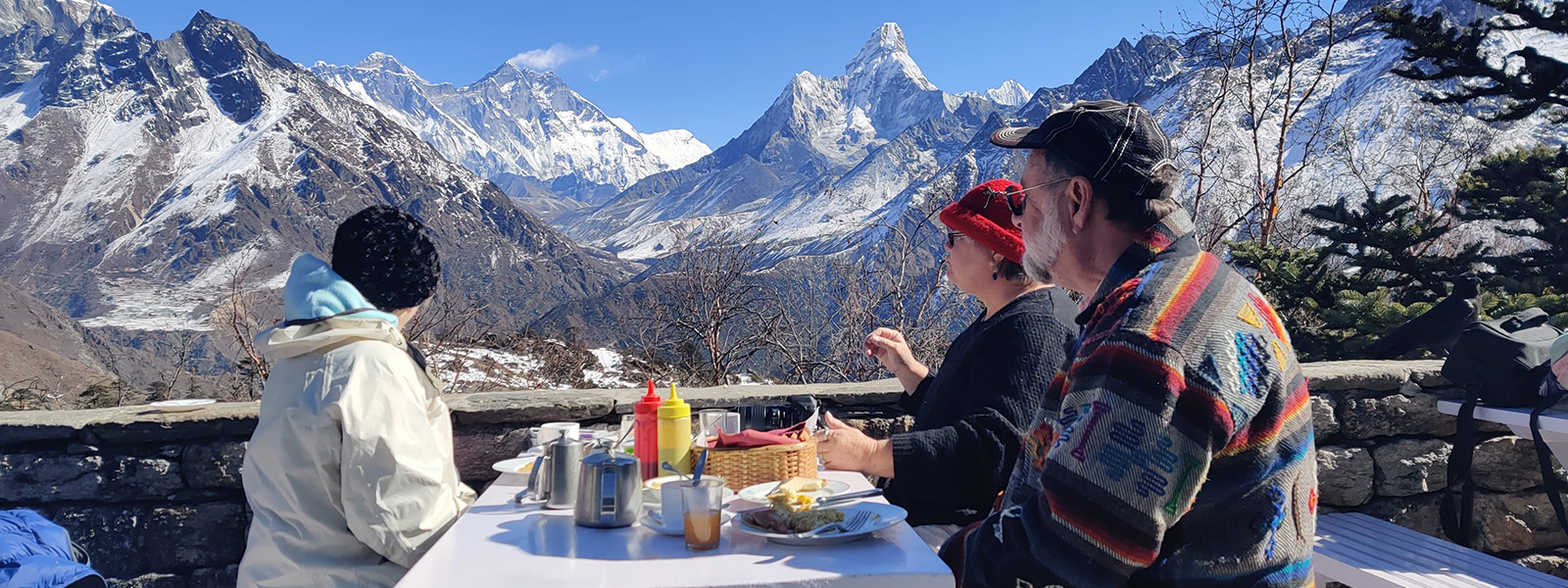
Enjoying a luxury breakfast with panoramic Himalayan views, one of the unique experiences more than trekking in Everest region.
About halfway up the climb to Namche, near a small ridge called Top Danda, a clearing reveals the first glimpse of Mount Everest peeking out behind Lhotse and Nuptse on a clear day. It's a humbling moment — the mountain is still days away, but you can finally see your destination.
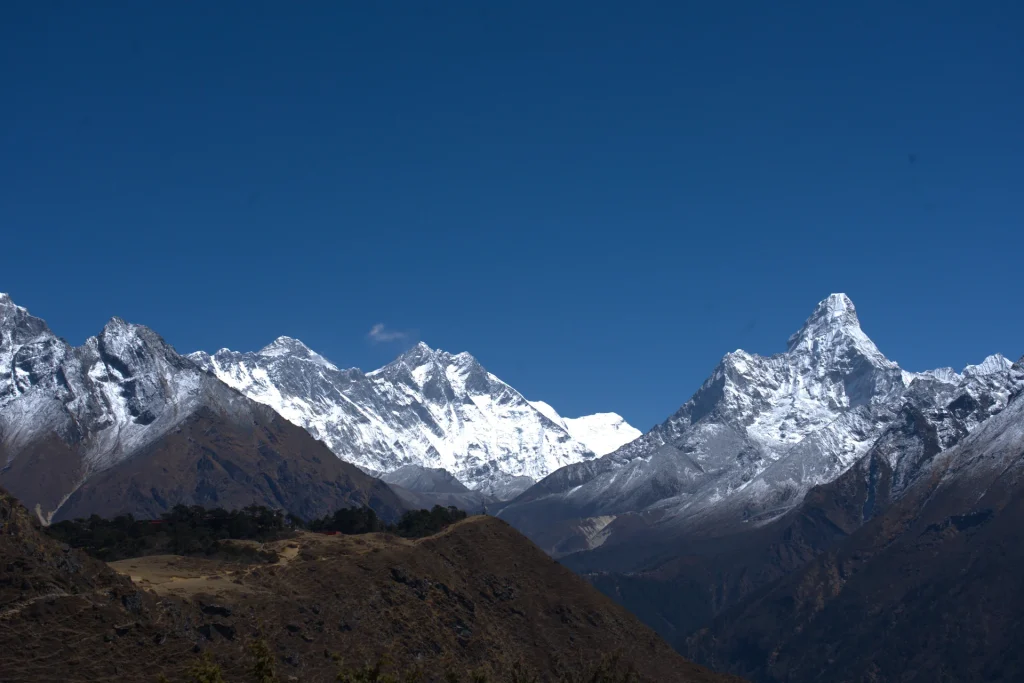
Tengboche Monastery with the iconic Ama Dablam (6,812 m) perfectly framed behind — the spiritual heart of the Khumbu.
At 3,860 meters, the Tengboche Monastery is the largest and most significant Buddhist monastery in the Khumbu region. Founded in 1916 and rebuilt after fire and earthquake damage, it sits on a wide saddle with Ama Dablam (6,812 m) framed perfectly behind it. If timing aligns (usually around 3:00 PM), visitors can witness the monks' afternoon puja — a deeply moving experience of chanting, long copper horns, and flickering butter lamps.
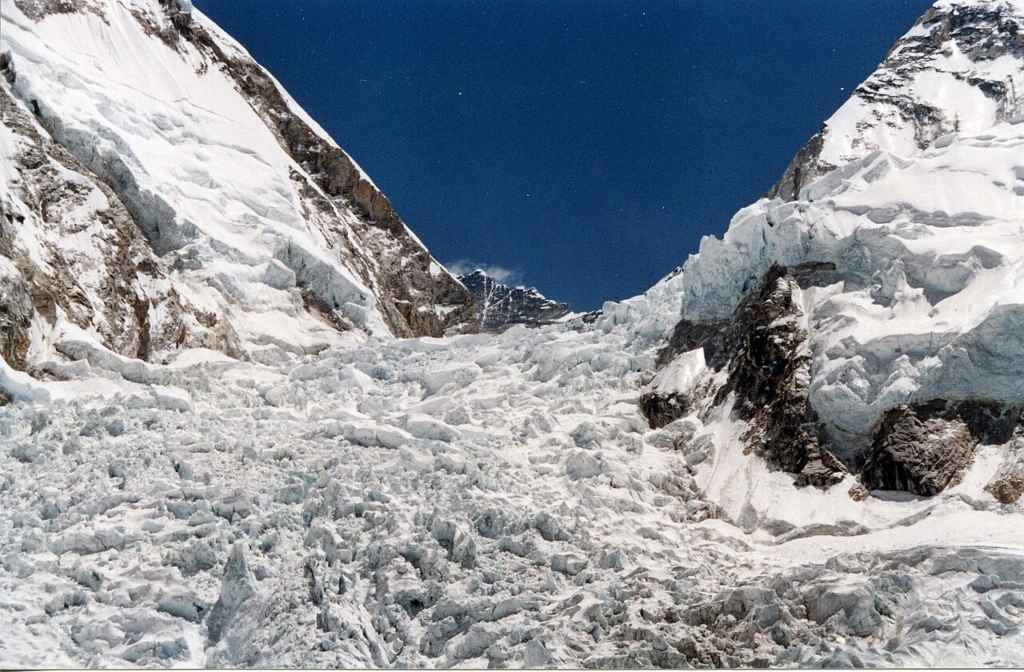
Khumbu glacier
Between Lobuche and Gorak Shep, the trail traces the edge of the Khumbu Glacier — one of the highest glaciers in the world. On quiet mornings, you can actually hear the ice shifting beneath the moraine. This section feels otherworldly, with Pumori, Lingtren, and Nuptse towering on all sides.
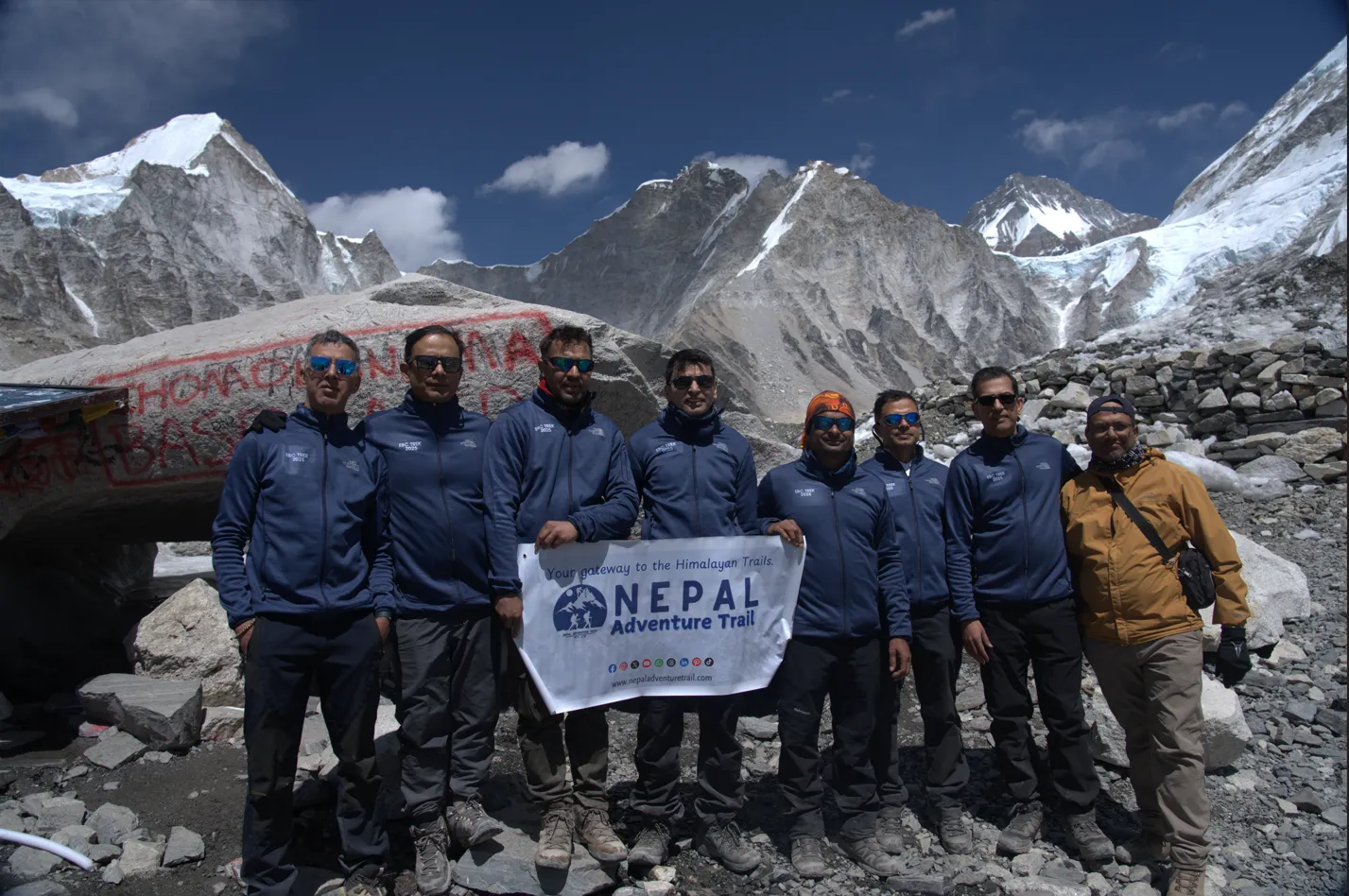
Sagarmatha (Everest) Base Camp
After 8–9 days of trekking, you reach the wide, rocky basin of Everest Base Camp, marked by prayer flags and the famous painted boulder. In expedition season (April–May), you'll see colorful summit teams' tents against the ice, with the Khumbu Icefall rising directly behind. Outside expedition season, the silence is equally powerful. You're standing where every Everest summit climb begins.

The legendary Kala Patthar sunrise — golden light washing over Mount Everest, the most iconic moment of the entire trek.
An early morning ascent to Kala Patthar (5,545 m) rewards you with the most iconic panoramic view of the Himalayas. At sunrise, golden light washes over Everest, Nuptse, and Changtse aligned across the horizon. This is the photo that defines the Sagarmatha Base Camp trek — and the moment most trekkers say changed them forever.
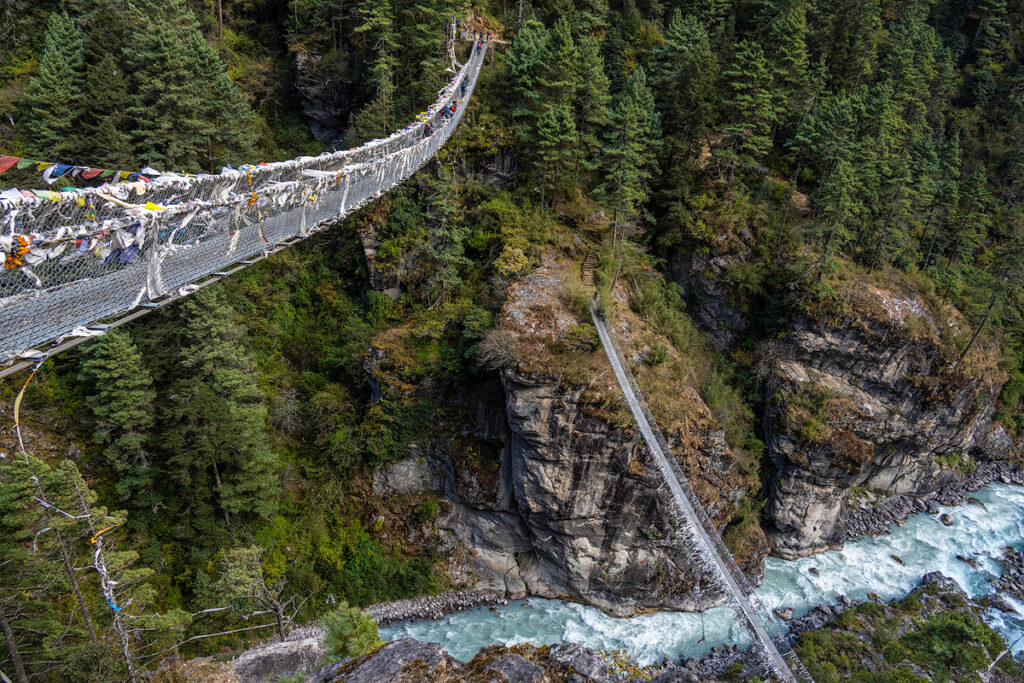
The high suspension bridges over the Dudh Koshi River between Phakding and Namche — strung with hundreds of prayer flags, swaying gently above the roaring gorge — are among the trek's most thrilling and photogenic sections. The tallest of these, the Hillary Bridge, is a rite of passage for every EBC trekker.
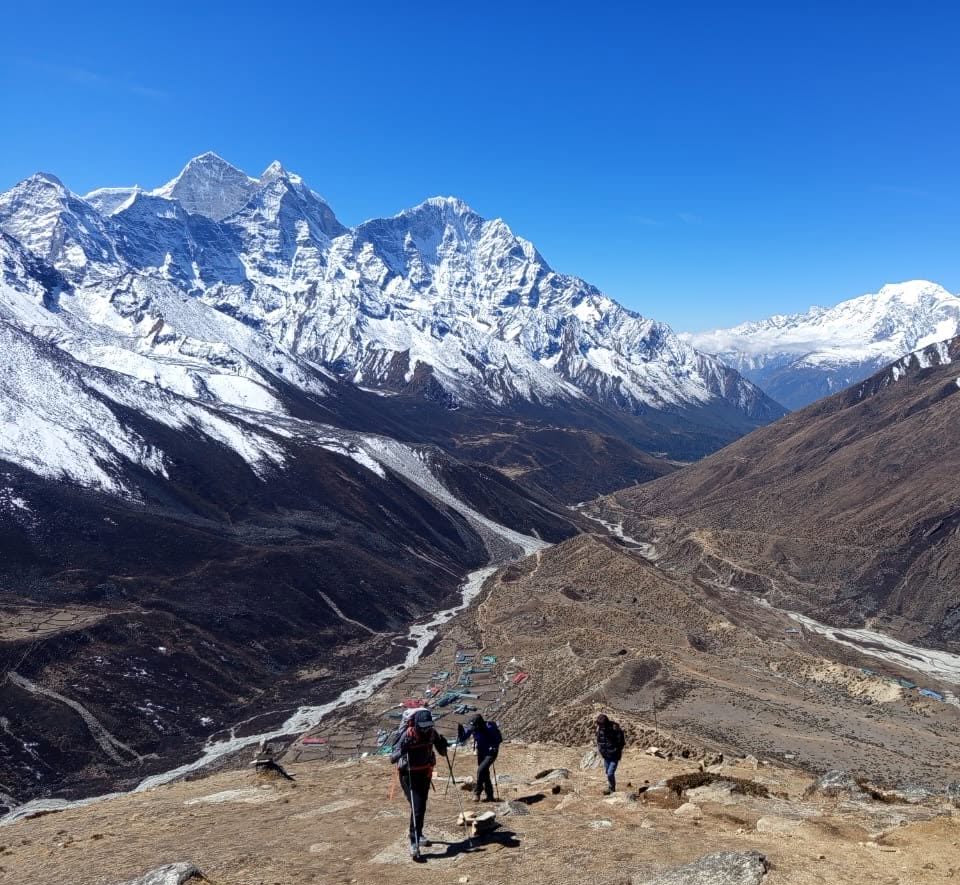
From Dingboche, the acclimatization hike to Nangkartshang Peak offers a 360-degree view of Ama Dablam, Lhotse, Lhotse Shar, Makalu, Cholatse, Taboche, Island Peak, and the Imja Valley. At 5,083 meters, it's the highest point before base camp and a critical lung- and leg-building day.
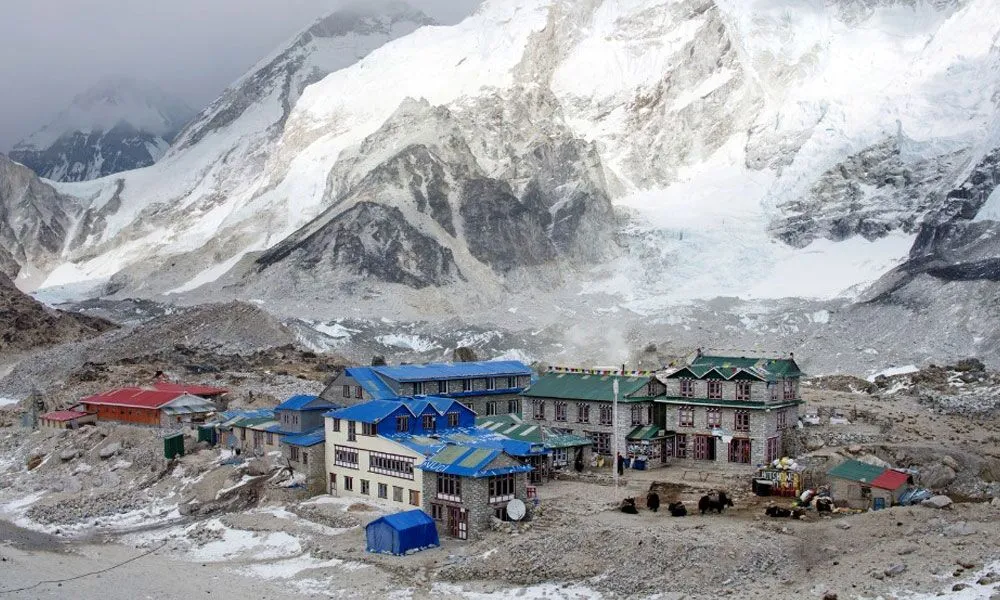
A breathtaking view of Gorakshep, the last settlement before Everest Base Camp, with icy Himalayan giants all around.
From the first night in Phakding to the final descent through Namche, you'll experience genuine Sherpa hospitality in family-run teahouses. Dal Bhat (rice, lentil soup, vegetables) is the staple — and it's what guides eat at altitude because it's balanced, filling, and refillable. Evenings around the wood stove, playing cards with your guide and sharing stories, become some of the most cherished memories.
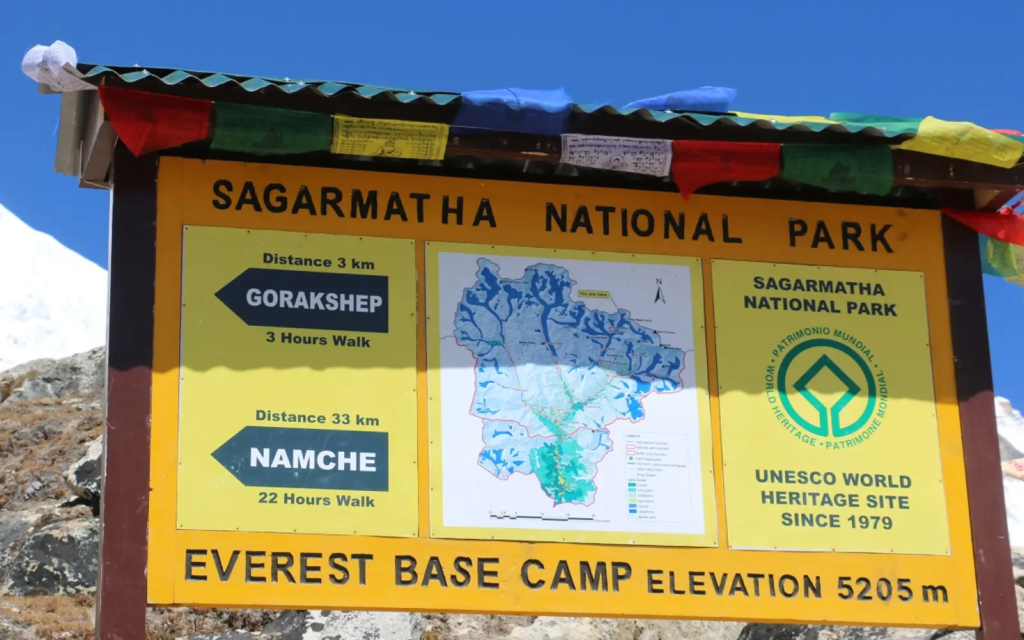
The entire trek from Monjo to base camp lies within Sagarmatha National Park, a UNESCO World Heritage Site protecting rare wildlife including the snow leopard, Himalayan tahr, and musk deer. The park's pristine forests of pine, rhododendron, and birch give way to alpine desert above 4,000 meters — a dramatic ecological transition. Learn more about this protected area on the UNESCO World Heritage Site listing.
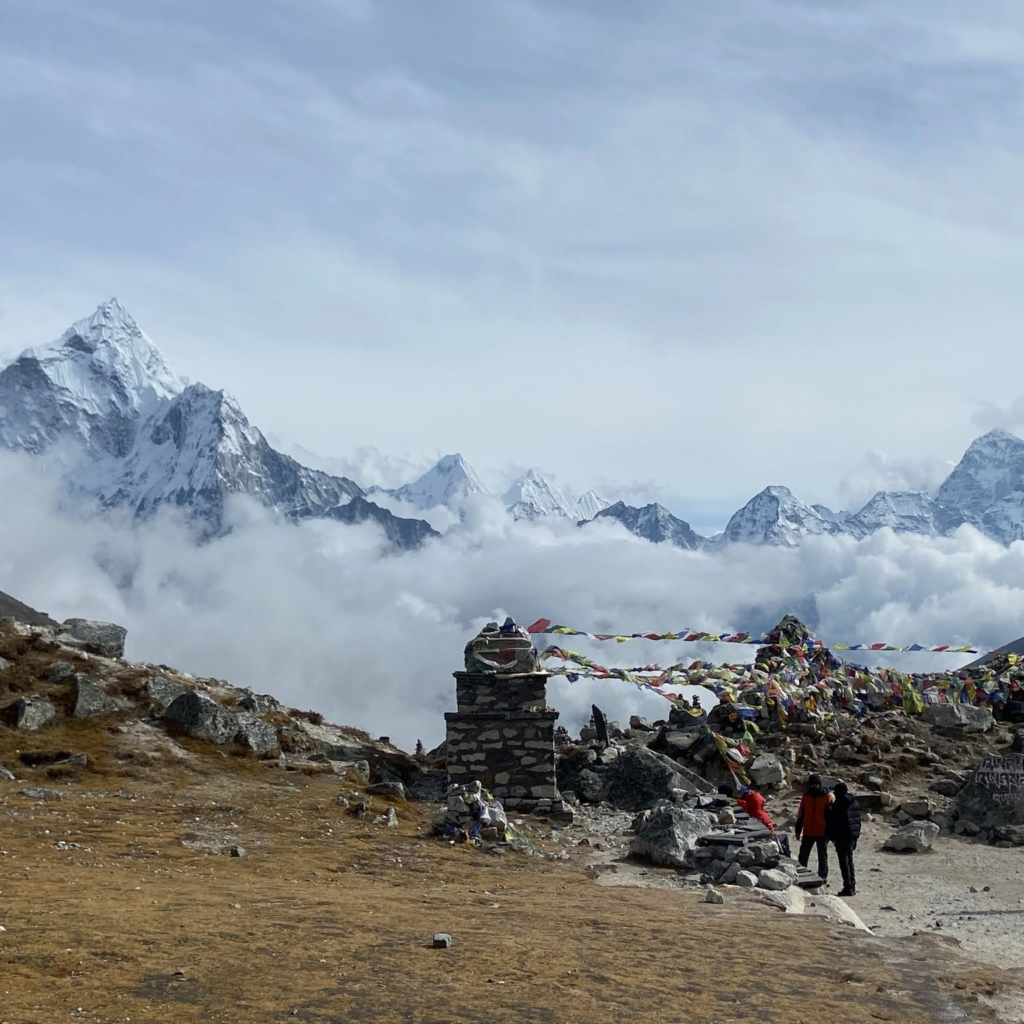
The climb from Thukla (4,620 m) to the Thukla Pass features memorial chortens and stone plaques honoring climbers who lost their lives on Everest and surrounding peaks. It's a sobering reminder of the mountain's power and a moment of reflection before the final push to base camp.
Start Planning Your Trip — Inquire Now →
Overnight: Kathmandu hotel | Meals: Not included
Trek: 3–4 hours | Distance: 6.2 km / 3.8 miles | Overnight: Phakding teahouse | Meals: B, L, D
Trek: 5–6 hours | Distance: 7.4 km / 4.6 miles | Elevation Gain: ~830 m | Overnight: Namche Bazaar | Meals: B, L, D
Trek: 6–7 hours | Overnight: Namche Bazaar | Meals: B, L, D
Trek: 5–6 hours | Distance: 9.2 km / 5.7 miles | Overnight: Tengboche | Meals: B, L, D
Trek: 6–7 hours | Distance: 12 km / 7.45 miles | Overnight: Dingboche | Meals: B, L, D
Trek: 6 hours | Overnight: Dingboche | Meals: B, L, D
Trek: 4–5 hours | Distance: 8.5 km / 5.2 miles | Overnight: Lobuche | Meals: B, L, D
Trek: 6–7 hours | Distance: ~8 km total | Overnight: Gorak Shep | Meals: B, L, D
Trek: 7–8 hours | Distance: ~19.6 km | Overnight: Pheriche | Meals: B, L, D
Trek: 6–7 hours | Overnight: Namche Bazaar | Meals: B, L, D
Trek: 6–7 hours | Overnight: Lukla | Meals: B, L, D
Flight: 25–40 minutes | Overnight: Kathmandu | Meals: Breakfast
Meals: Breakfast
Note: The TIMS card is no longer required for the Everest region — it's been replaced by the Khumbu Pasang Lhamu permit. For the most current permit information, check the official Everest Base Camp permit guide.
Hiring local staff is highly recommended for first-time trekkers. Guides provide critical altitude monitoring (carrying pulse oximeters), emergency support, and cultural interpretation. Porters carry up to 15–20 kg, allowing you to trek with just a daypack.
Prices scale upward with altitude because all supplies are transported by porters or yak trains. A Dal Bhat meal costs roughly $6–$8 in Namche but $10–$15 in Gorak Shep.
Pro Tip: Budget an extra $200–$300 for contingency days. Lukla flights are weather-dependent and can be delayed 1–3 days even in peak season. If your international flight home is scheduled immediately after the trek, you're taking a real risk.
Key training tip: Train in the boots you'll trek in. Blisters at 4,000 meters are miserable and avoidable.
Insurance is non-negotiable. Your policy MUST cover helicopter evacuation above 5,000 meters. Standard travel insurance often excludes high-altitude rescue — verify this specifically before you book.
Yes, it's demanding. Yes, the altitude is real. And yes, the Lukla flight might test your nerves. But the teahouse camaraderie, the prayer flags snapping in the wind at 5,000 meters, the golden sunrise over Everest from Kala Patthar, and the quiet pride of completing one of Earth's greatest treks — these are the reasons 40,000+ trekkers attempt this route every year.
Train well. Pack smart. Hire a reputable guide. Respect the mountain. And when you stand at Sagarmatha Base Camp, looking up at the Khumbu Icefall with prayer flags fluttering around you, you'll understand why this trek is called legendary.
Ready to book your Sagarmatha Base Camp trek? Start by choosing your season, booking your flights to Kathmandu, and selecting a licensed trekking operator with proven safety records. The Himalayas are waiting.
Start Planning Your Trip — Inquire Now →
Disclosure: This post contains affiliate links to recommended trekking operators and gear. We only recommend services and products we have personally tested or that come highly recommended by our network of professional guides. Your support helps us maintain this free resource.
Standing at 5,364 meters (17,598 feet) beside the Khumbu Glacier, gazing up at the icefall that every Everest summiteer must conquer — this is the Sagarmatha Base Camp trek, the most iconic Himalayan adventure on Earth. Whether you call it Everest Base Camp or Sagarmatha Base Camp (Sagarmatha being the Nepali name for Everest), this 14-day journey through Nepal's Khumbu region delivers unmatched mountain panoramas, immersive Sherpa culture, and a physical challenge that transforms every trekker who completes it.
In this comprehensive guide, we break down everything you need to know: the complete day-by-day itinerary, real 2026 costs and permit fees, acclimatization strategies that keep you safe above 5,000 meters, packing essentials, and insider tips from guides who've led hundreds of trekkers to base camp. If you're searching for the most authoritative resource on the Sagarmatha Base Camp trek in 2026, you've found it.
Plan My Nepal Trip →
Table of Contents
- What Is the Sagarmatha Base Camp Trek?
- 12 Unmissable Highlights of the EBC Trek
- Complete 14-Day Sagarmatha Base Camp Trek Itinerary
- Sagarmatha Base Camp Trek Cost & Budget Breakdown (2026)
- Permits & Regulations for Sagarmatha National Park
- Best Time to Trek: Weather & Season Guide
- Difficulty Level, Fitness & Training Requirements
- Altitude Sickness Prevention & Acclimatization Strategy
- Complete Packing List for EBC Trek
- Safety Tips, Insurance & Emergency Protocols
- Frequently Asked Questions (FAQ)
What Is the Sagarmatha Base Camp Trek?
The Sagarmatha Base Camp trek — internationally known as the Everest Base Camp (EBC) trek — is a legendary 14-day high-altitude trekking route in Nepal's Solukhumbu District. The trail begins with a thrilling flight to Lukla's Tenzing-Hillary Airport (2,860 m), one of the world's most dramatic mountain airstrips, and ascends through the UNESCO-listed Sagarmatha National Park to reach the base of Mount Everest at 5,364 meters.
"Sagarmatha" is the official Nepali name for Mount Everest, derived from Sanskrit meaning "Forehead of the Sky." The trek weaves through the Khumbu region, the ancestral homeland of the Sherpa people, passing through iconic villages like Namche Bazaar (the Sherpa capital), Tengboche (home to the region's largest monastery), Dingboche, and Lobuche before the final push to base camp via Gorak Shep.
Importantly, Mount Everest itself is NOT visible from Base Camp — the ridgelines of Nuptse and Lhotse block the view. For the iconic panoramic shot of Everest, trekkers ascend Kala Patthar (5,545 m / 18,192 ft) at dawn, where the sunrise paints the world's highest peak in golden light. This makes Kala Patthar a non-negotiable part of any Sagarmatha Base Camp trek itinerary.
For more details on the official trekking route and peak information, visit the Nepal Himal Peak Profile — the government's official mountaineering and trekking resource.
Key Facts at a Glance
| Duration | 14 Days (12 trekking + 2 in Kathmandu) |
| Max Altitude | 5,545 m (Kala Patthar) / 5,364 m (Base Camp) |
| Trek Distance | ~130 km (80 miles) round trip |
| Difficulty | Strenuous (no technical climbing required) |
| Best Seasons | March–May (Spring) & September–November (Autumn) |
| Permits Required | Sagarmatha NP Entry + Khumbu Pasang Lhamu Permit |
| Accommodation | Teahouse (lodge-to-lodge) |
| Region | Khumbu / Solukhumbu, Nepal |
12 Unmissable Highlights of the Sagarmatha Base Camp Trek
Every day on the Sagarmatha Base Camp trek delivers something extraordinary. Here are the 12 moments that make this trek a once-in-a-lifetime experience:1. The Lukla Flight — Gateway to the Himalayas
Small aircraft landed at Lukla Airport, the gateway to Everest Base Camp, surrounded by the majestic Himalayan mountains.
Your adventure begins with a 25–40 minute scenic flight to Lukla's Tenzing-Hillary Airport (2,860 m). The runway is just 527 meters long and slopes uphill at 11.7 degrees — landing here is an adrenaline rush that sets the tone for the entire trek. During peak seasons (March–May, September–November), flights may operate from Manthali (Ramechhap) instead, requiring a 4-hour night drive from Kathmandu.
2. Namche Bazaar — The Sherpa Capital at 3,440 m
View from namche bazar during everest base camp
Built like a natural amphitheatre into the mountainside, Namche Bazaar is the largest town in the Khumbu and your first major acclimatization stop. Colorful markets, bakeries serving apple pie, gear shops, and prayer wheels at every corner make this a vibrant cultural hub. The hike up from Phakding crosses the famous Hillary Suspension Bridge draped in prayer flags — one of the most photographed sections of the entire trail.
3. First View of Everest from Top Danda
Enjoying a luxury breakfast with panoramic Himalayan views, one of the unique experiences more than trekking in Everest region.
About halfway up the climb to Namche, near a small ridge called Top Danda, a clearing reveals the first glimpse of Mount Everest peeking out behind Lhotse and Nuptse on a clear day. It's a humbling moment — the mountain is still days away, but you can finally see your destination.
4. Tengboche Monastery — Spiritual Heart of the Khumbu
Tengboche Monastery with the iconic Ama Dablam (6,812 m) perfectly framed behind — the spiritual heart of the Khumbu.
At 3,860 meters, the Tengboche Monastery is the largest and most significant Buddhist monastery in the Khumbu region. Founded in 1916 and rebuilt after fire and earthquake damage, it sits on a wide saddle with Ama Dablam (6,812 m) framed perfectly behind it. If timing aligns (usually around 3:00 PM), visitors can witness the monks' afternoon puja — a deeply moving experience of chanting, long copper horns, and flickering butter lamps.
5. The Khumbu Glacier Moraine Walk
Khumbu glacier
Between Lobuche and Gorak Shep, the trail traces the edge of the Khumbu Glacier — one of the highest glaciers in the world. On quiet mornings, you can actually hear the ice shifting beneath the moraine. This section feels otherworldly, with Pumori, Lingtren, and Nuptse towering on all sides.
6. Standing at Sagarmatha Base Camp (5,364 m)
Sagarmatha (Everest) Base Camp
After 8–9 days of trekking, you reach the wide, rocky basin of Everest Base Camp, marked by prayer flags and the famous painted boulder. In expedition season (April–May), you'll see colorful summit teams' tents against the ice, with the Khumbu Icefall rising directly behind. Outside expedition season, the silence is equally powerful. You're standing where every Everest summit climb begins.
7. Kala Patthar Sunrise — The Best View of Everest
The legendary Kala Patthar sunrise — golden light washing over Mount Everest, the most iconic moment of the entire trek.
An early morning ascent to Kala Patthar (5,545 m) rewards you with the most iconic panoramic view of the Himalayas. At sunrise, golden light washes over Everest, Nuptse, and Changtse aligned across the horizon. This is the photo that defines the Sagarmatha Base Camp trek — and the moment most trekkers say changed them forever.
8. The Hillary Suspension Bridges
The high suspension bridges over the Dudh Koshi River between Phakding and Namche — strung with hundreds of prayer flags, swaying gently above the roaring gorge — are among the trek's most thrilling and photogenic sections. The tallest of these, the Hillary Bridge, is a rite of passage for every EBC trekker.
9. Nangkartshang Peak Acclimatization Hike (5,083 m)
From Dingboche, the acclimatization hike to Nangkartshang Peak offers a 360-degree view of Ama Dablam, Lhotse, Lhotse Shar, Makalu, Cholatse, Taboche, Island Peak, and the Imja Valley. At 5,083 meters, it's the highest point before base camp and a critical lung- and leg-building day.
10. Authentic Sherpa Culture & Teahouse Hospitality
A breathtaking view of Gorakshep, the last settlement before Everest Base Camp, with icy Himalayan giants all around.
From the first night in Phakding to the final descent through Namche, you'll experience genuine Sherpa hospitality in family-run teahouses. Dal Bhat (rice, lentil soup, vegetables) is the staple — and it's what guides eat at altitude because it's balanced, filling, and refillable. Evenings around the wood stove, playing cards with your guide and sharing stories, become some of the most cherished memories.
11. Sagarmatha National Park — A UNESCO World Heritage Site
The entire trek from Monjo to base camp lies within Sagarmatha National Park, a UNESCO World Heritage Site protecting rare wildlife including the snow leopard, Himalayan tahr, and musk deer. The park's pristine forests of pine, rhododendron, and birch give way to alpine desert above 4,000 meters — a dramatic ecological transition. Learn more about this protected area on the UNESCO World Heritage Site listing.
12. The Thukla Pass Memorials
The climb from Thukla (4,620 m) to the Thukla Pass features memorial chortens and stone plaques honoring climbers who lost their lives on Everest and surrounding peaks. It's a sobering reminder of the mountain's power and a moment of reflection before the final push to base camp.
Start Planning Your Trip — Inquire Now →
Complete 14-Day Sagarmatha Base Camp Trek Itinerary
This is the standard, guide-recommended 14-day itinerary used by professional trekking companies. It includes two critical acclimatization days — one in Namche Bazaar and one in Dingboche — which are non-negotiable for safe altitude adaptation. Rushing these rest days is the single biggest reason EBC treks fail.Day 1: Arrival in Kathmandu (1,400 m)
Land at Tribhuvan International Airport and transfer to your hotel in Thamel. The rest of the day is yours to explore, grab your first plate of momos, and pick up any last-minute gear. In the evening, attend your pre-trek briefing — meet your guide, review the day-by-day itinerary, do a gear check, and ask every question you have.Overnight: Kathmandu hotel | Meals: Not included
Day 2: Fly to Lukla (2,860 m) → Trek to Phakding (2,610 m)
The legendary Lukla flight departs early morning (weather-dependent). From Lukla, the trail descends gently through pine forests and scattered Sherpa villages, following the Dudh Koshi River. Pass chortens, mani walls, and prayer flags before reaching Phakding — a peaceful riverside village surrounded by greenery.Trek: 3–4 hours | Distance: 6.2 km / 3.8 miles | Overnight: Phakding teahouse | Meals: B, L, D
Day 3: Phakding → Namche Bazaar (3,440 m)
One of the longest, steeper days. Cross five high suspension bridges over the Dudh Koshi, including the famous Hillary Bridge. Enter Sagarmatha National Park at Monjo (permits checked here). The final 3-hour push to Namche is a relentless uphill through pine and rhododendron forest — but your first glimpse of Everest from Top Danda makes every step worth it.Trek: 5–6 hours | Distance: 7.4 km / 4.6 miles | Elevation Gain: ~830 m | Overnight: Namche Bazaar | Meals: B, L, D
Day 4: Acclimatization Day in Namche Bazaar (3,440 m)
Climb high, sleep low. Your guide leads a slow hike to the Everest View Hotel (3,880 m) for your first proper sit-down view of Everest, Lhotse, and Ama Dablam. Loop through Khunde and Khumjung to visit the Hillary School and the Khumjung Monastery's famous Yeti skull. Hydration is critical today — aim for 3–4 liters of water.Trek: 6–7 hours | Overnight: Namche Bazaar | Meals: B, L, D
Day 5: Namche → Tengboche (3,860 m)
The Khumbu skyline opens up. Traverse a gentle ridge with panoramic views of Ama Dablam, Everest, Lhotse, Nuptse, Thamserku, and Kangtega. Descend to Phunki Thanga for lunch, then climb 600 m of switchbacks to Tengboche Monastery — the spiritual heart of the Khumbu, with Ama Dablam perfectly framed behind it.Trek: 5–6 hours | Distance: 9.2 km / 5.7 miles | Overnight: Tengboche | Meals: B, L, D
Day 6: Tengboche → Dingboche (4,410 m)
Above the tree line for the first time. Pass through Pangboche, then follow the Imja Khola valley with Lhotse rising ahead. The landscape shifts from forest trail to high Himalayan desert. Dingboche sits in a wide, wind-protected bowl with Island Peak (6,189 m) at the far end of the valley.Trek: 6–7 hours | Distance: 12 km / 7.45 miles | Overnight: Dingboche | Meals: B, L, D
Day 7: Acclimatization Day in Dingboche (4,410 m)
The hardest acclimatization hike of the trek: Nangkartshang Peak (5,083 m). The "Khumbu shuffle" — 30 steps, breathe, 30 more — is the only pace that works above 4,500 m. From the summit, a 360° panorama reveals Makalu (world's 5th highest), Lhotse, Lhotse Shar, Island Peak, Cholatse, Taboche, and the Imja Valley.Trek: 6 hours | Overnight: Dingboche | Meals: B, L, D
Day 8: Dingboche → Lobuche (4,940 m)
Short on distance but long on altitude. Trace the Khumbu Glacier moraine with views of Lobuche East and Cholatse. Lunch at Thukla, then tackle the Thukla Pass climb — 200 m of steep switchbacks up the moraine wall, passing memorial chortens for fallen climbers.Trek: 4–5 hours | Distance: 8.5 km / 5.2 miles | Overnight: Lobuche | Meals: B, L, D
Day 9: Lobuche → Gorak Shep (5,164 m) → Kala Patthar (5,545 m)
Trek to Gorak Shep (3 hours, 4.5 km), the last settlement before base camp. After lunch and a brief rest, ascend Kala Patthar (5,545 m) for sunset or late-afternoon views. Your guide reads the cloud patterns and times the ascent for the sharpest photos. From the summit: Everest, Nuptse, and Changtse aligned across the horizon.Trek: 6–7 hours | Distance: ~8 km total | Overnight: Gorak Shep | Meals: B, L, D
Day 10: Gorak Shep → Sagarmatha Base Camp (5,364 m) → Pheriche (4,240 m)
The day you've trained for. After an early breakfast, hike along the western edge of the Khumbu Glacier to Everest Base Camp (5,364 m). The 6.5 km round trip takes 4–5 hours across rocky glacial debris, with Pumori, Lingtren, Khumbutse, and Nuptse towering above. Stand beside the prayer-flag-draped boulder, take it all in, then descend to Pheriche for the night.Trek: 7–8 hours | Distance: ~19.6 km | Overnight: Pheriche | Meals: B, L, D
Day 11: Pheriche → Namche Bazaar (3,440 m)
Retrace your steps through Tengboche and the Dudh Koshi valley. The descent is faster but harder on the knees — trekking poles are essential. Celebrate your return to Namche with a hot shower, bakery apple pie, and a well-earned rest.Trek: 6–7 hours | Overnight: Namche Bazaar | Meals: B, L, D
Day 12: Namche → Lukla (2,860 m)
The final day on the trail. Descend through Monjo and the suspension bridges to Phakding, then a gentle climb back to Lukla. This is your last night in the mountains — share stories with your guide and porters over a final Dal Bhat.Trek: 6–7 hours | Overnight: Lukla | Meals: B, L, D
Day 13: Fly Lukla → Kathmandu
Early morning flight back to Kathmandu (or Ramechhap, then drive). Transfer to your hotel. The rest of the day is free — explore Durbar Square, visit Pashupatinath, or simply rest your legs.Flight: 25–40 minutes | Overnight: Kathmandu | Meals: Breakfast
Day 14: Departure from Kathmandu
Airport transfer for your international flight. Most trekkers say this isn't goodbye to Nepal — it's "until next time."Meals: Breakfast
Sagarmatha Base Camp Trek Cost & Budget Breakdown (2026)
Understanding the Sagarmatha Base Camp trek cost is essential for planning. Prices vary dramatically depending on whether you trek independently or book an all-inclusive package. Here's the complete 2026 breakdown based on official government rates and current trekking industry standards:Permit Fees (Fixed Government Rates)
| Permit | Foreign Nationals | SAARC Nationals |
|---|---|---|
| Sagarmatha National Park Entry | NPR 3,000 (~$22) | NPR 1,500 (~$11) |
| Khumbu Pasang Lhamu Rural Municipality | NPR 2,000 (~$15) | NPR 2,000 (~$15) |
| Total Permit Cost | NPR 5,000 (~$37) | NPR 3,500 (~$26) |
Guide & Porter Costs (Per Day)
| Licensed Trekking Guide | $25 – $35 per day |
| Experienced Porter | $20 – $25 per day |
| Guide + Porter Combo | $45 – $60 per day total |
Food & Accommodation (Teahouse Costs)
| Teahouse Room (twin-share) | $5 – $20 per night |
| Daily Meal Budget | $15 – $25 per day |
| Hot Shower | $2 – $5 (more at higher altitudes) |
| Wi-Fi / Charging | $2 – $5 per device |
| Bottled Water (1L) | $1 – $4 (increases with altitude) |
Total Estimated Budget (2026)
| Tier | Total Cost (14 Days) | What's Included |
|---|---|---|
| Budget Independent Trek | $500 – $800 | Self-guided, basic teahouses, no porter |
| Standard Tea House Package | $900 – $1,500 | Guide, porter, meals, accommodation, permits, Lukla flights |
| Luxury / Premium Package | $2,000 – $3,500+ | Private guide, best teahouses, helicopter options, Kathmandu luxury hotel |
Permits & Regulations for Sagarmatha National Park
Trekking in the Sagarmatha region requires two mandatory permits. Your trekking company typically arranges these, but independent trekkers must obtain them personally. For the most up-to-date permit requirements, consult the 2026 Nepal Trekking Permits Guide.1. Sagarmatha National Park Entry Permit
- Cost: NPR 3,000 (foreigners) / NPR 1,500 (SAARC)
- Where to get it: Nepal Tourism Board office in Kathmandu, or the park entrance checkpoint at Monjo
- Required for: All trekkers entering the national park
- Valid: For single entry; keep it with you at all times (checked at multiple points)
2. Khumbu Pasang Lhamu Rural Municipality Permit
- Cost: NPR 2,000 (all nationalities)
- Where to get it: Lukla airport checkpoint or Monjo
- Required for: All trekkers in the Khumbu region
- Note: Replaced the old TIMS card for this specific route. In 2026, this permit has gone digital with a QR code "Trek Card" system scanned at checkpoints along the trail for safety tracking.
- For a detailed breakdown of all Everest region permit costs and where to obtain them, visit this comprehensive EBC permit guide for solo travelers.
Important Trekking Rules
- Always carry permits — checkpoints operate at Monjo, Namche, and other villages
- Stay on marked trails — shortcuts cause erosion and increase getting-lost risk
- Respect local culture — remove shoes before entering monasteries, no flash photography during puja
- Do not litter — strict fines apply in some areas; carry all trash out
- No drones without special permits from the Civil Aviation Authority of Nepal
- Best Time to Trek: Weather & Season Guide
Spring (March – May) — Peak Season #1
- Weather: Mild temperatures, rhododendron forests in full bloom below 3,500 m
- Visibility: Generally excellent, though afternoon clouds can build
- Crowds: High — book teahouses and flights well in advance
- Special: Everest expedition season; you'll see summit teams' colorful tents at base camp
- Temperatures: Kathmandu 15–28°C | Namche 5–15°C | Base Camp -5 to 5°C
Autumn (September – November) — Peak Season #2
- Weather: Post-monsoon clarity — the crispest mountain views of the year
- Visibility: Exceptional; skies are deep blue with minimal haze
- Crowds: High — October is the busiest month
- Special: Dashain and Tihar festivals in villages; clear, dry trails
- Temperatures: Kathmandu 12–25°C | Namche 0–12°C | Base Camp -10 to 0°C
Winter (December – February)
- Pros: Empty trails, lowest prices, clearest skies
- Cons: Extreme cold above 4,000 m (Base Camp can hit -20°C), snow may block passes, Lukla flights frequently cancelled
- Best for: Experienced cold-weather trekkers seeking solitude
Monsoon (June – August)
- Pros: Lush green valleys, wildflowers, zero crowds, lowest costs
- Cons: Heavy rain below 3,500 m, leeches in forests, cloudy mountain views, flight delays
- Best for: Budget trekkers comfortable with wet conditions and obscured views
Difficulty Level, Fitness & Training Requirements
The Sagarmatha Base Camp trek is rated "Strenuous" — but it is non-technical. No ropes, ice axes, or climbing experience are required. What you need is:Physical Requirements
- Ability to walk 5–7 hours per day for 12 consecutive days
- Comfort carrying a 5–8 kg daypack uphill at altitude
- Cardiovascular endurance — you don't need to be an athlete, but couch potatoes will struggle
- Mental resilience — the altitude, cold, and basic teahouse conditions test your mindset
Recommended 8-Week Training Plan
| Week | Focus | Weekly Schedule |
|---|---|---|
| 1–2 | Base Building | 3x 5km walks + 2x gym sessions (legs, core) |
| 3–4 | Endurance | 3x 8–10km walks + 1x stair climbing session (30 min) |
| 5–6 | Hill Training | 2x 10km hill walks + 2x stair climbing (45 min) + weighted pack walks |
| 7–8 | Taper & Simulate | 2x 12–15km walks with full pack + 1x long hike (6+ hours) |
Altitude Sickness Prevention & Acclimatization Strategy
Altitude sickness (Acute Mountain Sickness — AMS) is the #1 reason trekkers fail to reach Sagarmatha Base Camp. It's not about fitness — it's about how your body adapts to thin air. The Himalayan Rescue Association (HRA) has been providing critical medical support and altitude education in the Khumbu region since 1973, with aid posts in Pheriche and seasonal clinics at Everest Base Camp.The Golden Rules of Acclimatization
- Climb high, sleep low. Both acclimatization days involve morning hikes to higher elevation before descending to sleep.
- Go slow. The "Khumbu shuffle" — 30 steps, 10-second breathing break — is the only pace that works above 4,500 m.
- Hydrate aggressively. Drink 3–4 liters of water daily from Namche onward. Dehydration mimics AMS symptoms.
- No alcohol above Lukla. Alcohol dehydrates and suppresses breathing at altitude.
- Never skip rest days. Guides with 600+ trekkers per year confirm: the ones who rush acclimatization are the ones who turn back.
AMS Symptoms & Response Protocol
| Severity | Symptoms | Action Required |
|---|---|---|
| Mild AMS | Headache, mild nausea, dizziness, trouble sleeping, loss of appetite | Rest, hydrate, descend 300–500 m if symptoms worsen after 24 hours |
| Moderate AMS | Severe headache, vomiting, extreme fatigue, shortness of breath at rest | Immediate descent of 500–1,000 m; do not continue ascending |
| Severe AMS (HACE/HAPE) | Confusion, inability to walk straight, fluid in lungs, blue lips/fingertips | Emergency evacuation — helicopter rescue to Kathmandu or lower altitude |
Complete Packing List for Sagarmatha Base Camp Trek
Packing smart is critical — you'll carry everything yourself or pay porters by weight. Here's the expert-approved list:Clothing (Layering System)
- Base layers (2–3): Merino wool or synthetic long-sleeve tops and bottoms
- Mid-layer fleece (1–2): Lightweight, breathable fleece jackets
- Insulation: Down jacket (800+ fill power) — essential for Kala Patthar and base camp
- Outer shell: Waterproof/breathable jacket and pants (Gore-Tex or equivalent)
- Trekking pants (2): Quick-dry, convertible zip-off style ideal
- Underwear & socks: 5–6 pairs merino wool socks, moisture-wicking underwear
- Accessories: Warm beanie, sun hat, buff/neck gaiter, liner gloves, insulated gloves, sunglasses (UV400, glacier-rated)
Footwear
- Trekking boots: Broken-in, waterproof, ankle-supporting (mid-cut minimum)
- Camp shoes: Lightweight sandals or Crocs for teahouses
- Gaiters: Keep snow and debris out of boots
Gear & Equipment
- Backpack: 40–50L with rain cover (daypack) + duffel bag for porter (if hiring)
- Sleeping bag: Rated to -15°C (comfort rating, not survival)
- Trekking poles: Essential for knee protection on descents
- Headlamp: With extra batteries (for Kala Patthar pre-dawn start)
- Water system: 2L hydration bladder + water purification tablets or SteriPen
- Sunscreen & lip balm: SPF 50+ — UV is intense at altitude
- First aid kit: Blister plasters, Diamox (consult doctor), painkillers, anti-diarrheal, rehydration salts
- Electronics: Power bank (20,000mAh minimum), camera, universal adapter, charging cables
- Documents: Passport, permits, insurance papers, 4–6 passport photos, cash (NPR and USD)
What NOT to Bring
- Jeans or cotton clothing (heavy, slow-drying, dangerous when wet)
- Excess toiletries (teahouses have basic soap; weight matters)
- Multiple books (1 e-reader or lightweight paperback max)
- Hair dryers or high-wattage electronics (teahouse circuits can't handle them)
Safety Tips, Insurance & Emergency Protocols
Travel Insurance — The Non-Negotiable
Your insurance policy MUST explicitly cover:- Emergency helicopter evacuation above 5,000 meters
- Medical treatment in Nepal and emergency repatriation
- Trip cancellation/interruption due to weather or illness
- Lost baggage and gear
Emergency Contacts
- Himalayan Rescue Association (HRA): Clinics in Pheriche (4,250 m) and Manang (3,550 m). Visit HRA's official website for current clinic schedules and volunteer doctor rotations.
- Emergency Helicopter: Arranged through your guide or teahouse; requires insurance confirmation
- Nepal Police: 100
- Tourist Police: 1144
General Safety Tips
- Always trek with a buddy or guide — never solo above Namche
- Share your daily itinerary with someone not on the trek
- Carry a basic first-aid kit and know how to use it
- Purify ALL drinking water — giardia and other waterborne illnesses are common
- Respect altitude warnings from your guide — they have seen what happens when trekkers ignore symptoms
- Keep emergency cash (NPR 50,000+) separate from your main wallet
Frequently Asked Questions (FAQ)
How long is the Sagarmatha Base Camp trek?
The standard itinerary is 14 days: 2 days in Kathmandu, 12 days on the trail (including 2 acclimatization rest days). Some trekkers complete it in 12 days by skipping one rest day, but this significantly increases AMS risk and is not recommended for first-timers.Can beginners do the Everest Base Camp trek?
Yes — with proper preparation. You don't need technical climbing skills, but you do need cardiovascular fitness, mental resilience, and a willingness to follow your guide's pace. The trek is strenuous but achievable for anyone who trains consistently for 6–8 weeks beforehand.Is a guide mandatory for the Sagarmatha Base Camp trek?
As of April 2023, Nepal requires all trekkers in the Everest region to be accompanied by a licensed guide. Independent trekking without a guide is no longer permitted. This regulation improves safety and supports the local economy.What is the success rate for reaching Sagarmatha Base Camp?
With proper acclimatization and a reputable guide, the success rate is approximately 85–90%. The main reasons for not reaching base camp are altitude sickness (preventable with proper pacing), injury, or severe weather. Trekkers who skip acclimatization days or rush the itinerary have significantly lower success rates.Can you see Everest from Base Camp?
No. Mount Everest is not visible from Base Camp (5,364 m) because the ridgelines of Nuptse and Lhotse block the view. The best and most iconic view of Everest is from Kala Patthar (5,545 m), which is why every standard itinerary includes this pre-dawn or late-afternoon summit.How much does the Sagarmatha Base Camp trek cost in 2026?
Total costs range from $500 (budget independent) to $3,500+ (luxury package). A standard all-inclusive 14-day package with guide, porter, meals, accommodation, permits, and Lukla flights costs $900–$1,500. Add $200–$300 for contingency days and tips for guides/porters (10–15% of trek cost is customary).What is the hardest day of the EBC trek?
Most trekkers find Day 3 (Phakding to Namche) the hardest physically due to the 830 m elevation gain and steep final push. However, Day 9 (Gorak Shep to Kala Patthar) is the hardest mentally and physiologically due to extreme altitude (5,545 m) and thin air. The Thukla Pass climb on Day 8 is also notoriously tough.Do I need Diamox for the Sagarmatha Base Camp trek?
Diamox (acetazolamide) is a preventive medication for altitude sickness. Many trekkers take it prophylactically starting in Namche, while others only use it if symptoms appear. Consult your doctor before the trek — it's prescription-only in most countries and has side effects (increased urination, tingling fingers). It is not a substitute for proper acclimatization.Is there Wi-Fi and charging on the EBC trek?
Yes, but it's limited and expensive. Most teahouses offer Wi-Fi for $2–$5 per device and charging for $2–$5 per hour. Connectivity degrades as you gain altitude — expect slow, intermittent signal above Dingboche. Everest Link cards are available in Namche and Lukla for prepaid Wi-Fi access. A large power bank (20,000mAh+) is essential.What happens if Lukla flights are cancelled?
Flight cancellations due to weather are common, especially in the afternoons. If your flight is cancelled:- Wait for the next available flight (usually next morning)
- Consider a helicopter charter to/from Lukla ($400–$600 per person, weather-dependent)
- Drive to Manthali and fly from there (seasonal alternative)
- Build 2–3 contingency days into your Nepal itinerary — this is non-negotiable
Final Thoughts: Is the Sagarmatha Base Camp Trek Worth It?
Absolutely. The Sagarmatha Base Camp trek is more than a hike — it's a pilgrimage to the roof of the world. The combination of breathtaking Himalayan scenery, profound Sherpa culture, physical challenge, and the indescribable moment of standing at 5,364 meters where every Everest summit begins creates memories that last a lifetime.Yes, it's demanding. Yes, the altitude is real. And yes, the Lukla flight might test your nerves. But the teahouse camaraderie, the prayer flags snapping in the wind at 5,000 meters, the golden sunrise over Everest from Kala Patthar, and the quiet pride of completing one of Earth's greatest treks — these are the reasons 40,000+ trekkers attempt this route every year.
Train well. Pack smart. Hire a reputable guide. Respect the mountain. And when you stand at Sagarmatha Base Camp, looking up at the Khumbu Icefall with prayer flags fluttering around you, you'll understand why this trek is called legendary.
Ready to book your Sagarmatha Base Camp trek? Start by choosing your season, booking your flights to Kathmandu, and selecting a licensed trekking operator with proven safety records. The Himalayas are waiting.
Start Planning Your Trip — Inquire Now →
Related Guides You Might Love
- Annapurna Base Camp Trek: Complete 2026 Guide & Itinerary
- Everest Three Passes Trek: The Ultimate Khumbu Challenge
- Nepal Trekking Permits 2026: Complete Guide to TIMS, ACAP & Restricted Areas
- Best Trekking Gear for Nepal 2026: Expert-Tested Recommendations
- Altitude Sickness Prevention: The Science-Backed Guide for Himalayan Treks
Disclosure: This post contains affiliate links to recommended trekking operators and gear. We only recommend services and products we have personally tested or that come highly recommended by our network of professional guides. Your support helps us maintain this free resource.
0 Replies
·
162 views

Planning an international motorcycle trip involves more than choosing a route and booking a bike. Permits, driving documents, visas and local requirements can affect your journey, especially on Himalayan routes. This is why Indian Motorcycle Trip Planning should include checking paperwork before you arrive.
Does the tour operator handle permits and paperwork?
Yes, with our services, we assist international riders with important travel requirements as part of the booking process.
For riders joining an India Motorbike Tour, we provide guidance on:
But if you are booking for We explain these requirements during the booking process so you can arrive prepared and focus on the ride.
Does the tour operator handle permits and paperwork?
Yes, with our services, we assist international riders with important travel requirements as part of the booking process.
For riders joining an India Motorbike Tour, we provide guidance on:
- Indian visa requirements and eVisa assistance for international travellers.
- International Driving Permit requirements. Riders must carry a valid motorcycle licence from their home country along with an IDP that authorises motorcycle riding.
- Route specific permits where required, including permits for certain cross border or restricted areas.
- Local travel arrangements and documentation connected with the planned itinerary.
But if you are booking for We explain these requirements during the booking process so you can arrive prepared and focus on the ride.
1 Replies
·
233 views
Hello all forum members here at forum4travel. I love traveling and always like to have a conversation about travel with people from different parts of the world. This is my first post here and I am really looking forward to meeting some travel lovers here to make my future trips more enjoyable and convenient.
0 Replies
·
32 views


I’m planning a trip to Kyrgyzstan and I’m considering renting a car so I can travel independently rather than rely on organised tours.
I’m mostly interested in travelling outside Bishkek, so I’m wondering what people’s experiences have been with local rental companies. How are the cars, insurance and deposits and are there any restrictions i should know about?
Would appreciate recommendations from anyone who’s rented locally.
I’m mostly interested in travelling outside Bishkek, so I’m wondering what people’s experiences have been with local rental companies. How are the cars, insurance and deposits and are there any restrictions i should know about?
Would appreciate recommendations from anyone who’s rented locally.
1 Replies
·
44 views

Many travelers avoid India during the monsoon season, but the rainy months can actually be one of the most beautiful times to explore the country. Landscapes become greener, waterfalls come alive, and popular destinations are often less crowded.
Some of my favorite places to visit during monsoon include:
1. Udaipur, Rajasthan
The City of Lakes looks stunning when the surrounding hills turn green and the lakes are full.
2. Munnar, Kerala
Tea plantations covered in mist create spectacular scenery during the rainy season.
3. Coorg, Karnataka
Known for coffee plantations, waterfalls, and lush greenery.
4. Valley of Flowers, Uttarakhand
One of the best monsoon destinations, famous for its colorful alpine flowers.
5. Goa
A different side of Goa emerges during monsoon, with fewer tourists and beautiful natural landscapes.
6. Lonavala, Maharashtra
Popular for waterfalls, viewpoints, and pleasant weather.
7. Shillong, Meghalaya
One of the wettest regions in India, offering dramatic waterfalls and lush scenery.
What are your favorite places to visit in India during the monsoon season?
Some of my favorite places to visit during monsoon include:
1. Udaipur, Rajasthan
The City of Lakes looks stunning when the surrounding hills turn green and the lakes are full.
2. Munnar, Kerala
Tea plantations covered in mist create spectacular scenery during the rainy season.
3. Coorg, Karnataka
Known for coffee plantations, waterfalls, and lush greenery.
4. Valley of Flowers, Uttarakhand
One of the best monsoon destinations, famous for its colorful alpine flowers.
5. Goa
A different side of Goa emerges during monsoon, with fewer tourists and beautiful natural landscapes.
6. Lonavala, Maharashtra
Popular for waterfalls, viewpoints, and pleasant weather.
7. Shillong, Meghalaya
One of the wettest regions in India, offering dramatic waterfalls and lush scenery.
What are your favorite places to visit in India during the monsoon season?
2 Replies
·
265 views

The best time to book a Kanha Jungle Safari is at least 30–60 days in advance, especially if you are planning to visit during the peak season from October to June. Safari permits can fill quickly on weekends, holidays, and around festivals. For popular zones and preferred morning or afternoon slots, early booking gives you more choices and helps avoid last-minute availability issues. If you are planning a Kanha National Park safari booking, it is also useful to decide your entry gate and safari date before making the reservation. March to May is popular for wildlife sightings, while October to February offers pleasant weather and beautiful forest views. Booking early is particularly recommended for families, groups, and foreign tourists who have fixed travel schedules.
0 Replies
·
41 views

Singapore is a must-visit destination for travelers from India, offering a perfect mix of modern attractions and cultural experiences. Our specially curated Singapore tour packages from India are designed to provide a smooth and enjoyable travel experience.
Our comprehensive Singapore tour packages from India include flights, hotel accommodations, guided sightseeing tours, and airport transfers. You can visit iconic attractions such as Marina Bay Sands, Sentosa Island, Gardens by the Bay, and Universal Studios Singapore. We also offer additional experiences like night safaris and river cruises to make your trip extra special.
We offer a wide range of Singapore tour packages from India that suit different budgets and preferences. Whether you're looking for a luxurious escape or a budget-friendly holiday, our packages ensure you get the best value for your money.
The best time for a Singapore tour from India is from February to April when the weather is pleasant. However, Singapore's year-round tropical climate makes it a great destination any time of the year.
Don’t wait to explore the best of Singapore! Choose from our exciting Singapore tour packages from India and book your trip today. Join the discussion here if you need help or have any questions about planning your perfect Singapore getaway!
Our comprehensive Singapore tour packages from India include flights, hotel accommodations, guided sightseeing tours, and airport transfers. You can visit iconic attractions such as Marina Bay Sands, Sentosa Island, Gardens by the Bay, and Universal Studios Singapore. We also offer additional experiences like night safaris and river cruises to make your trip extra special.
We offer a wide range of Singapore tour packages from India that suit different budgets and preferences. Whether you're looking for a luxurious escape or a budget-friendly holiday, our packages ensure you get the best value for your money.
The best time for a Singapore tour from India is from February to April when the weather is pleasant. However, Singapore's year-round tropical climate makes it a great destination any time of the year.
Don’t wait to explore the best of Singapore! Choose from our exciting Singapore tour packages from India and book your trip today. Join the discussion here if you need help or have any questions about planning your perfect Singapore getaway!

6 Replies
·
1527 views
Hi everyone,
I’m planning a trip to Georgia and I’m looking into travel insurance before I go. I mainly want good medical and emergency coverage, but I’m bit confused about whether it’s better to use an international provider or a local Georgian company. For anyone who has travelled to Georgia recently, what did you use for insurance? Are there any local providers worth looking? Thanks for any advice.
I’m planning a trip to Georgia and I’m looking into travel insurance before I go. I mainly want good medical and emergency coverage, but I’m bit confused about whether it’s better to use an international provider or a local Georgian company. For anyone who has travelled to Georgia recently, what did you use for insurance? Are there any local providers worth looking? Thanks for any advice.
2 Replies
·
58 views

Hi everyone,
I’ve noticed that choosing mobile data for a trip to the USA can be confusing, especially because coverage can vary a lot depending on the state, city and even the area you’re travelling through.
A few things I’d recommend checking before buying any eSIM for the US:
Which local network the eSIM connects to
How much data you actually need
Whether hotspot/tethering is included
How long the plan remains valid
Whether you need data only or also a phone number
Coverage in the specific places you’ll be visiting
I’m involved with Roaming4You, so full disclosure there.
Our eSIMs connect through local/partner mobile networks in the USA, and the available network can depend on the plan and location. We don’t operate our own mobile network — the eSIM gives travellers access through existing local infrastructure.
If anyone is travelling to the USA, feel free to post the states/cities you’re visiting, number of days and roughly how much data you use. I’m happy to help work out what type of plan makes sense, even if you ultimately choose another provider.
It would also be interesting to hear what other travellers have found works best in different parts of the US.
Cheers!
I’ve noticed that choosing mobile data for a trip to the USA can be confusing, especially because coverage can vary a lot depending on the state, city and even the area you’re travelling through.
A few things I’d recommend checking before buying any eSIM for the US:
Which local network the eSIM connects to
How much data you actually need
Whether hotspot/tethering is included
How long the plan remains valid
Whether you need data only or also a phone number
Coverage in the specific places you’ll be visiting
I’m involved with Roaming4You, so full disclosure there.
Our eSIMs connect through local/partner mobile networks in the USA, and the available network can depend on the plan and location. We don’t operate our own mobile network — the eSIM gives travellers access through existing local infrastructure.
If anyone is travelling to the USA, feel free to post the states/cities you’re visiting, number of days and roughly how much data you use. I’m happy to help work out what type of plan makes sense, even if you ultimately choose another provider.
It would also be interesting to hear what other travellers have found works best in different parts of the US.
Cheers!
0 Replies
·
39 views
Hi everyone,
Happy to join the community.
I’m interested in travel, technology and staying connected while abroad. I’m also involved with Roaming4You, an eSIM project for travellers, so I spend quite a bit of time learning about roaming, mobile networks and connectivity in different countries.
I joined to learn from other travellers, share what I know when it can be useful, and pick up some new travel tips along the way.
Looking forward to being part of the community.
Cheers!
Happy to join the community.
I’m interested in travel, technology and staying connected while abroad. I’m also involved with Roaming4You, an eSIM project for travellers, so I spend quite a bit of time learning about roaming, mobile networks and connectivity in different countries.
I joined to learn from other travellers, share what I know when it can be useful, and pick up some new travel tips along the way.
Looking forward to being part of the community.
Cheers!
0 Replies
·
50 views

Hi to all of you! I don't know in which category I should put this, but I hope it will be helpful for the community. If you think this post doesn't make sense or not useful, you can remove it.
I'm a simple digital nomad working full-time remotely while traveling, and one of my biggest challenges has been finding affordable, high-data internet options. I found that popular eSIM providers like Airalo, Nomad, Maya, and Mobimatter only offer small amounts of data which is in the same time very expensive – not nearly enough for those of us who need more than just 1-2GB!
So, I built a simple app Find local eSIM where I collect the best eSIM deals from local providers in each country, focusing on the options where you can buy directly online from local providers. This way, us as travelers and digital nomads can skip the overpriced international eSIMs providers and go straight to the best local deals.
I've managed to gather deals for a few countries I have been working from, including: Austria, Bulgaria, Croatia, Cyprus, Estonia, Finland, Greece, Italy, Latvia, Lithuania, Montenegro, Romania, Serbia, Slovenia and Switzerland.
But I want to expand this list to make it a go-to resource for digital nomads and travelers worldwide.
If you know any local eSIM providers with great deals, I'd love your help to add them to the app. Let’s create a go-to resource for people like us who need reliable, high-data internet options while on the road. What do you think about the app? Do you think would be helpful?
I'm a simple digital nomad working full-time remotely while traveling, and one of my biggest challenges has been finding affordable, high-data internet options. I found that popular eSIM providers like Airalo, Nomad, Maya, and Mobimatter only offer small amounts of data which is in the same time very expensive – not nearly enough for those of us who need more than just 1-2GB!
So, I built a simple app Find local eSIM where I collect the best eSIM deals from local providers in each country, focusing on the options where you can buy directly online from local providers. This way, us as travelers and digital nomads can skip the overpriced international eSIMs providers and go straight to the best local deals.
I've managed to gather deals for a few countries I have been working from, including: Austria, Bulgaria, Croatia, Cyprus, Estonia, Finland, Greece, Italy, Latvia, Lithuania, Montenegro, Romania, Serbia, Slovenia and Switzerland.
But I want to expand this list to make it a go-to resource for digital nomads and travelers worldwide.
If you know any local eSIM providers with great deals, I'd love your help to add them to the app. Let’s create a go-to resource for people like us who need reliable, high-data internet options while on the road. What do you think about the app? Do you think would be helpful?
7 Replies
·
3083 views