
forum4travel
This is a short synopsis of our cruise to Princess Louisa Inlet, about a hundred miles or so north of Vancouver BC.
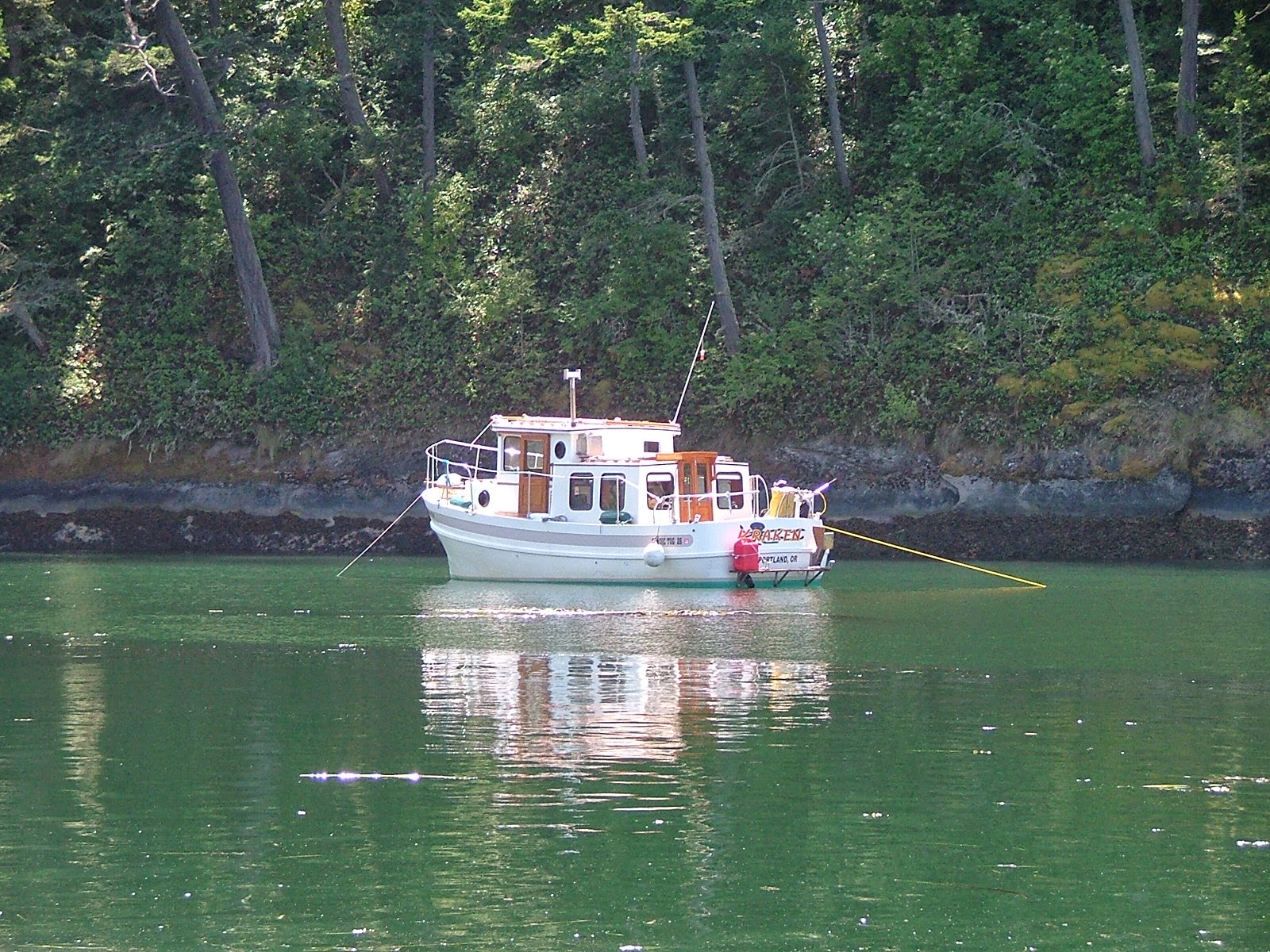
First, a picture of Kraken, our vintage time traveler, workhorse and home away from home.

Anchored in False Creek Vancouver, in front of multi-million dollar condos.
First, a picture of Kraken, our vintage time traveler, workhorse and home away from home.
Anchored in False Creek Vancouver, in front of multi-million dollar condos.
Our Princess Louisa Inlet Cruise was a great success. Success to me means no breakdowns or major deviations from the plan.
We cast off for this approximately 150-mile (one-way) joy ride from our slip in La Conner at a little before noon on a sunny Saturday. Our first stop was just a mile up Swinomish Channel where we visited the fuel dock to top off our 70-gallon diesel tank. Heading off with the tanks full, the fridge and cabinets crammed with ten to twelve days of very good eating, we headed north towards ominous-looking storm clouds and the forecast of gale-force winds. Yes, we are very apprehensive. Many thoughts occupied our thinking, the first was, were we making a mistake knowingly heading into bad weather? The second was, would we get stuck somewhere and not be able to get back in time for our breakfast date with Linda's mother a week from Tuesday?
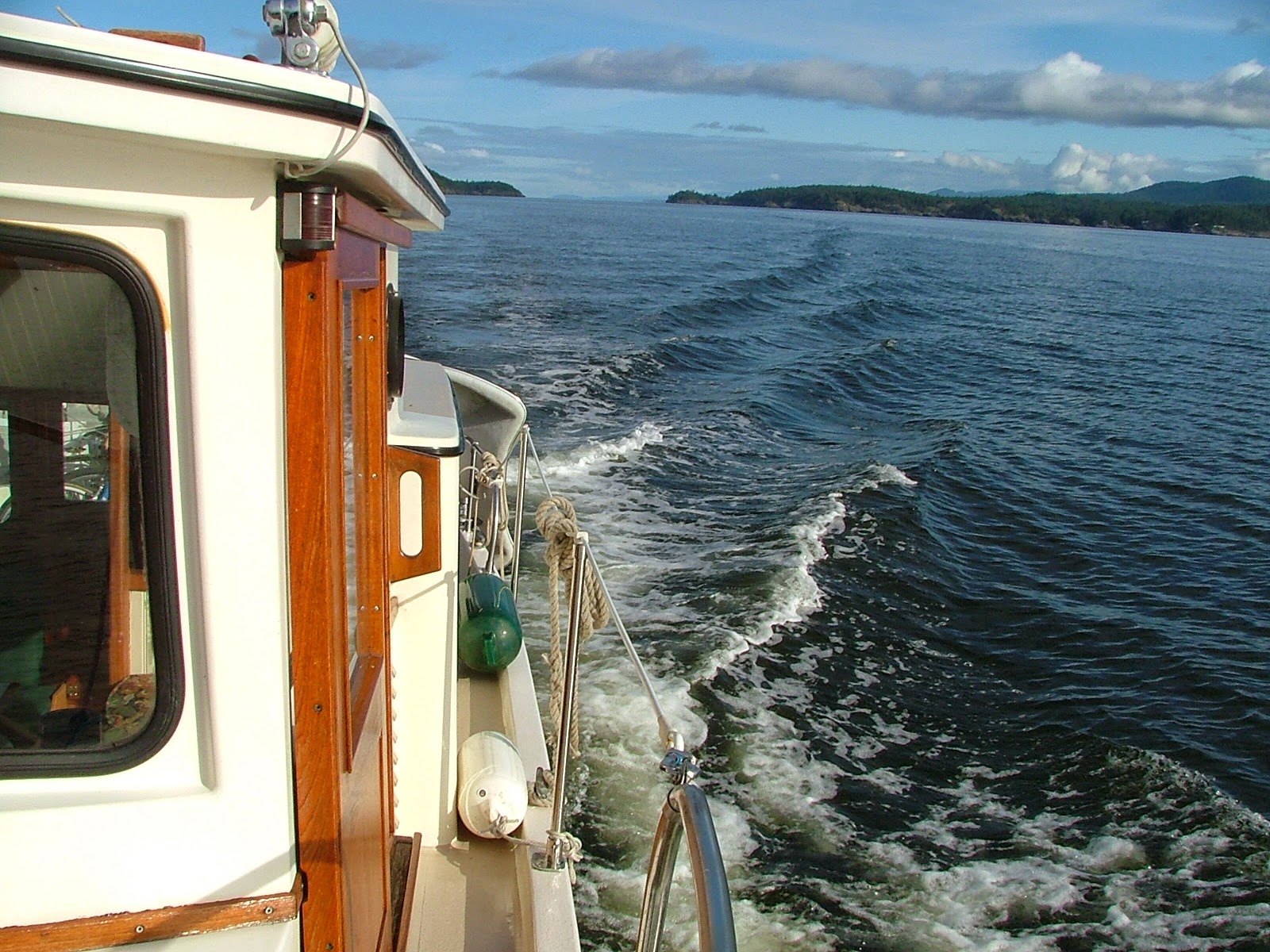
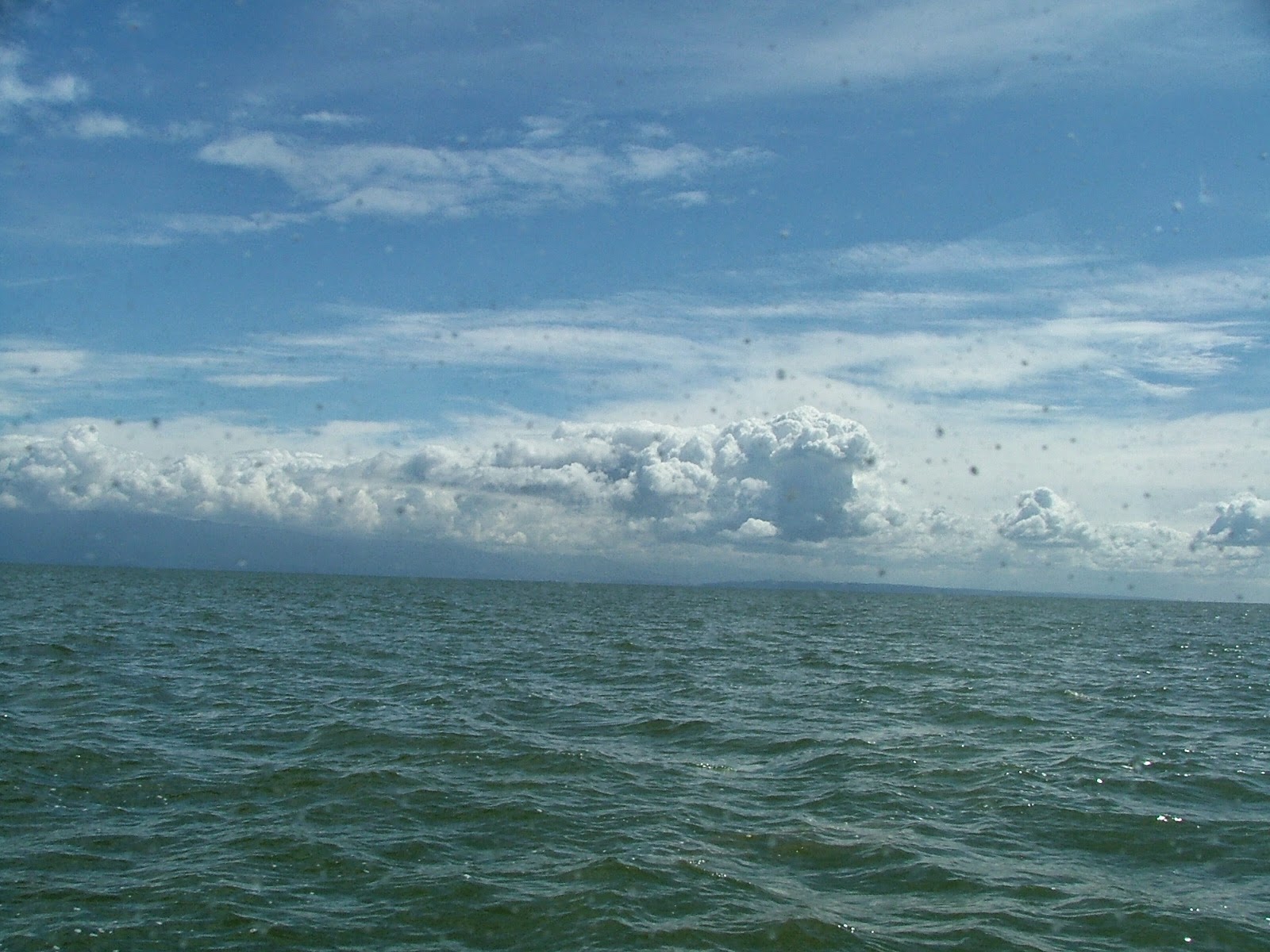
Our first overnight stop is Patos Island. Patos is as far north, not counting Point Roberts as a boater can go before entering Canada. We anchored with plenty of daylight left to walk out to the lighthouse and hike around. The next morning we got going early before 7 am. With 40 miles to cover at 5-8 mph, False Creek in Vancouver may be an 8-hour run. With no good options to duck and cover along the way, I was still a little apprehensive, to say the least. The wind never really was a factor that day but about halfway to Vancouver we were about 5 miles offshore from the Tsawwassen ferry terminal when a following swell began to overtake us and toss Kraken around like the little 26 Nordic Tug she is. Steering the wallowing boat became full-time work and I found myself driving a zigzag course. I was zigging to make ourselves more comfy and then zagging back onto a course that would eventually get us to False Creek where we would check into Canada and spend the night. Linda got out the Dramamine, and I took one also, something I almost never do. About every fourth zigzag an extra big quartering swell would turn us sideways causing severe rolling and much crashing sounds coming from all of Kraken's many stores and equipment. At this point, we are seriously discussing changing course for Bedwell Harbor on South Pender Island. Bedwell was about the same distance, the waves would be more on our nose, and we could continue northward on the inside of the Gulf Islands affording ourselves much better protection, but then we would be on the wrong side of the Strait of Georgia, and north of Nanaimo was where the real gale winds were churning up the strait. This is not how my Princess Louisa Trip was supposed to go.
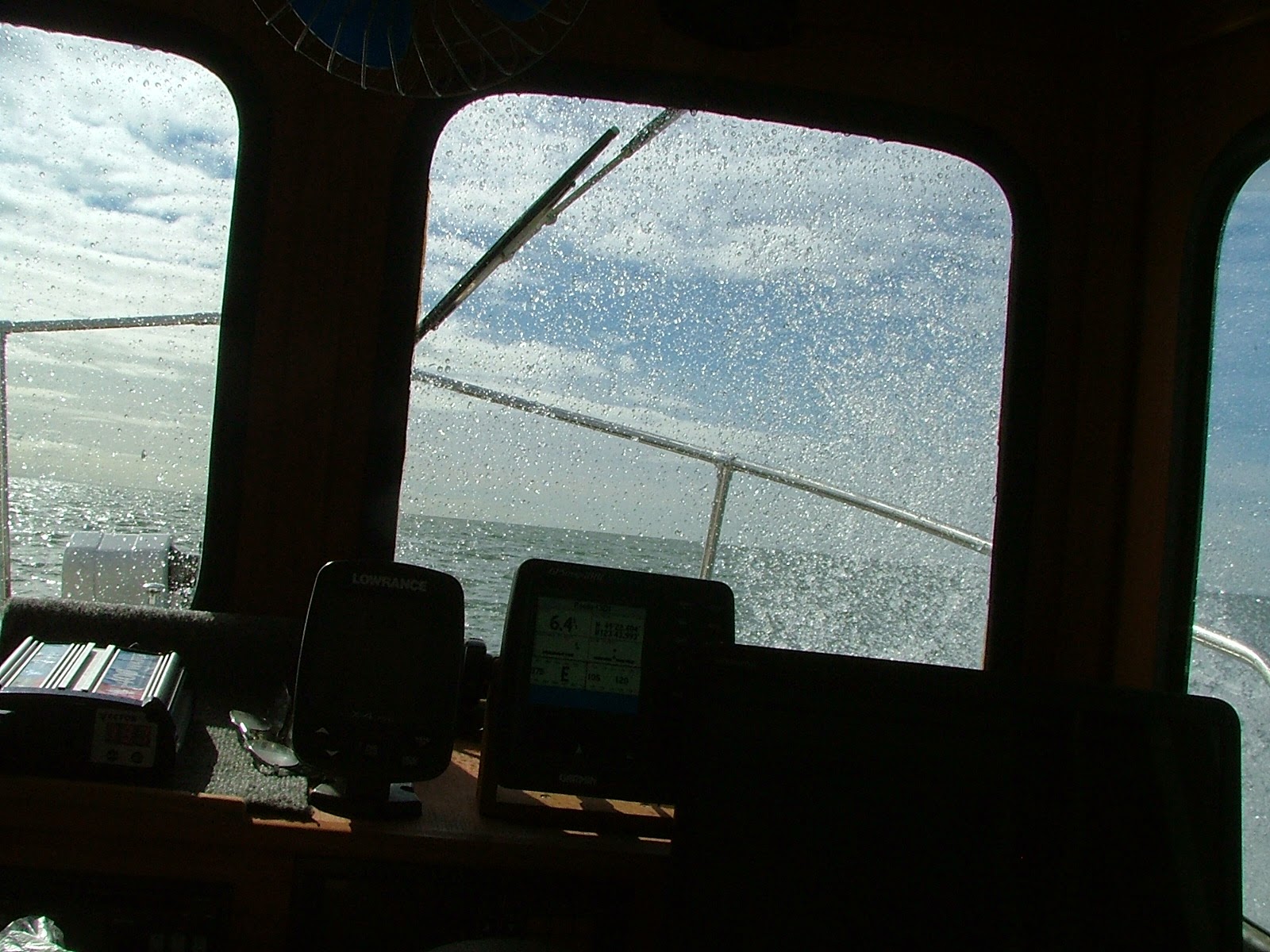
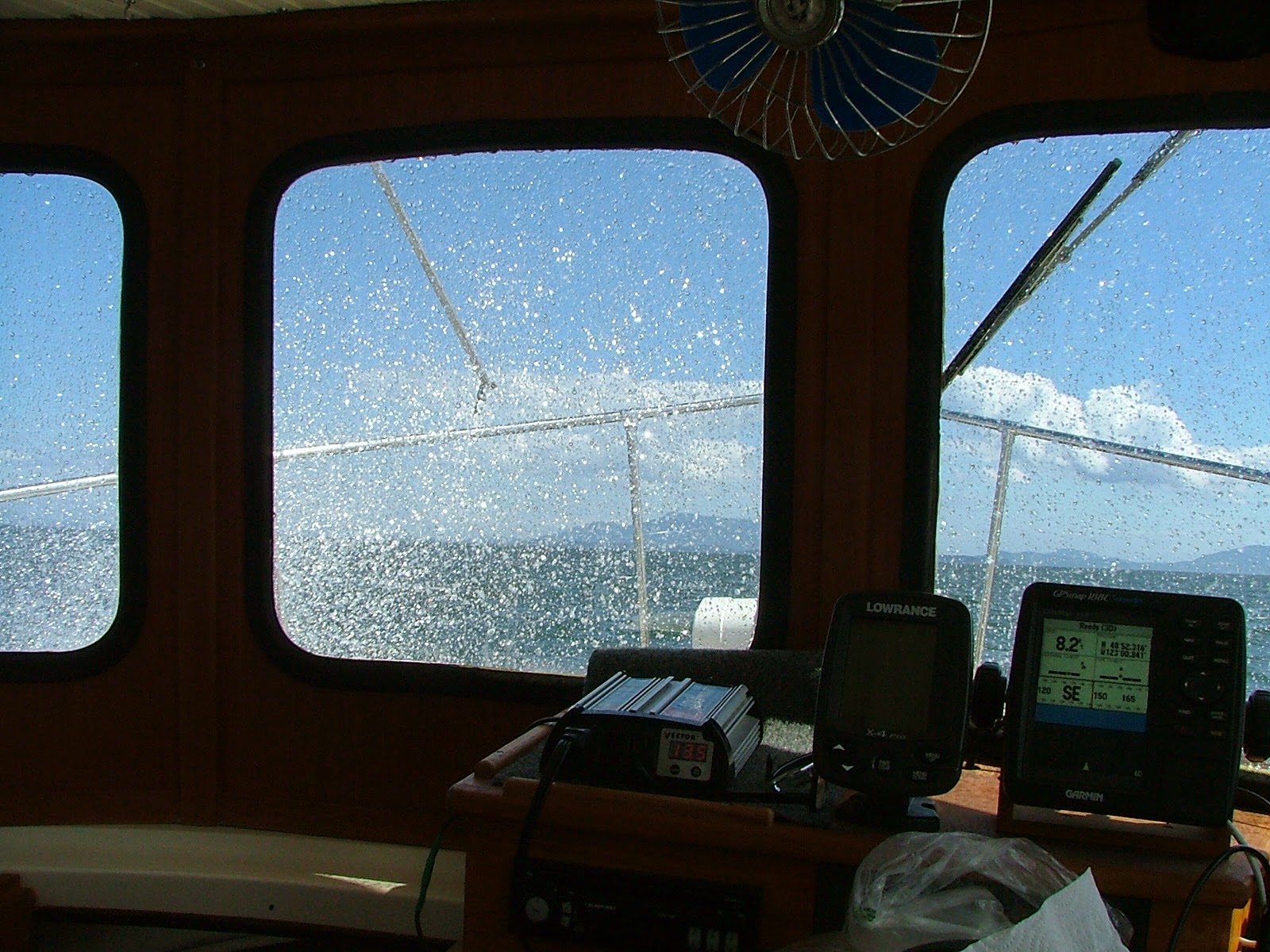
I never really felt seasick that day, but I could feel something queasily uneasy and was a little worried, especially after Linda quit talking and took to lying down. I reasoned that if things deteriorated more in the next hour we could turn and head for Point Roberts, an hour or so after that, head for the Fraser River (except it is known for problems with opposing tides) and an hour or so more, English Bay would be in range. I also vividly remember thinking of the posts I have written telling people to not push their luck, take their time, and wait it out for a weather window they preferred. Hardening my resolve, standing, and bracing myself, I pushed Kraken's throttle forward a little and the tachometer instantly rose to 1850 rpm, we picked up speed and with the added speed came much better rudder control. We no longer were pulled off course with every other wave. We still wallowed with every swell, the horizon tilted like a nauseating thrill ride. but I was able to counter steer keeping us under control. It wasn't too long before I bumped the throttle up to 1900 and then 2000 rpm. Kraken was knocking off 10-11 knots speed over ground, and I calculated later that she was gulping over 5 gallons an hour, or about 2 miles to the gallon. I remember thinking, with 70 gallons we can do this for 30 more hours. I also remember thinking how Kraken was 32 years old and brand new tugs like her top out at 11 knots wide open throttle, Kraken still had 650 rpm left and 4-5 more Knts to go. Positive proof that reserve power is a good thing when you need it, and we certainly used it that day. (Kraken was re-powered 25 years ago and can surprisingly creak out 15 knots on a good day)
In spite of recommendations to stay way offshore, I was driving a straight line (shortest distance) to English Bay, this brought us very close to the mouth of the Fraser River, for a while we were inside the warning buoy line and found ourselves in under 25 feet of water several times. The shoals of Roberts Bank and then Sturgeon Bank were turning swells into breaking waves demanding my attention. A few times I quickly spun the wheel hard over to avoid sneakers on our beam. As we got within the last few miles of English Bay the water got steadily worse, but finally, we turned the corner and immediately found peace. I throttled back to a more efficient 1300 rpm ( 7.5 kts) and we found False Creek on our chart plotter. This was the last we would be able to use the chart-plotter because our chart chip did not include Canada, from now on moving north we would be on paper charts, using the longitude and latitude coordinates the plotter supplied.
Canada Customs was our first stop at False Creek (simple phone call) and then we made our way to the Transient Boater Welcome Boat at the dock under the Burrard Bridge. The young man that greeted us was extremely nice and very helpful. He told us where to anchor, answered all our questions, gave us a tourist map/brochure and made us feel truly at ease and very comfortable. It was a good thing that we got an early start out of Patos because even though we covered 40 miserable miles, it was still mid-afternoon. We docked at the Granville Island public dock which is free and only 500 feet from the welcome dock, took a quick look around and decided to go for a bike ride. The sun was out, but rain was threatening so we tied our coats on our racks and took off for Stanley Park. All in all, we pedaled about 15 miles circling Stanley Park and False Creek on a level beautifully built and maintained shore-side trail. When we got back to the boat we stowed the bikes and checked out the public market which is a lot like an upscale Saturday Market under one roof. We settled on pizza and coke while the place closed down around us. It was only 7 p.m., but it was Sunday night. Kraken was tied up out front or I guess it was out back if you weren't a boater. We had been there for 5 hours, the sign said 3-hour maximum and no overnight tie-ups. We pushed off and motored about 1,000 feet to where we dropped anchor among 40 or so other boats. We are right in the middle of town. The water is flat, there is a no wake speed in all of False Creek. Aquabuses are scurrying everywhere. Lights of the modern high-rises light up the sky. Compared to how our day had been out on the strait it was magical. Sleep came easy, we slept soundly.
The next morning, I woke early even though I wanted to sleep in. The weather radio reported gale-force winds north of Nanaimo and 15 -20 south of Nanaimo. So where we are is not good and where we are headed is much worse. The decision to stay put is not difficult to make. I''m standing in the cockpit, coffee in my hand, Aquabuses are passing on both sides of us, some within 20 feet, and I'm nodding good morning to drivers and early commuters alike. There is a gentle breeze, and the water is reflecting billowy white clouds, the Aquabuses barely leave a ripple. It's hard to believe, gently floating like we are in protected False Creek with a modern city all around us that out in the Strait of Georgia nature is raging. I remember thinking how great this place is, and how I am coming back again someday.
We spend some of the day acting like tourists ashore, we overhear other boaters talking about how they were forced back in yesterday due to big waves. The laid-back day turned out to be very enjoyable, I was not the least bit disappointed being forced to wait in port. In the afternoon Linda reads and knits while I sail the dinghy around the bay. The little Aquabuses are everywhere, one time I counted six of the 12-person boats underway, and then turned and saw three more in the other direction.
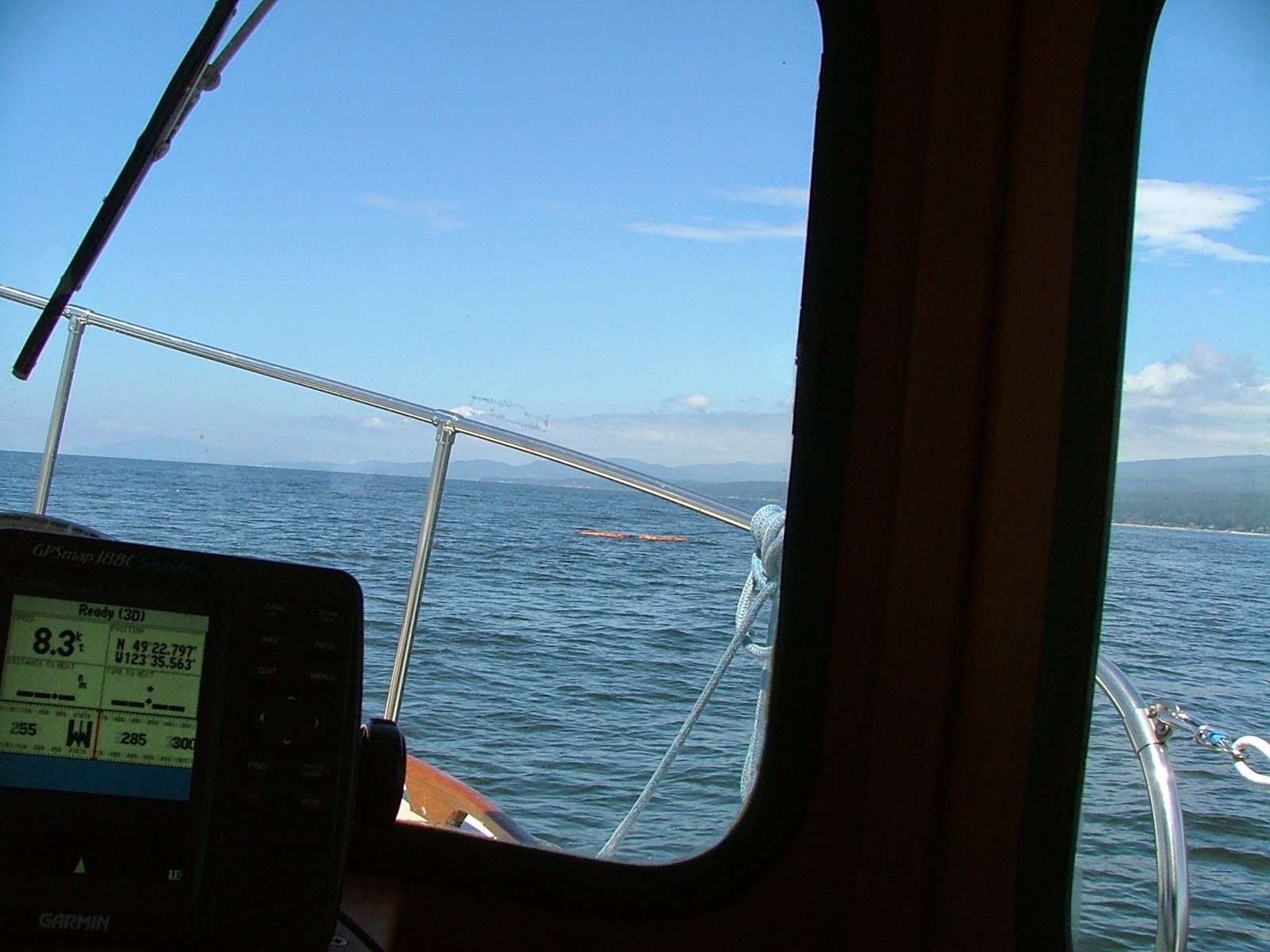 |
| See the log? Logs are a constant hazard and require avoidance turns many times. Running in the dark or heavy fog would have spelled disaster. |
Tuesday morning found us leaving at the crack of dawn, just like at Patos. We have 50 open unprotected miles to cover, and the weather is supposed to be better early rather than later. When we got fuel at False Creek I found out what pushing Kraken hard had cost us in Canadian dollars plus how much more fuel costs by the liter. I miss the chart plotter already, without a Canadian chart chip it's totally useless for finding our way. We look out the windows at the drippy cloud-covered coastline and try to match up what we see with navigation charts. What I have on the screen is a rough drawing of the coast, no depths, no topo lines, no landmarks, and islands are missing. We have two charts I picked up for $1 each, one is dated from the forty's the other the eighty's. The longitude and latitudes and the land masses are accurate, but the depths and nav aids not so much. Our Lorance depth sounder has quit working at depths over about 100 feet only we don't know it. I read off coordinates and Linda finds our location on the charts, things are going fine the water is calm, I'm not pushing Kraken as hard as before but we are making 9 knots, so some current is helping us. We pace a tug boat a mile off our starboard side for several hours and I mistakenly assume he is going where we are going, by following him we miss our turn up Agamemnon Passage, at the same time I find out Linda and I aren't communicating the lats and longs correctly. Lost but not really really lost, I hail a fishing boat going past and ask him where Pender Harbour is. He says turn around and follow me, you're 5 miles past it.
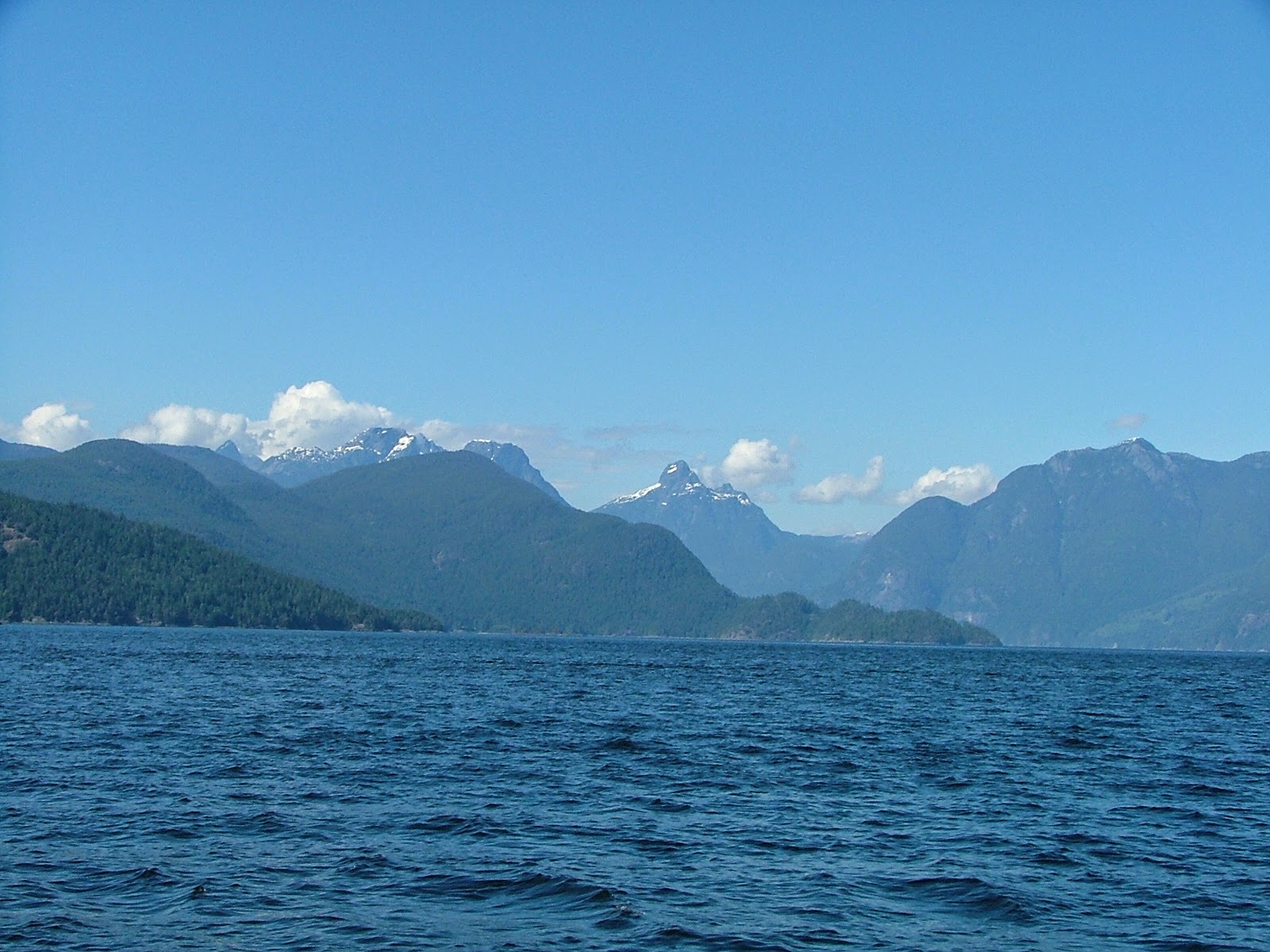 | ||||||||||||||||||||||||||||
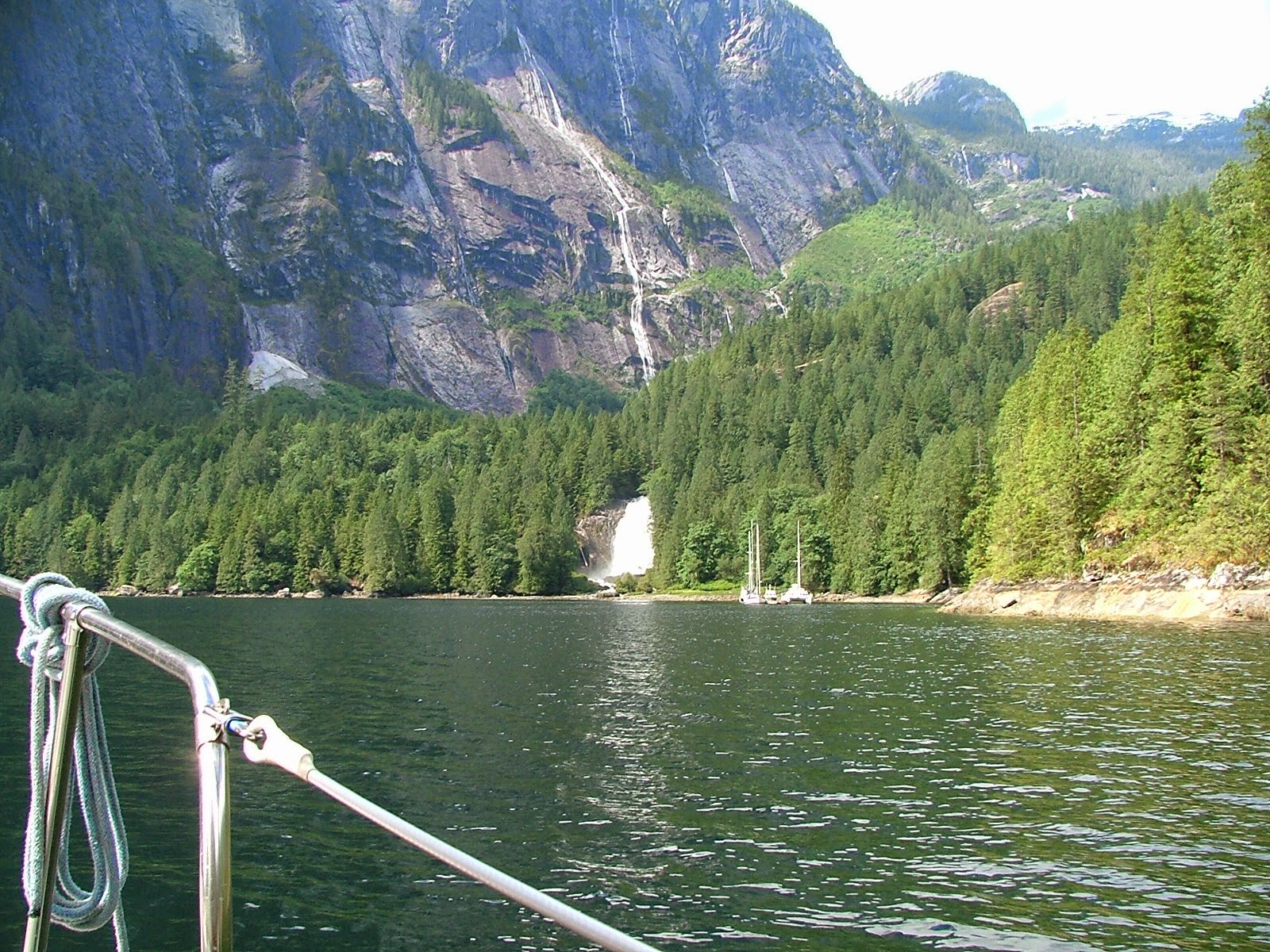
| In the fiords, we are treated to calm waters and snow-capped views, but soon the clouds lower. Back on track and in protected waters we take on fuel at Backeddy Marina Resort at Egmont, plus for $24 Canadian we can stay at the dock for the night. $188 is the cost of the fuel to run 60 miles from Vancouver to Egmont, I vow to slow way down, and the rest of the way to Princess Louisa Inlet and back to La Conner we run at 6.5 to 7.5 knots. As soon as we get situated at Backeddy, off come the bikes and we ride the road and then trail to Skookumchuck Narrows. I feel sorry for the people who have to walk, it's a long way and the rapids are just so-so when we arrive. I recommend to anyone planning a visit to only go during maximum flow. We enjoyed the outing but the rapids weren't worth it. Back at the boat, I use two Loonies to take a hot shower, Linda only uses one, I don't get it. I am finding that I look forward to hitting the sack each night. We are both tired, and I sleep very well on the boat. Linda says she doesn't. I still prefer my bed at home because I don't hit my head when I get up in the middle of the night but other than that I like sleeping on board.
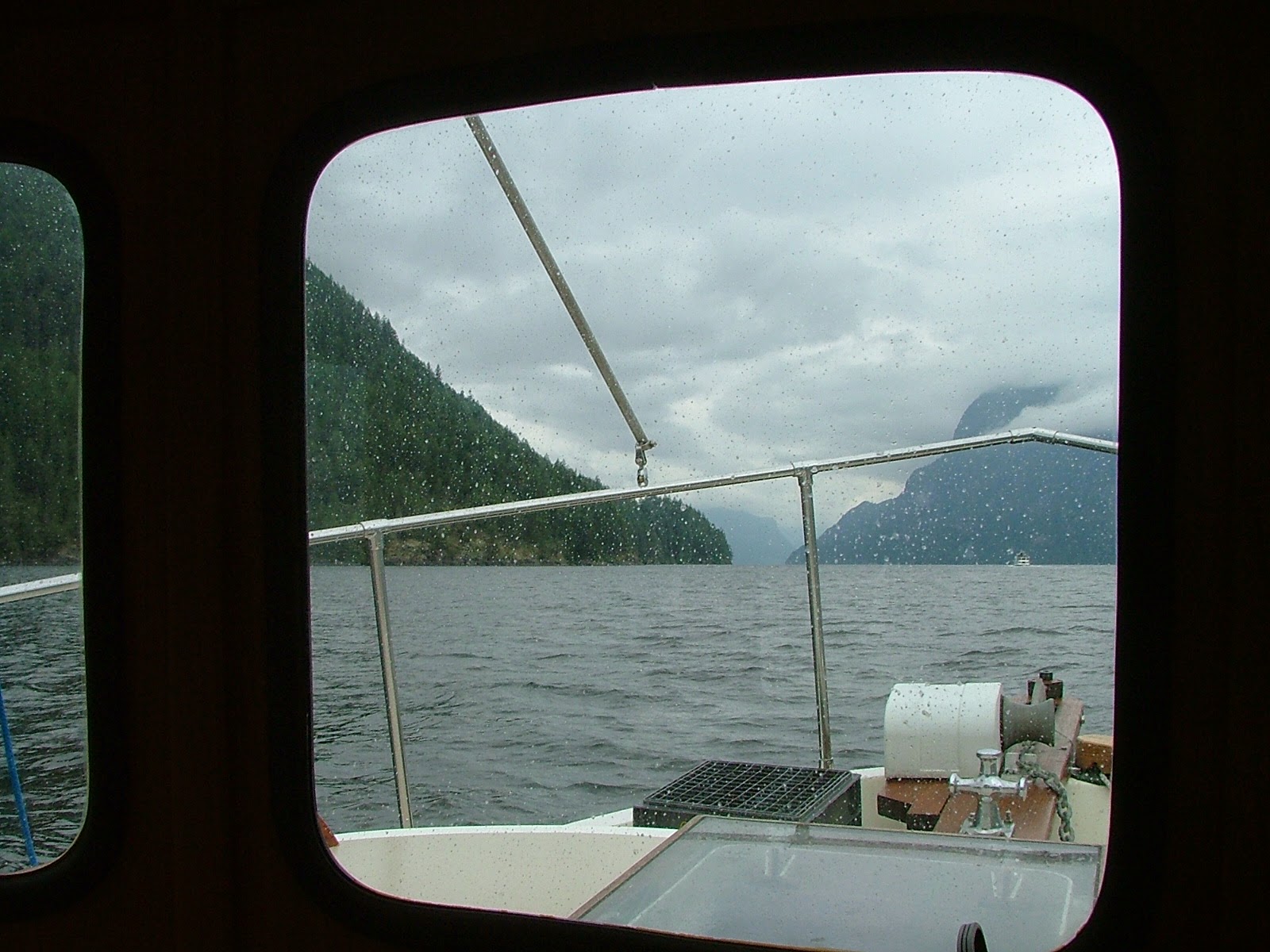
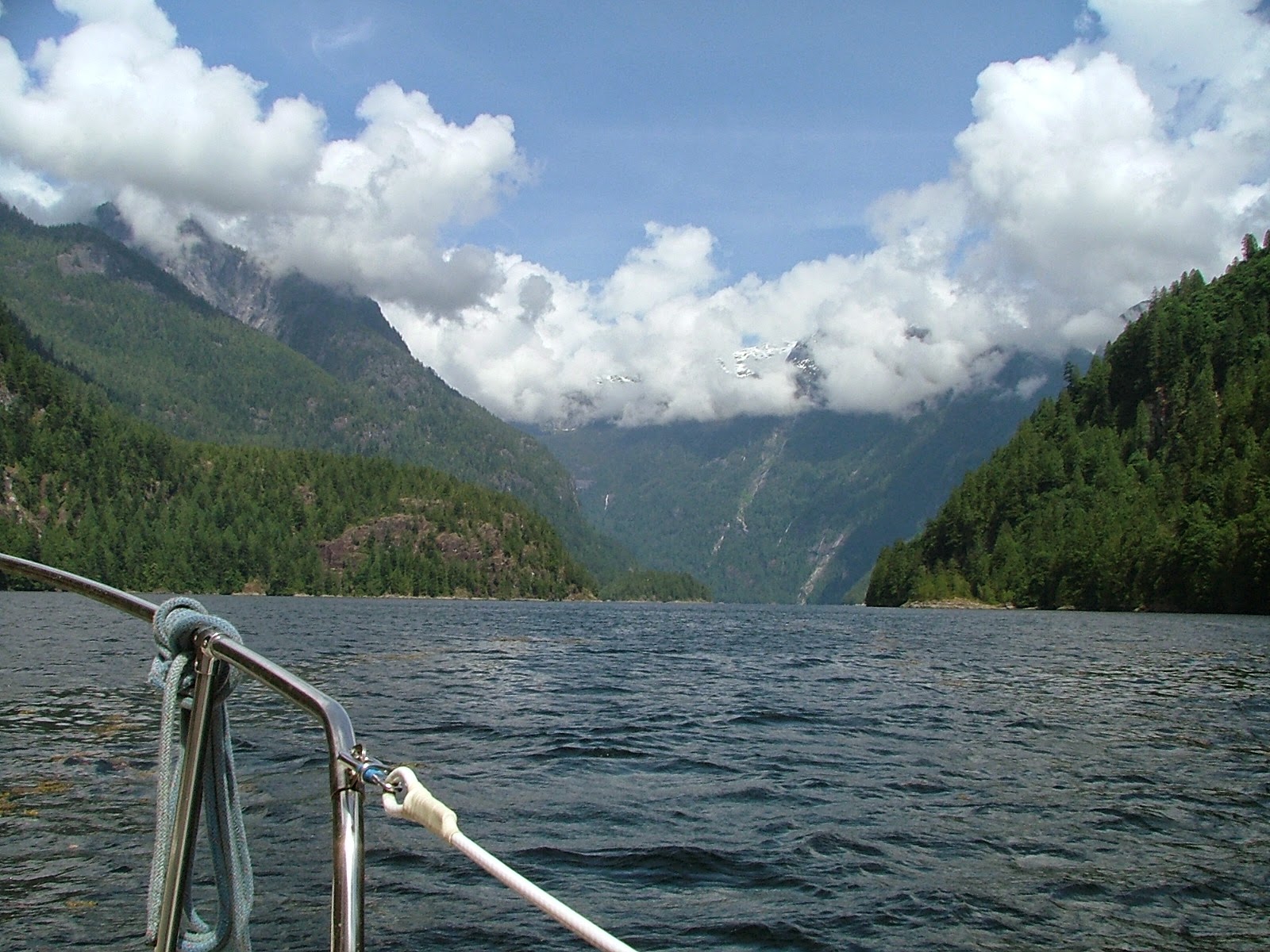
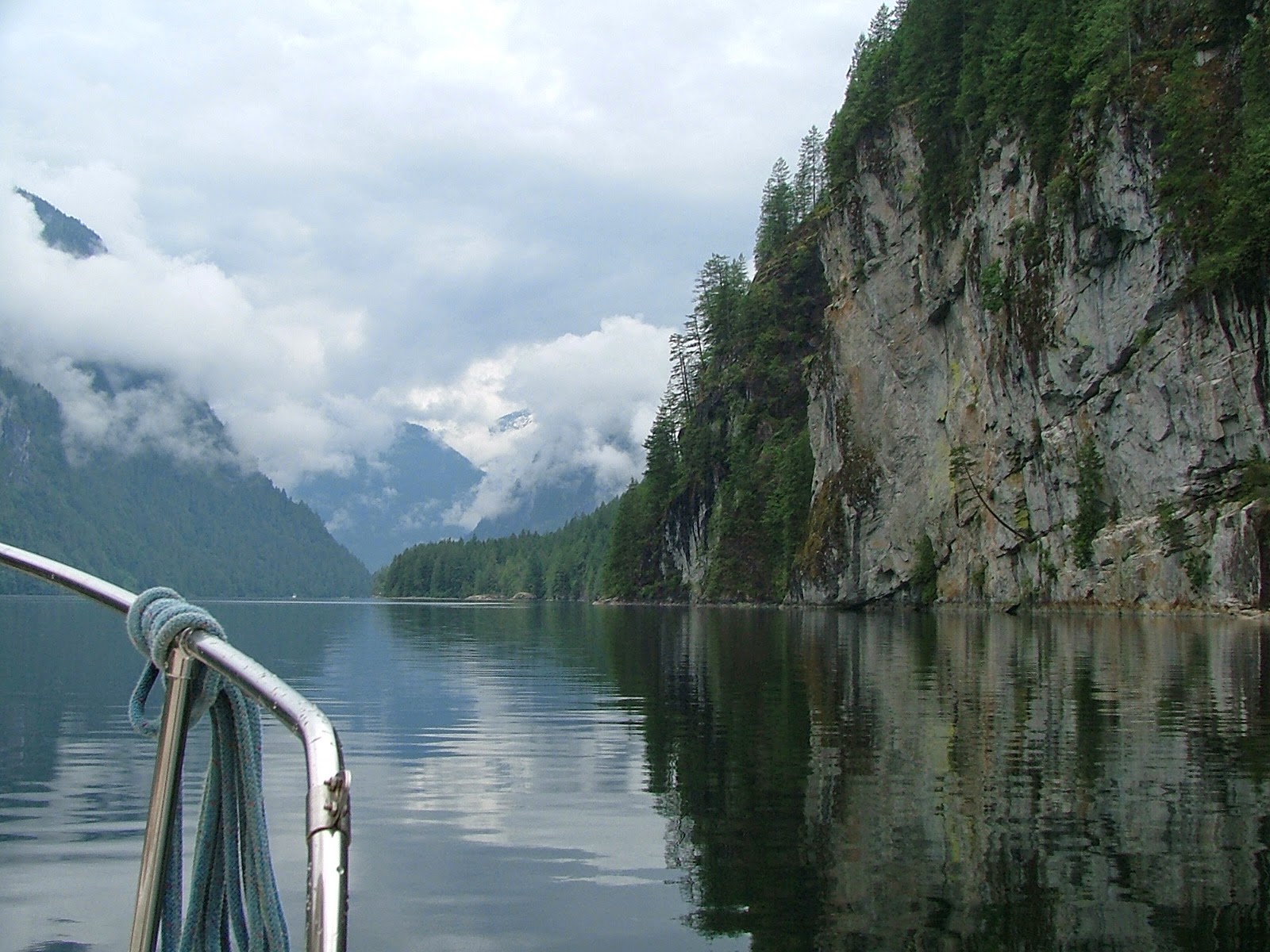
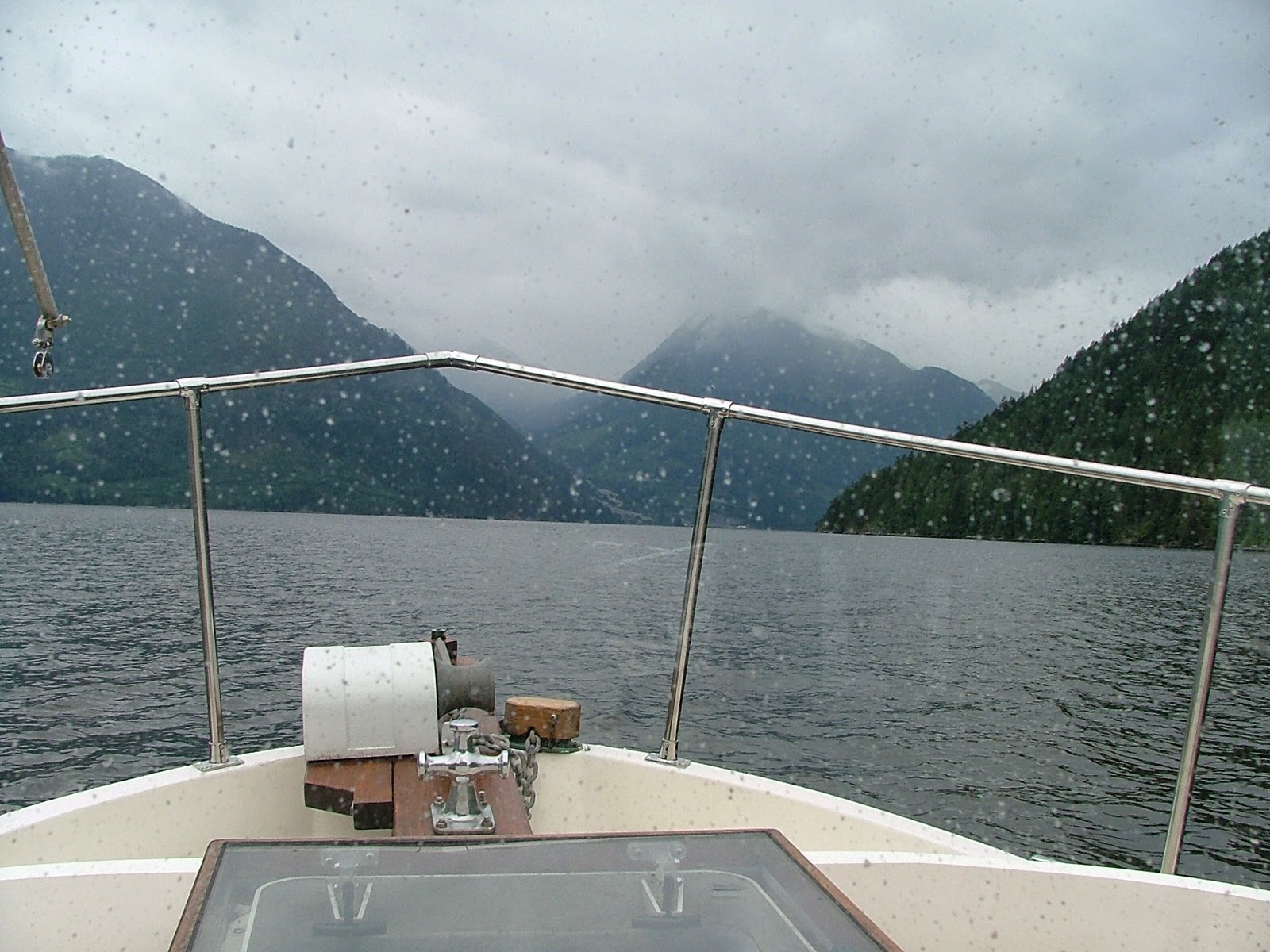
9 a.m. and we are on our way, low clouds ooze a mist limiting our view to a few miles. The mountains lining the fiord are snow-capped and we get quick glimpses most of the time. It's about 35 miles up to Malibu Rapids, the entrance to Princess Louisa Inlet. Backeddy Marina is the last and only gas stop available so topping off the tank before we head out is a must. The tides are significant but the current is hardly noticeable in the deep fiord, our depth sounder is reading 952 feet and blinking, sometimes 1,082. The decades-old chart shows our depth at 250 feet. I spend an hour or more playing with the Lowrance settings to no avail. I carefully study the chart looking for rocky surprises, there are none, but I still keep in the middle unless something on shore attracts us for an up close look-see. The run to Malibu rapids is monotonous, the shoreline and mountains repeat endlessly. We are early in the season and see few other boats.
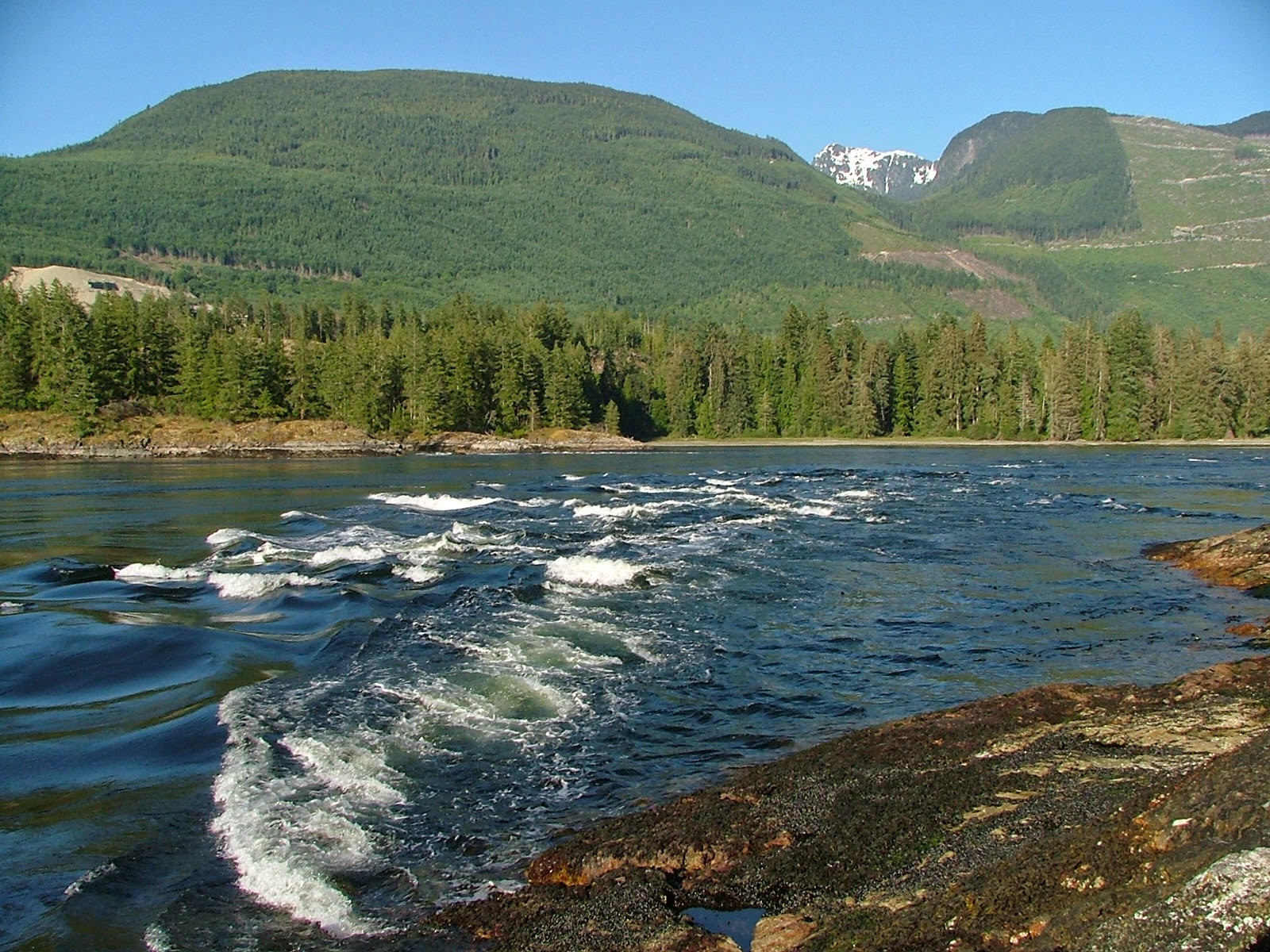
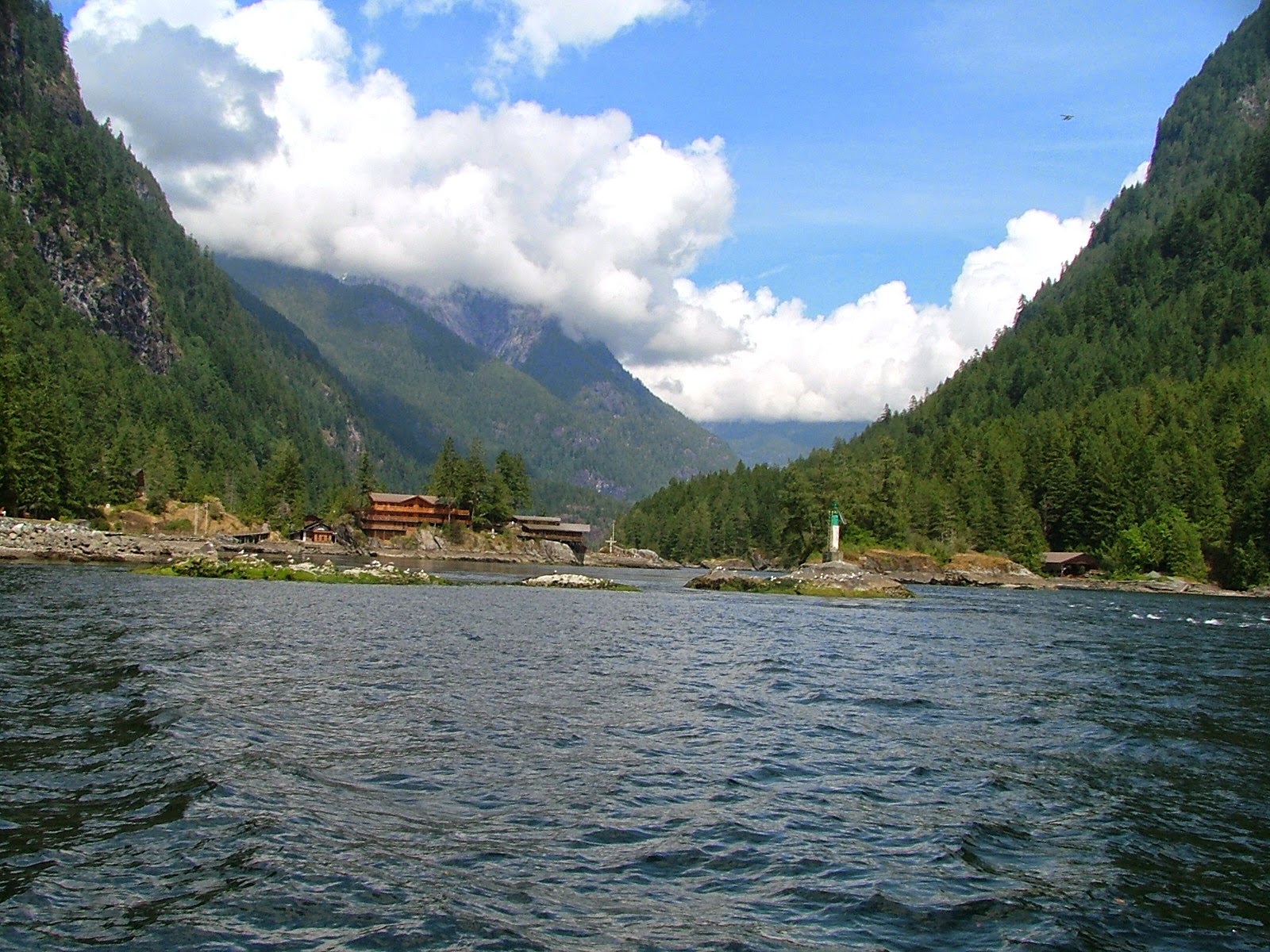
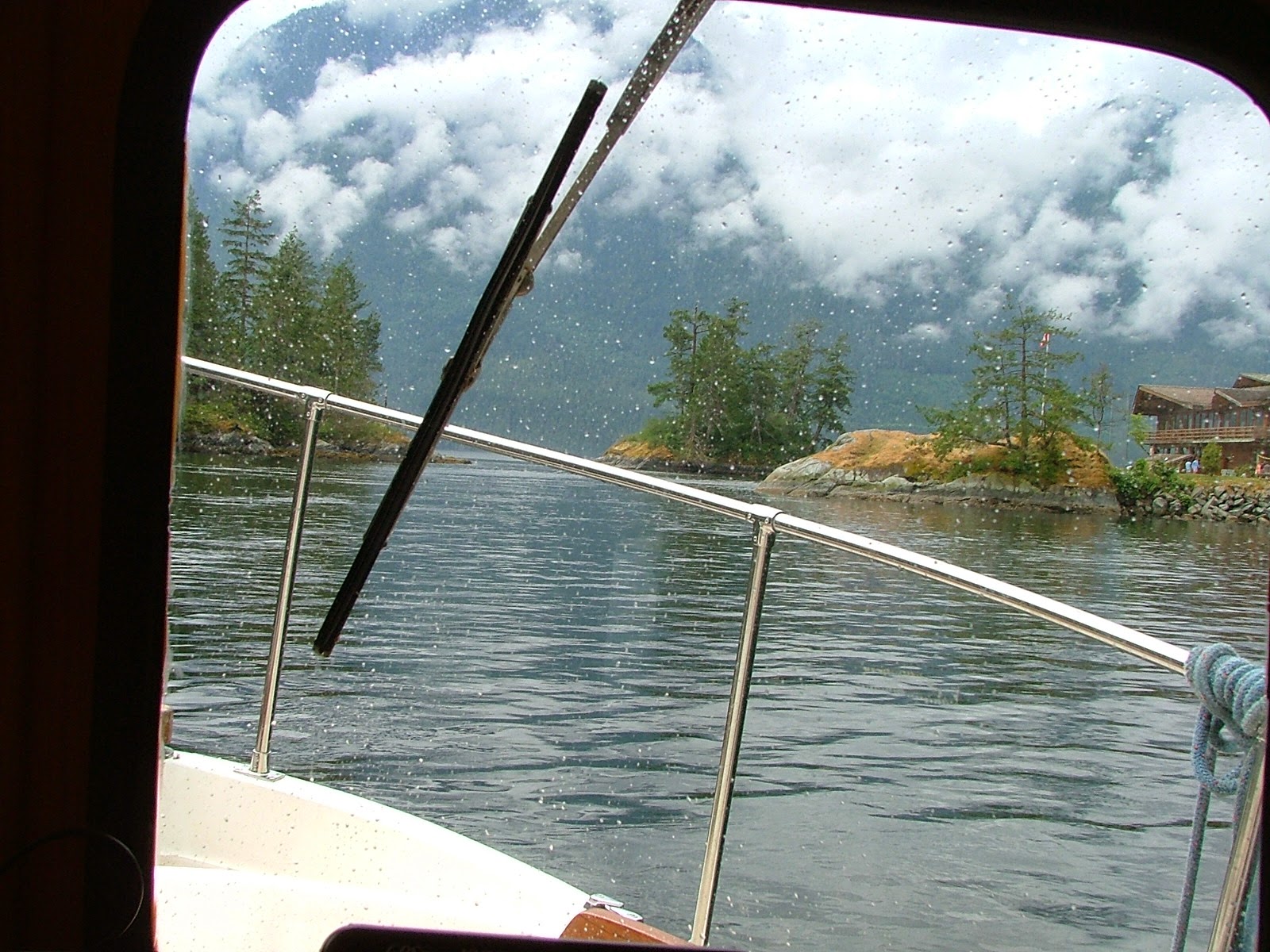
3 pm, we have the Church Camp and Malibu rapids in sight, I expect to see some sailboats hanging around waiting for slack water but there are none. Slack water low tide is forecast for around 6 pm so we are early. Little islets and rocks are everywhere, I'm idling dead slow as we creep closer. The depth sounder has quit lying and begun working again. We watch a commercial runabout run the notorious dogleg. I pay close attention to where he drives and creep closer. I am remembering all the warnings I have read about waiting for slack water, but I just don't see what all the fuss is about. Our plan was to anchor and wait but I creep closer, I am expecting Linda to say something, but maybe she is thinking like me. The currents begin to pull on Krakens keel so I bump the throttle a few rpm. The swirlies are easily managed and we slowly move against the increasing flow. We stall out at a fast idle beside the main islet obstruction, I know our water speed is about 6.5-7 knots. This is as far as our last sailboat would have made it. I bump up a few more rpm and we pull ahead some more. We are right in the middle of Malibu Rapids, adjacent to the viewing decks at the church camp. A couple of people are watching, I have read reports about how onlookers cheer boats coming through. I muse that the people watching may think we are in trouble since we are barely moving, I add some more rpm and look ahead and all around us. Nothing to worry about, the depth sounder reads 25.3 feet and has quit blinking so I trust it again. I push the throttle all the way forward. The tach jumps to 2650 and we leave our wake in Malibu Rapids. No one cheers, most of the people are kids and they are around the corner swimming and water skiing off the camp docks. Once inside, I immediately back down, all of Princess Louisa Inlet is a no-wake zone.
|


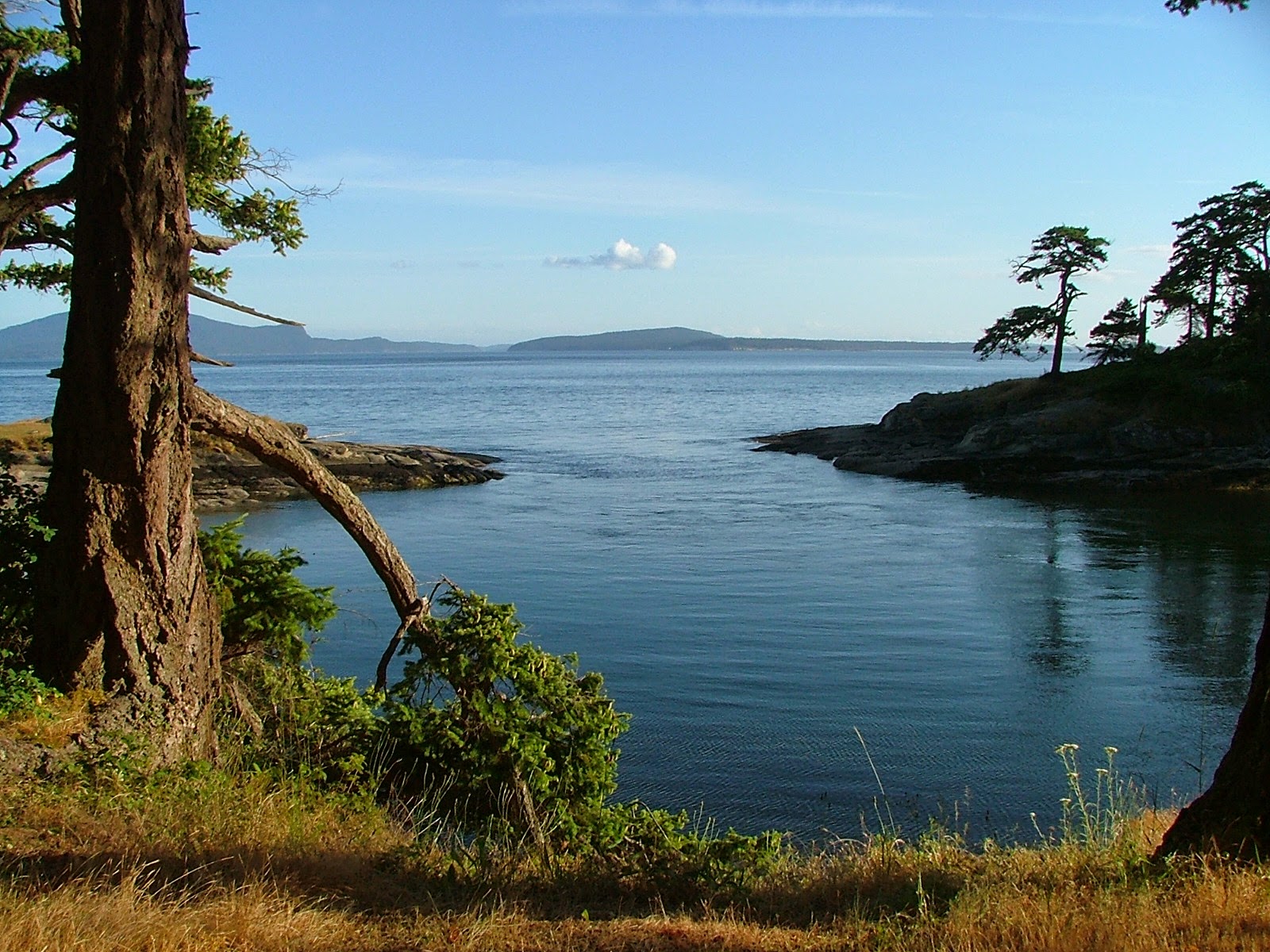
1 Replies
·
2111 views


Plans change all the time whether you need to change your travel dates, fix a passenger name mistake, or cancel your trip completely.
Airline policies can be confusing, but knowing your options can help you avoid unnecessary fees and save money.
Here’s a simple guide on how to change or cancel your flight with less hassle:
If you booked your flight within the last 24 hours, many airlines follow rules that allow you to cancel or make changes for a full refund, as long as your departure date is at least 7 days away.
If you’re outside the 24-hour window, your options depend on your ticket type.
Main Cabin / Flexible Tickets:
Many airlines no longer charge standard change fees for regular economy or business tickets. You may only need to pay the fare difference if your new flight costs more.
Basic Economy / Restricted Tickets:
These tickets usually have more restrictions, but some small corrections, like fixing a spelling mistake in a name, may still be possible.
Online Flight Changes:
Instead of waiting on long phone hold times, you can review available options and manage your itinerary through FlightSkynet Flight Changes.
Your options depend on whether you cancel the flight or the airline makes the change.
If You Cancel:
Depending on your fare type, you may receive a travel credit, voucher, or refund. Always check your ticket rules before confirming a cancellation.
If the Airline Cancels:
If the airline cancels your flight or makes a major schedule change, you may be entitled to a refund to your original payment method instead of only receiving a credit.
For flights covered by EU261/UK261 rules, passengers may also qualify for compensation in certain situations.
Whether you need a refund, a new route, or help managing a cancellation, FlightSkynet can help you review your available options and get support faster.
Airline policies can be confusing, but knowing your options can help you avoid unnecessary fees and save money.
Here’s a simple guide on how to change or cancel your flight with less hassle:
If you booked your flight within the last 24 hours, many airlines follow rules that allow you to cancel or make changes for a full refund, as long as your departure date is at least 7 days away.
If you’re outside the 24-hour window, your options depend on your ticket type.
Main Cabin / Flexible Tickets:
Many airlines no longer charge standard change fees for regular economy or business tickets. You may only need to pay the fare difference if your new flight costs more.
Basic Economy / Restricted Tickets:
These tickets usually have more restrictions, but some small corrections, like fixing a spelling mistake in a name, may still be possible.
Online Flight Changes:
Instead of waiting on long phone hold times, you can review available options and manage your itinerary through FlightSkynet Flight Changes.
Your options depend on whether you cancel the flight or the airline makes the change.
If You Cancel:
Depending on your fare type, you may receive a travel credit, voucher, or refund. Always check your ticket rules before confirming a cancellation.
If the Airline Cancels:
If the airline cancels your flight or makes a major schedule change, you may be entitled to a refund to your original payment method instead of only receiving a credit.
For flights covered by EU261/UK261 rules, passengers may also qualify for compensation in certain situations.
Whether you need a refund, a new route, or help managing a cancellation, FlightSkynet can help you review your available options and get support faster.
0 Replies
·
6 views
Plans change all the time whether you need to change your travel dates, fix a passenger name mistake, or cancel your trip completely.
Airline policies can be confusing, but knowing your options can help you avoid unnecessary fees and save money.
Here’s a simple guide on how to change or cancel your flight with less hassle:
Main Cabin / Flexible Tickets:
Many airlines no longer charge standard change fees for regular economy or business tickets. You may only need to pay the fare difference if your new flight costs more.
Basic Economy / Restricted Tickets:
These tickets usually have more restrictions, but some small corrections, like fixing a spelling mistake in a name, may still be possible.
Online Flight Changes:
Instead of waiting on long phone hold times, you can review available options and manage your itinerary through FlightSkynet Flight Changes.
If You Cancel:
Depending on your fare type, you may receive a travel credit, voucher, or refund. Always check your ticket rules before confirming a cancellation.
If the Airline Cancels:
If the airline cancels your flight or makes a major schedule change, you may be entitled to a refund to your original payment method instead of only receiving a credit.
For flights covered by EU261/UK261 rules, passengers may also qualify for compensation in certain situations.
Airline policies can be confusing, but knowing your options can help you avoid unnecessary fees and save money.
Here’s a simple guide on how to change or cancel your flight with less hassle:
1. The 24-Hour Cancellation & Change Rule
If you booked your flight within the last 24 hours, many airlines follow rules that allow you to cancel or make changes for a full refund, as long as your departure date is at least 7 days away.2. Changing Dates, Times, Names, or Routes
If you’re outside the 24-hour window, your options depend on your ticket type.Main Cabin / Flexible Tickets:
Many airlines no longer charge standard change fees for regular economy or business tickets. You may only need to pay the fare difference if your new flight costs more.
Basic Economy / Restricted Tickets:
These tickets usually have more restrictions, but some small corrections, like fixing a spelling mistake in a name, may still be possible.
Online Flight Changes:
Instead of waiting on long phone hold times, you can review available options and manage your itinerary through FlightSkynet Flight Changes.
3. Flight Cancellations & Refund Options
Your options depend on whether you cancel the flight or the airline makes the change.If You Cancel:
Depending on your fare type, you may receive a travel credit, voucher, or refund. Always check your ticket rules before confirming a cancellation.
If the Airline Cancels:
If the airline cancels your flight or makes a major schedule change, you may be entitled to a refund to your original payment method instead of only receiving a credit.
For flights covered by EU261/UK261 rules, passengers may also qualify for compensation in certain situations.
Need Help With a Flight Change or Cancellation?
Whether you need a refund, a new route, or help managing a cancellation, FlightSkynet can help you review your available options and get support faster.
0 Replies
·
8 views

The Everest Base Camp trek is one of the most popular high-altitude trekking routes in Nepal. Every year, trekkers from around the world make their way through the Khumbu Valley toward the foot of Mount Everest.
But one question comes up frequently before the trip: Is trekking to Everest Base Camp actually safe?
The short answer is that EBC is a well-established trekking route and can be safely completed by properly prepared travelers. At the same time, it is not an ordinary hiking trail. You're spending several days at high altitude in a remote mountain environment, so understanding the potential challenges is essential.
1. The Main Challenge: High Altitude
Altitude is probably the biggest factor that separates the Everest Base Camp trek from a typical hiking holiday.
The trail gradually climbs from Lukla to Everest Base Camp at 5,364 meters (17,600 feet). As you gain elevation, the amount of oxygen available decreases, and your body needs time to adjust.
This is why a well-designed EBC itinerary includes acclimatization stops rather than trying to reach Base Camp as quickly as possible.
Some trekkers experience headaches, tiredness, nausea or difficulty sleeping as they gain altitude. These symptoms shouldn't simply be ignored. If they become more serious, continuing upward can make the situation worse.
A slower pace and appropriate rest days can make a significant difference.
2. The Khumbu Is a Remote Mountain Environment
Another factor to consider is where the trek takes place.
The Everest trail is popular and there are teahouses, shops, guides and other trekkers along the route. However, once you're deeper into the Khumbu, access to roads and full medical facilities becomes limited.
An injury or serious illness at higher elevations can't always be dealt with immediately.
Depending on the circumstances, a trekker may need to descend to a lower settlement or arrange an evacuation. This is one reason good travel insurance with high-altitude trekking and emergency evacuation coverage is so important.
The remoteness shouldn't discourage you from doing the trek. It simply means you need to plan for situations that you wouldn't normally consider on a regular hiking trip.
3. Weather Can Affect Your Trek
Conditions in the Himalayas can change quickly.
Snow, strong winds, low temperatures and poor visibility can affect the trail, particularly during winter and at higher elevations. Weather can also disrupt flights between Kathmandu and Lukla.
For that reason, it is wise to leave some room in your schedule rather than arranging everything down to the hour.
A spare day can be particularly useful if a flight is delayed or you need additional time because of weather or altitude.
What Are the Trails Like?
You don't need ropes, climbing skills or technical mountaineering equipment for the standard Everest Base Camp trek.
That doesn't mean the trail is easy.
Expect a mixture of rocky paths, steep climbs, long descents, suspension bridges and uneven ground. The final sections around Gorak Shep and Base Camp can be particularly demanding because you're already at a very high elevation.
Your legs may be capable of walking further, but your body doesn't necessarily respond the same way at 5,000 meters.
This is where maintaining a steady pace becomes important.
How Much Fitness Do You Need?
You don't need to be an elite athlete to trek to Everest Base Camp.
However, you should be comfortable walking for several hours on consecutive days.
Preparing beforehand with regular walking, hiking, stair climbing and cardiovascular exercise can help you handle the physical demands much better.
Strength is useful, but endurance is arguably more important. You're not preparing for one extremely difficult day, you're preparing to keep walking day after day while gradually gaining altitude.
What Can You Do to Make the Trek Safer?
A few simple precautions go a long way:
The Bottom Line:
Everest Base Camp trekking is not inherently unsafe, but it does require preparation and respect for the mountain environment.
The route is established, thousands of people trek it, and you don't need technical climbing experience. The real challenges come from the altitude, physical exertion, changing weather and limited access to medical facilities in the higher sections.
If you prepare properly, allow yourself enough time to acclimatize and know when to slow down or turn around, you can enjoy the trek without treating every challenge as an emergency.
And ultimately, reaching Everest Base Camp should never be more important than returning safely.
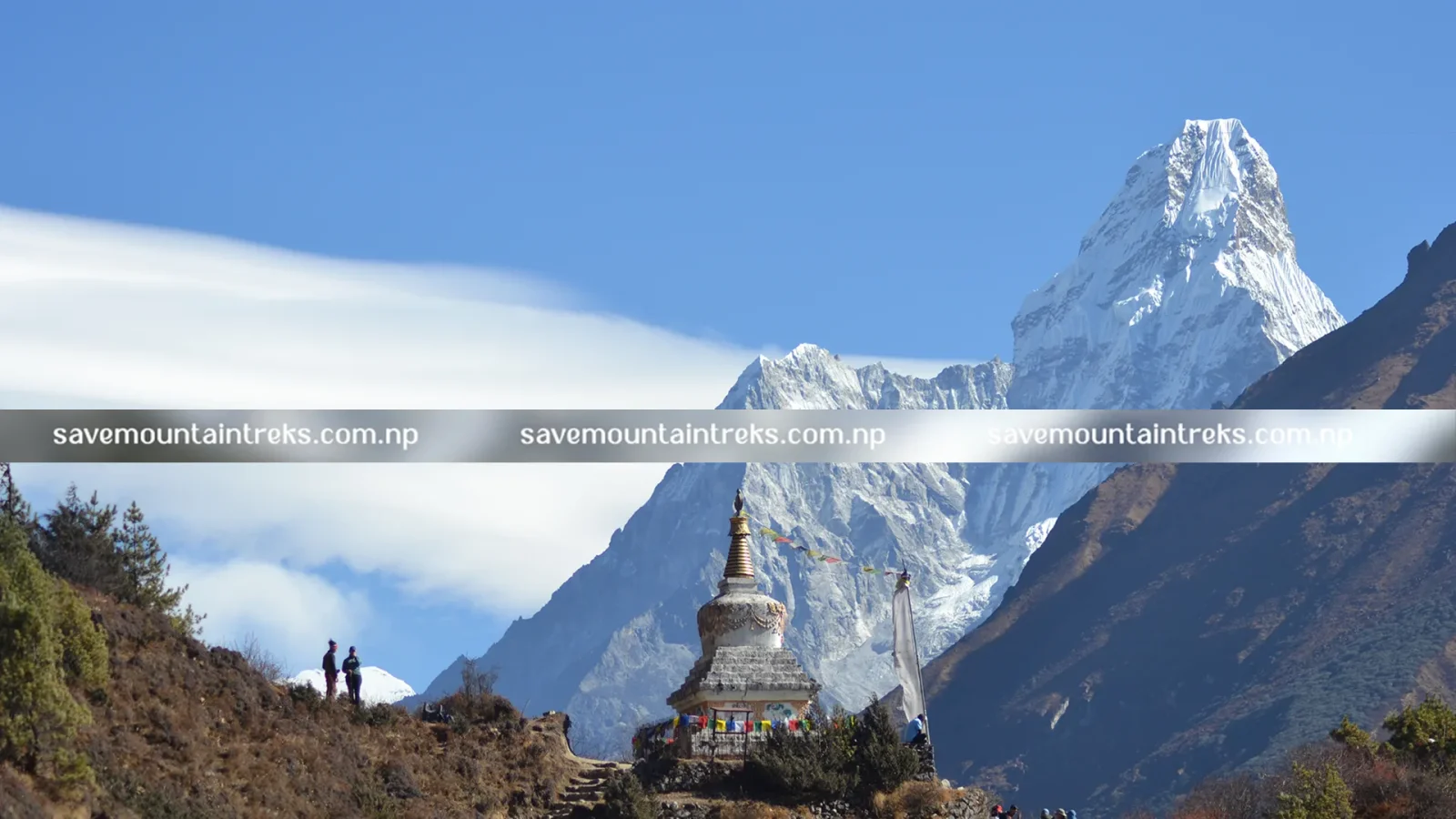
Photo by: Save Mountain Treks & Expeditions
But one question comes up frequently before the trip: Is trekking to Everest Base Camp actually safe?
The short answer is that EBC is a well-established trekking route and can be safely completed by properly prepared travelers. At the same time, it is not an ordinary hiking trail. You're spending several days at high altitude in a remote mountain environment, so understanding the potential challenges is essential.
1. The Main Challenge: High Altitude
Altitude is probably the biggest factor that separates the Everest Base Camp trek from a typical hiking holiday.
The trail gradually climbs from Lukla to Everest Base Camp at 5,364 meters (17,600 feet). As you gain elevation, the amount of oxygen available decreases, and your body needs time to adjust.
This is why a well-designed EBC itinerary includes acclimatization stops rather than trying to reach Base Camp as quickly as possible.
Some trekkers experience headaches, tiredness, nausea or difficulty sleeping as they gain altitude. These symptoms shouldn't simply be ignored. If they become more serious, continuing upward can make the situation worse.
A slower pace and appropriate rest days can make a significant difference.
2. The Khumbu Is a Remote Mountain Environment
Another factor to consider is where the trek takes place.
The Everest trail is popular and there are teahouses, shops, guides and other trekkers along the route. However, once you're deeper into the Khumbu, access to roads and full medical facilities becomes limited.
An injury or serious illness at higher elevations can't always be dealt with immediately.
Depending on the circumstances, a trekker may need to descend to a lower settlement or arrange an evacuation. This is one reason good travel insurance with high-altitude trekking and emergency evacuation coverage is so important.
The remoteness shouldn't discourage you from doing the trek. It simply means you need to plan for situations that you wouldn't normally consider on a regular hiking trip.
3. Weather Can Affect Your Trek
Conditions in the Himalayas can change quickly.
Snow, strong winds, low temperatures and poor visibility can affect the trail, particularly during winter and at higher elevations. Weather can also disrupt flights between Kathmandu and Lukla.
For that reason, it is wise to leave some room in your schedule rather than arranging everything down to the hour.
A spare day can be particularly useful if a flight is delayed or you need additional time because of weather or altitude.
What Are the Trails Like?
You don't need ropes, climbing skills or technical mountaineering equipment for the standard Everest Base Camp trek.
That doesn't mean the trail is easy.
Expect a mixture of rocky paths, steep climbs, long descents, suspension bridges and uneven ground. The final sections around Gorak Shep and Base Camp can be particularly demanding because you're already at a very high elevation.
Your legs may be capable of walking further, but your body doesn't necessarily respond the same way at 5,000 meters.
This is where maintaining a steady pace becomes important.
How Much Fitness Do You Need?
You don't need to be an elite athlete to trek to Everest Base Camp.
However, you should be comfortable walking for several hours on consecutive days.
Preparing beforehand with regular walking, hiking, stair climbing and cardiovascular exercise can help you handle the physical demands much better.
Strength is useful, but endurance is arguably more important. You're not preparing for one extremely difficult day, you're preparing to keep walking day after day while gradually gaining altitude.
What Can You Do to Make the Trek Safer?
A few simple precautions go a long way:
- Choose an itinerary that allows adequate acclimatization.
- Train before arriving in Nepal.
- Stay hydrated and eat regularly.
- Dress appropriately for changing temperatures.
- Don't ignore unusual or worsening symptoms.
- Follow your guide's advice about altitude and weather.
- Carry travel insurance that includes high-altitude trekking and evacuation.
- Keep some flexibility in your itinerary for weather and transportation delays.
The Bottom Line:
Everest Base Camp trekking is not inherently unsafe, but it does require preparation and respect for the mountain environment.
The route is established, thousands of people trek it, and you don't need technical climbing experience. The real challenges come from the altitude, physical exertion, changing weather and limited access to medical facilities in the higher sections.
If you prepare properly, allow yourself enough time to acclimatize and know when to slow down or turn around, you can enjoy the trek without treating every challenge as an emergency.
And ultimately, reaching Everest Base Camp should never be more important than returning safely.
Photo by: Save Mountain Treks & Expeditions
0 Replies
·
8 views

Hi everyone,
I am planning a Caribbean holiday and would love to hear recommendations from travellers who have visited the region.
The Caribbean has so many beautiful islands, and I am trying to decide which destinations are best for a memorable trip.
I am looking for places that offer:
• Beautiful beaches and crystal-clear waters
• Unique local culture and experiences
• Great food and sightseeing
• A good balance between relaxation and exploring
Some destinations I am considering include Jamaica, Barbados, St Lucia, Aruba, and the Dominican Republic.
I recently came across some helpful Caribbean travel information from GenZ Travel while researching different islands, but I would also love to hear personal recommendations from this community.
Which Caribbean island would you recommend for a first-time visitor, and what makes it special?
Are there any hidden gems or places that should not be missed?
Thanks in advance for sharing your experiences!
I am planning a Caribbean holiday and would love to hear recommendations from travellers who have visited the region.
The Caribbean has so many beautiful islands, and I am trying to decide which destinations are best for a memorable trip.
I am looking for places that offer:
• Beautiful beaches and crystal-clear waters
• Unique local culture and experiences
• Great food and sightseeing
• A good balance between relaxation and exploring
Some destinations I am considering include Jamaica, Barbados, St Lucia, Aruba, and the Dominican Republic.
I recently came across some helpful Caribbean travel information from GenZ Travel while researching different islands, but I would also love to hear personal recommendations from this community.
Which Caribbean island would you recommend for a first-time visitor, and what makes it special?
Are there any hidden gems or places that should not be missed?
Thanks in advance for sharing your experiences!
4 Replies
·
183 views

Chandigarh is a good place to start your Shimla or Manali trip, especially if you’re going by road. It’s easy to reach from Chandigarh, and the journey from there is quite straightforward.
- Easy connectivity: Himachal Pradesh is well connected by road from Chandigarh, with regular bus and taxi services.
- For Shimla: Chandigarh to Shimla is roughly 119 km, with the road journey taking around 3–4 hours in normal conditions.
- For Manali: Chandigarh is also well connected to Manali by road, with the distance around 280–310 km depending on the route and destination point.
- For both destinations: Starting from Chandigarh makes it convenient to plan a combined itinerary covering Shimla and Manali.
- For a planned holiday: A chandigarh shimla manali tour can be arranged with Chandigarh as the pickup and drop-off point, making transportation and sightseeing easier to coordinate.
- Travel tip: Keep extra travel time during weekends, bad weather, or peak tourist seasons because mountain-road conditions can affect journey times.
0 Replies
·
22 views

Many travelers planning trips from the USA to India often wonder when flight prices are the lowest. In most cases, booking international tickets 2–4 months before departure helps travelers find better airfare deals. Flight prices usually fluctuate because airlines adjust fares based on demand, travel season, and seat availability.
Popular routes such as New York to Delhi, San Francisco to Mumbai, Chicago to Hyderabad, and Washington to Bengaluru often experience price changes throughout the year. Travelers who are flexible with travel dates or mid-week departures can sometimes find cheaper fares compared to weekend flights.
Another helpful strategy is to set flight price alerts and compare fares across different booking platforms. Monitoring airfare trends regularly can help travelers identify price drops and book tickets at the right time.
If anyone is currently planning a trip, you can also explore some affordable USA to India flight options:
I’m curious to know how others track airfare trends or find good international flight deals. Any tips or tools you recommend
Popular routes such as New York to Delhi, San Francisco to Mumbai, Chicago to Hyderabad, and Washington to Bengaluru often experience price changes throughout the year. Travelers who are flexible with travel dates or mid-week departures can sometimes find cheaper fares compared to weekend flights.
Another helpful strategy is to set flight price alerts and compare fares across different booking platforms. Monitoring airfare trends regularly can help travelers identify price drops and book tickets at the right time.
If anyone is currently planning a trip, you can also explore some affordable USA to India flight options:
I’m curious to know how others track airfare trends or find good international flight deals. Any tips or tools you recommend
2 Replies
·
1314 views

Planning a trip to Kanha National Park requires some preparation to make your wildlife experience comfortable and enjoyable. Before visiting, check the best time to visit, safari timings, entry gates, available safari zones, and permit availability. Kanha is known for its beautiful sal forests, grasslands, and diverse wildlife, including tigers, leopards, barasingha, wild dogs, and many bird species. Choosing the right safari zone and booking your safari in advance can help you enjoy your jungle experience without last-minute hassles. During peak months, permits can fill quickly, so early planning is recommended. A well-planned Kanha National Park Trip should also include suitable accommodation, transportation, weather conditions, and important park rules. Carry comfortable clothing, binoculars, a camera, and essentials for the safari while following all forest guidelines during your visit.
0 Replies
·
19 views
Hey everyone,
If you are planning a trip to Sri Lanka and looking for reliable yet affordable transport options, local taxi services often work out much cheaper and more convenient than booking through large international tour agencies.
For long-distance transfers or coastal travel (like Colombo Airport to Southern beaches like Weligama, Mirissa, or Galle), using a local eco-friendly provider gives you reasonable rates without hidden fees.
If you're looking for low-cost transfers, you can check out Eco Cab Taxi for direct local bookings and transparent pricing.
Feel free to ask if you need any advice on Sri Lanka travel routes!
If you are planning a trip to Sri Lanka and looking for reliable yet affordable transport options, local taxi services often work out much cheaper and more convenient than booking through large international tour agencies.
For long-distance transfers or coastal travel (like Colombo Airport to Southern beaches like Weligama, Mirissa, or Galle), using a local eco-friendly provider gives you reasonable rates without hidden fees.
If you're looking for low-cost transfers, you can check out Eco Cab Taxi for direct local bookings and transparent pricing.
Feel free to ask if you need any advice on Sri Lanka travel routes!
3 Replies
·
81 views

If you are staying in Barcelona for a few days, I highly recommend making a day trip to Montserrat. It is only about an hour from Barcelona, but the landscape feels completely different from the city.
Montserrat is famous for its spectacular rock formations and the Benedictine monastery built high in the mountains. But one of the main reasons people come here is La Moreneta, the Black Madonna of Montserrat, one of the most important religious symbols of Catalonia.
According to local tradition, the statue was discovered in a cave on the mountain. Today, it is located inside the basilica, and visitors can go inside to see it.
I would also recommend leaving some time to explore the mountain rather than visiting only the monastery. There are several walking routes with beautiful views, and you can take the Sant Joan funicular higher up the mountain. If you enjoy hiking, you can continue towards Sant Jeroni, the highest point of the Montserrat massif.
Another interesting experience is hearing L’Escolania, the famous boys' choir of Montserrat, which has a tradition going back more than seven centuries. The schedule varies, so it is worth checking before your visit.
You can reach Montserrat from Barcelona by train and then continue by cable car or the mountain railway. Going by car is also convenient if you want to explore more of Catalonia afterwards.
For me, Montserrat is one of the best day trips from Barcelona because it combines history, religion, nature and spectacular scenery in one place.
Montserrat is famous for its spectacular rock formations and the Benedictine monastery built high in the mountains. But one of the main reasons people come here is La Moreneta, the Black Madonna of Montserrat, one of the most important religious symbols of Catalonia.
According to local tradition, the statue was discovered in a cave on the mountain. Today, it is located inside the basilica, and visitors can go inside to see it.
I would also recommend leaving some time to explore the mountain rather than visiting only the monastery. There are several walking routes with beautiful views, and you can take the Sant Joan funicular higher up the mountain. If you enjoy hiking, you can continue towards Sant Jeroni, the highest point of the Montserrat massif.
Another interesting experience is hearing L’Escolania, the famous boys' choir of Montserrat, which has a tradition going back more than seven centuries. The schedule varies, so it is worth checking before your visit.
You can reach Montserrat from Barcelona by train and then continue by cable car or the mountain railway. Going by car is also convenient if you want to explore more of Catalonia afterwards.
For me, Montserrat is one of the best day trips from Barcelona because it combines history, religion, nature and spectacular scenery in one place.
0 Replies
·
30 views

The year-end market session in Dong Van town (Dong Van district, Ha Giang) is as lively as a festival, filled with the colorful attire of the Dao, Hmong, Tay, Nung ethnic groups... Goods are also more abundant than usual.
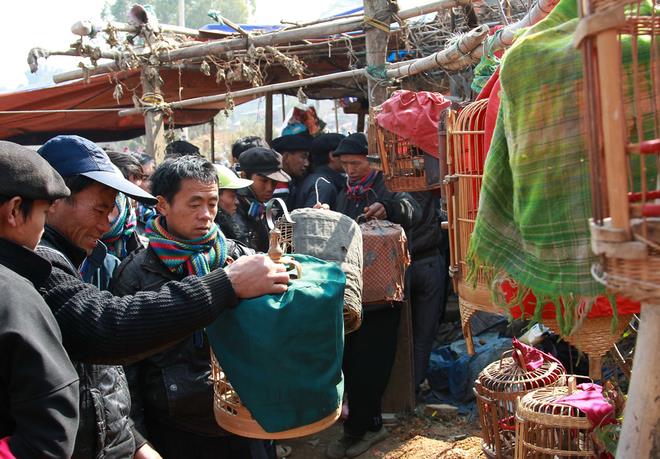
Attending the market is an important activity in the daily life of ethnic minorities in the Ha Giang rocky plateau. Especially in the days leading up to Tet, various types of goods and agricultural produce are displayed and sold more abundantly. In Dong Van district, the market meets once a week on Sunday.
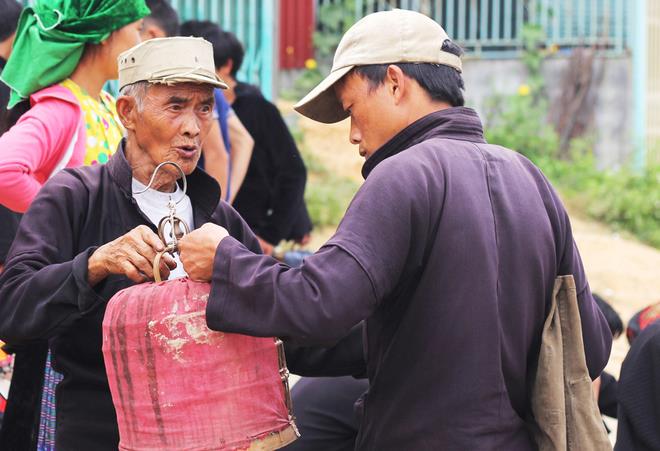
The market session is held on a large plot of land next to the old quarter in Dong Van town. The place most frequented by men in the market is the bird-selling area.
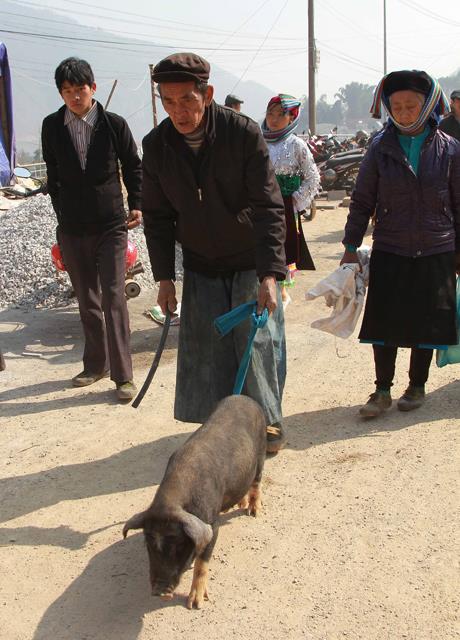
Many people who live far away have to leave from 3 a.m., crossing several mountains to arrive in time for the market. Mr. Giang Nhi Dinh from Thai Phin Tung commune led a black pig from his home to the market to sell.
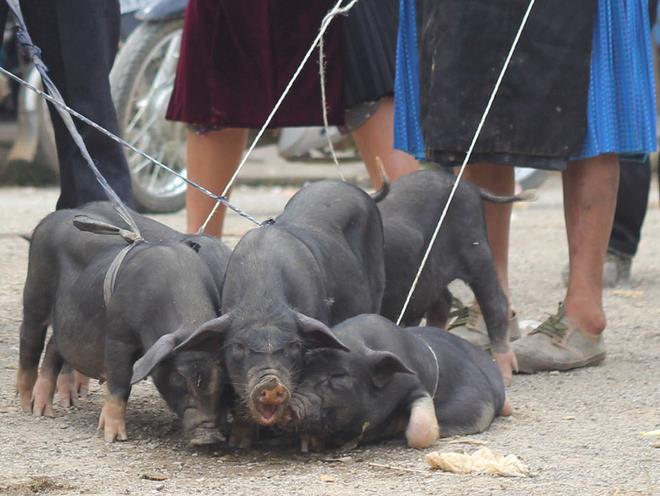
Black pork is very delicious because it is free-range raised by the Hmong people, with each pig weighing only 30-40 kg. Near Tet, almost every family stocks up on some black pork to wrap cakes and prepare feasts.
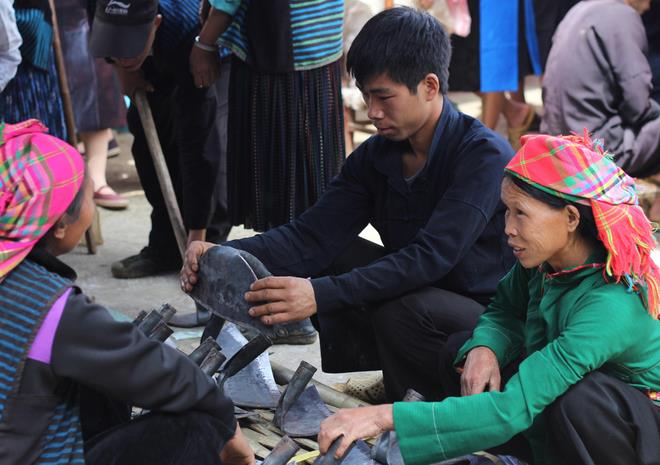
By 8 a.m., the market is packed with people, and the roads leading to the center of the market are also crowded. Locals come to the market to buy farming tools.
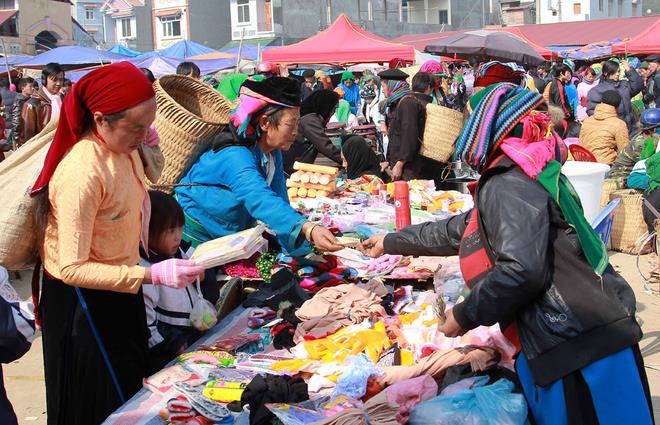
Clothes and daily necessities are of greatest interest to women. Goods are mainly brought up from the lowlands, while a small portion of farming tools and seeds are produced and brought to sell by the locals.
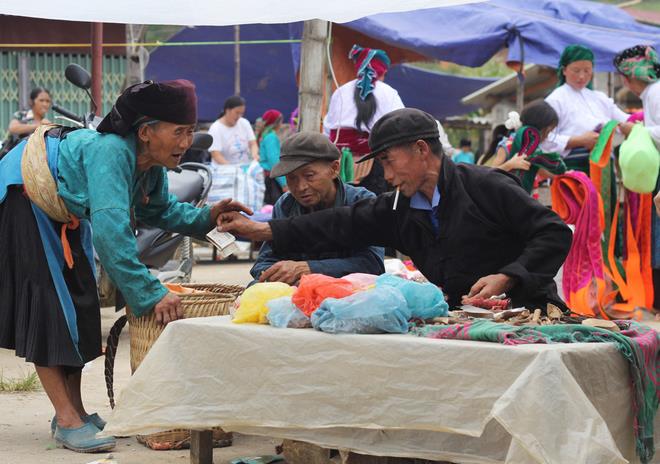
Ethnic minority people often carry woven back baskets to hold goods. For the elderly, money is not kept in pockets but wrapped in a cloth pouch.
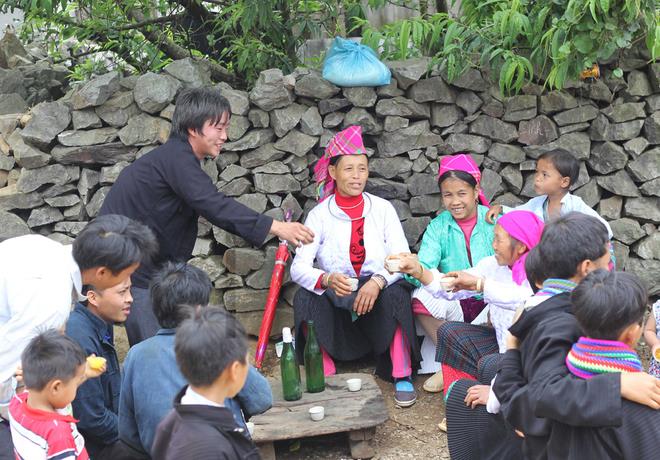
Ethnic minorities in the Ha Giang rocky highlands work hard every day, and families live whole hills or mountains apart. Therefore, meeting each other is very limited. The market session is an occasion for them to meet, share the joys and sorrows of life, and raise a glass of wine together.
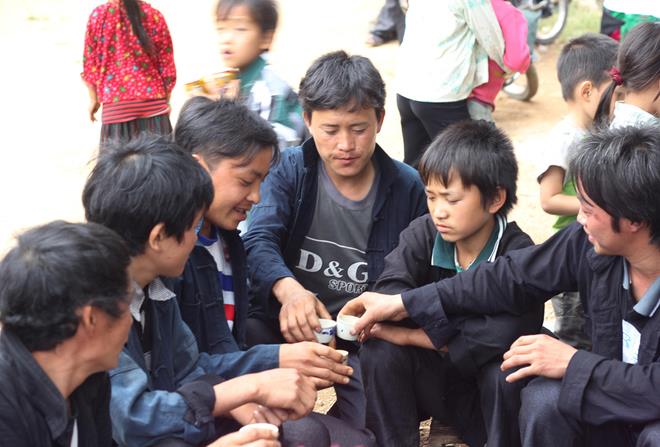
Drinking wine at the market session is a custom of the Hmong people. After shopping, they often gather in a corner to meet and drink wine. Both women and young girls can drink.
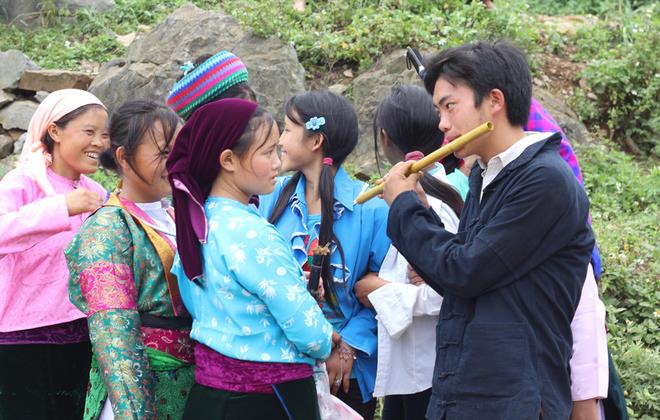
A special feature of highland market sessions is that in addition to buying, selling, and trading goods, the market is also a place for people to socialize. Therefore, almost all family members eagerly wait for the market day to go down to the market together, also known as going to the market for fun. Many young couples also take this opportunity to express their affection.
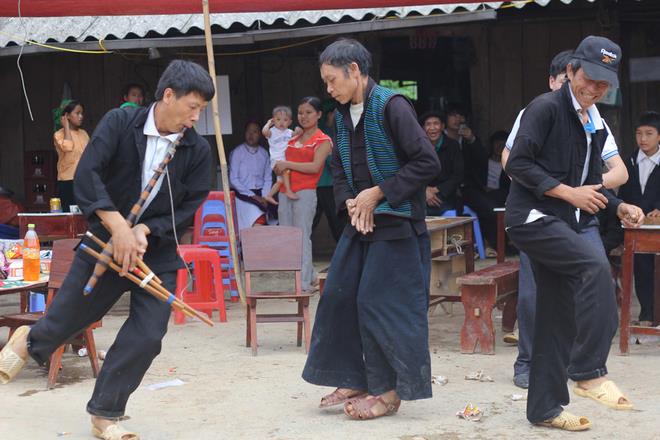
Hmong youths play the khen and dance in the market session, to the warm cheers of the local people.
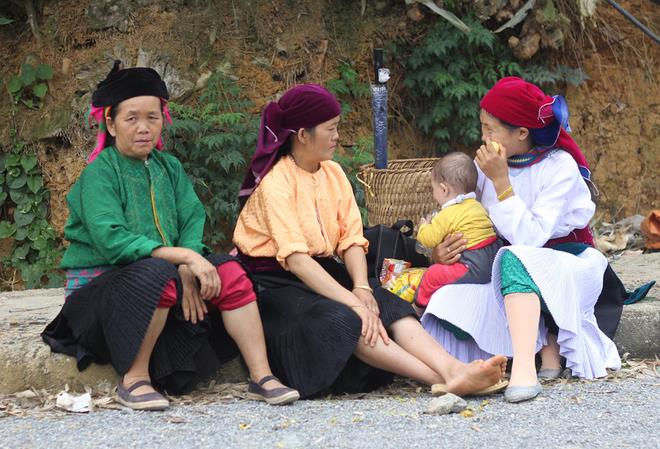
This year, many ethnic minority people in the Ha Giang rocky mountains celebrate a prosperous Tet as the weather was quite favorable for agricultural production. Therefore, when coming down to the market, everyone is happy and wearing their newest and finest clothes.
source: https://ola88.com/en/van-hoa-vung-mien/tet-market-in-ha-giang-rocky-platea-21728

Attending the market is an important activity in the daily life of ethnic minorities in the Ha Giang rocky plateau. Especially in the days leading up to Tet, various types of goods and agricultural produce are displayed and sold more abundantly. In Dong Van district, the market meets once a week on Sunday.

The market session is held on a large plot of land next to the old quarter in Dong Van town. The place most frequented by men in the market is the bird-selling area.

Many people who live far away have to leave from 3 a.m., crossing several mountains to arrive in time for the market. Mr. Giang Nhi Dinh from Thai Phin Tung commune led a black pig from his home to the market to sell.

Black pork is very delicious because it is free-range raised by the Hmong people, with each pig weighing only 30-40 kg. Near Tet, almost every family stocks up on some black pork to wrap cakes and prepare feasts.

By 8 a.m., the market is packed with people, and the roads leading to the center of the market are also crowded. Locals come to the market to buy farming tools.

Clothes and daily necessities are of greatest interest to women. Goods are mainly brought up from the lowlands, while a small portion of farming tools and seeds are produced and brought to sell by the locals.

Ethnic minority people often carry woven back baskets to hold goods. For the elderly, money is not kept in pockets but wrapped in a cloth pouch.

Ethnic minorities in the Ha Giang rocky highlands work hard every day, and families live whole hills or mountains apart. Therefore, meeting each other is very limited. The market session is an occasion for them to meet, share the joys and sorrows of life, and raise a glass of wine together.

Drinking wine at the market session is a custom of the Hmong people. After shopping, they often gather in a corner to meet and drink wine. Both women and young girls can drink.

A special feature of highland market sessions is that in addition to buying, selling, and trading goods, the market is also a place for people to socialize. Therefore, almost all family members eagerly wait for the market day to go down to the market together, also known as going to the market for fun. Many young couples also take this opportunity to express their affection.

Hmong youths play the khen and dance in the market session, to the warm cheers of the local people.

This year, many ethnic minority people in the Ha Giang rocky mountains celebrate a prosperous Tet as the weather was quite favorable for agricultural production. Therefore, when coming down to the market, everyone is happy and wearing their newest and finest clothes.
source: https://ola88.com/en/van-hoa-vung-mien/tet-market-in-ha-giang-rocky-platea-21728
0 Replies
·
35 views