
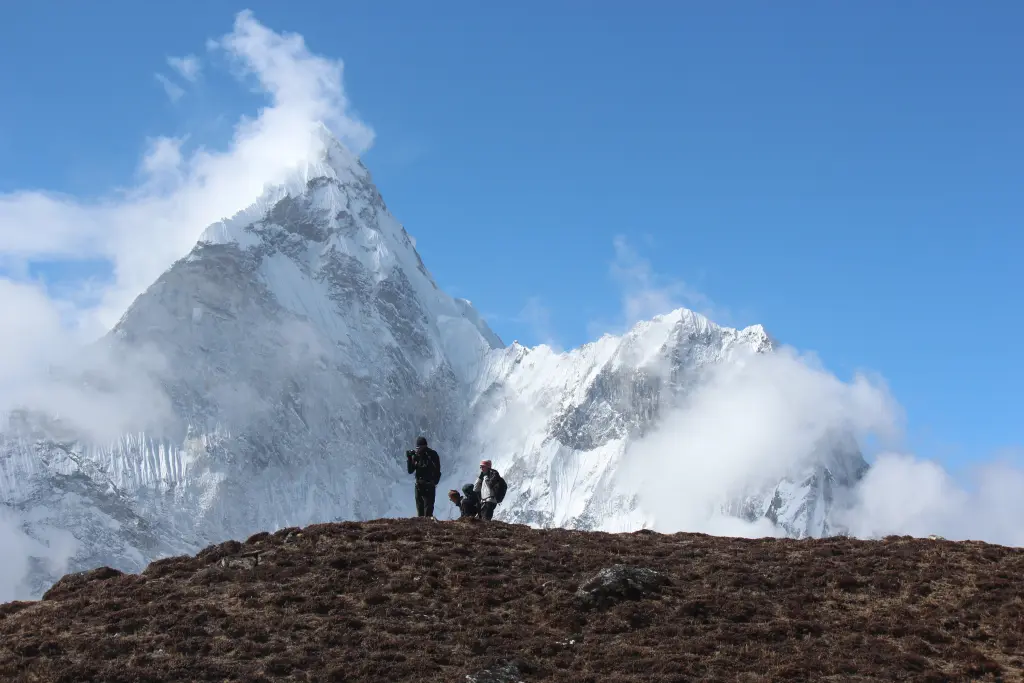
There's a ridge in the lower Solu-Khumbu valley where, on a clear morning, you can stand in near-complete silence and watch the sun paint Mount Everest gold. No helicopter noise. No crowded teahouse queues. Just you, a cup of milk tea, and the entire eastern Himalayan arc stretched out like a painting.
That ridge is Pikey Peak — and it's one of the most rewarding treks in Nepal that most people still haven't heard of.
Why Pikey Peak Deserves Your Attention
Most trekkers heading to the Everest region set their sights on Everest Base Camp. It's iconic, no question. But it also means weeks of walking, altitude sickness risks above 5,000 meters, and sharing the trail with hundreds of others during peak season.Pikey Peak sits at 4,065 meters (13,336 feet) high enough to deliver a breathtaking 360-degree panorama of Everest, Makalu, Lhotse, Kanchenjunga, Ama Dablam, and Dhaulagiri, but accessible enough to complete in just 9 days.
Sir Edmund Hillary, the man who first stood on top of Everest, reportedly called this one of his favourite viewpoints in all of Nepal. That's not marketing that's the honest opinion of someone who had seen every angle of these mountains imaginable.
If it was good enough for Hillary, it's probably good enough for you.
Trek at a Glance
| Details | Info |
|---|---|
| Location | Solu Khumbu, Everest Region |
| Max Altitude | 4,065 m (13,336 ft) |
| Duration | 9 days (7 days trekking) |
| Difficulty | Easy to Moderate |
| Transport | Jeep |
| Accommodation | Hotels and Lodges |
| Best Seasons | Spring (Mar–May) and Autumn (Sep–Nov) |
| Starting Point | Phaplu (2,413 m) |
| Ending Point | Dhap (1,830 m) |
| Cost | USD 300 |
The Best Time to Go
- Spring (March to May) is the season that makes Pikey Peak truly unforgettable. The rhododendron forests Nepal's national flower burst into vivid red, pink, and white blooms along the trail. The mornings are crisp, the skies are clear, and the mountains look like they've been freshly polished.
- Autumn (September to November) runs a close second. The monsoon has just cleared, washing the air clean of any haze. Visibility is exceptional, temperatures are comfortable, and the trails are firm underfoot. Both seasons give you reliable weather and the kind of mountain views that end up framed on walls.
Day-by-Day Itinerary
Day 1 : Arrive in Kathmandu
Your journey begins the moment you land. The Trekkers Nepal team picks you up from Tribhuvan International Airport and transfers you to your hotel in the heart of the city. After settling in, the afternoon is yours most trekkers head to Thamel to sort out any last-minute gear, sample local food, or simply take in the organized chaos of Kathmandu's streets.In the evening, you'll sit down with your trekking guide for a full briefing: route details, what to expect, altitude considerations, and any questions you've been sitting on. Good night's sleep is on the agenda tomorrow is an early start.
Day 2 : Drive from Kathmandu to Phaplu (2,413 m)
This is your travel day a 7 to 8-hour jeep ride covering roughly 260–270 km through some of Nepal's most scenic midhill countryside. You'll cross Bhaktapur, climb up to Dhulikhel via the Araniko Highway, and then wind down to the Sunkoshi River along the BP Highway before climbing again through terraced farms and riverside villages toward Salleri and finally Phaplu.The road isn't always smooth expect some bumps and narrow stretches. But the payoff is watching the landscape slowly change from busy valley floor to quiet hill towns. Arrive, check in, have dinner, and let the altitude settle in gently.
Day 3 : Phaplu to Junbesi (2,700 m) | ~11–13 km | 5–7 hrs
Your boots hit trail for the first time today. The walk from Phaplu to Junbesi is a proper introduction to lower Solu-Khumbu suspension bridges over rushing kholas, stone-carved mani walls, and traditional Sherpa villages that feel genuinely lived-in.The path weaves through oak forests and open terraced farmland before opening into Junbesi, a peaceful and particularly charming settlement. This village has served as a resting point for trekkers heading toward Everest for generations. After lunch, those with energy to spare can walk up to the nearby Junbesi Monastery (over 400 years old) or the famous Thupten Choling Monastery, one of the most significant Tibetan Buddhist monasteries in Nepal.
Day 4 : Junbesi to Lamjura (3,500 m) | 6–7 hrs
Today the altitude starts to climb in earnest. The trail ascends steadily from Junbesi toward Lamjura, passing through a scatter of mani walls and chortens stone markers of Buddhist devotion that become more frequent as you head higher.Lamjura La is a mountain pass region that rewards early risers: if the clouds hold off, Numbur Himal dominates the northern horizon in a way that stops most trekkers mid-step. The trail gets steeper and narrower in the upper sections, so take your time and pace yourself. Drink water, eat well, and let the altitude work its way into your system slowly.
Day 5 : Lamjura to Pikey Peak (4,065 m) | The Summit Day
After breakfast, you set off across rhododendron-cloaked forests and open yak-grazing pastures, passing through the small Sherpa settlements of Chyangba and Jhapre before reaching Pikey Peak Base Camp at 3,640 m. From here, the final push to the summit is steep a rocky ridge draped in prayer flags that whip and snap in the wind.
As you gain the last few hundred meters, the Himalayas reveal themselves in stages. First Everest's dark pyramid. Then the satellites Lhotse, Makalu, Ama Dablam. Finally the whole arc: Dhaulagiri to the west, Kanchenjunga to the east, and everything in between laid out in a single sweeping panorama.
Take your time at the top. This is the view. This is why you came.
After photographs, rest, and a few minutes of quiet appreciation, you descend back to Pikey Peak Base Camp for the night.
Day 6 : Pikey Peak Base Camp to Jhapre (2,850 m) | ~11–14 km | 5–6 hrs
Wake up early for sunrise from base camp it's genuinely worth the effort. Golden light on snow-covered peaks at altitude is one of those experiences that stays with you long after the trek is over.After breakfast, the descent toward Jhapre takes you back through rhododendron forests and across a large mani wall before the trail opens into grassy yak pastures. The pace is more relaxed today let your legs enjoy the downhill, and take time to stop and talk to local shepherds or monastery caretakers if the opportunity arises. Arrive in Jhapre for lunch and spend the afternoon exploring the local area.
Day 7 : Jhapre to Dhap (2,900 m) | ~12–15 km | 4–6 hrs
The final trekking day. The trail to Dhap is the easiest of the journey a gentle walk through peaceful Sherpa settlements, forested paths, and terraced farmland. Consider it a victory lap.Dhap is a quiet but significant waypoint the gateway to Pikey Peak for trekkers approaching from the other direction. You'll find simple, comfortable guesthouses here, a good meal, and a sense of genuine accomplishment. Tonight you celebrate.
Day 8 : Drive Back to Kathmandu | 7–8 hrs
An early breakfast, then the jeep ride back through the midhills to Kathmandu. The road back follows the same scenic route you took on Day 2, though somehow the views look different on the way home. Stop for lunch somewhere along the route and stretch your legs.By evening you're back in Kathmandu, checked into your hotel, and at dinner ideally somewhere in Thamel where you can reflect on the past week over a good meal.
Day 9 : Departure
Your final morning in Nepal. A leisurely breakfast, last-minute shopping in Thamel if time allows, and then transfer to Tribhuvan International Airport. Remember to arrive at least 3 hours before your international flight the airport is busy and check-in queues can be long.The Trekkers Nepal team will see you off at the departure terminal. Safe travels.
Permits You'll Need
Three permits are required for the Pikey Peak trek your guide will handle all of these on your behalf:- Sagarmatha National Park Entry Permit
- TIMS Card (Trekker's Information Management System)
- Gaurishankar Conservation Area Permit (GCAP)
Who Is This Trek For?
Pikey Peak is graded easy to moderate, which makes it genuinely accessible to a wide range of trekkers. You don't need prior high-altitude experience or technical climbing skills. If you can walk 5–7 hours a day on uneven terrain with a daypack, you can do this trek.It's a strong choice if you're:
- Short on time but want real Himalayan scenery (9 days total including travel)
- New to trekking in Nepal and want a manageable first experience
- Avoiding the crowds of EBC and Annapurna circuit routes
- Interested in authentic Sherpa culture without the tourism overlay of busier regions
What's Included in the USD 300 Package
At $300, the Pikey Peak trek with Trekkers Nepal is exceptional value for a fully supported guided trek in the Himalayas. Detailed package inclusions are available directly from the team, but the price covers guided support, accommodation in hotels and lodges along the route, jeep transfers, and permit processing.A Note on the Region
Lower Solu-Khumbu is the quieter, less-visited half of the broader Khumbu region. While the upper reaches near Namche Bazaar and EBC attract the majority of trekkers, Solu with its terraced fields, dense forests, and traditional Buddhist monasteries retains a character that feels closer to what Himalayan trekking looked like twenty years ago.Villages are genuine, not tourism-built. Monasteries are active, not museums. And the trail, while well-maintained, doesn't feel like a conveyor belt.
That's increasingly rare in Nepal's popular trekking corridors, and it's one of the best reasons to make the Pikey Peak trek your next adventure.
Ready to Trek?
The Pikey Peak trek runs year-round with peak seasons in spring and autumn. Packages start from USD 300 and include guided support, accommodation, and all transfers.To book or ask questions, get in touch with the Trekkers Nepal team directly. They're based in Kathmandu and know this trail better than anyone.
Because some views are worth going slightly off the beaten path to find.